

The luxury influencer marketing trends 2026 favour “Measured Influence” over fleeting virality, trading algorithmic noise for enduring cultural authority and hyper-niche, gated credibility.
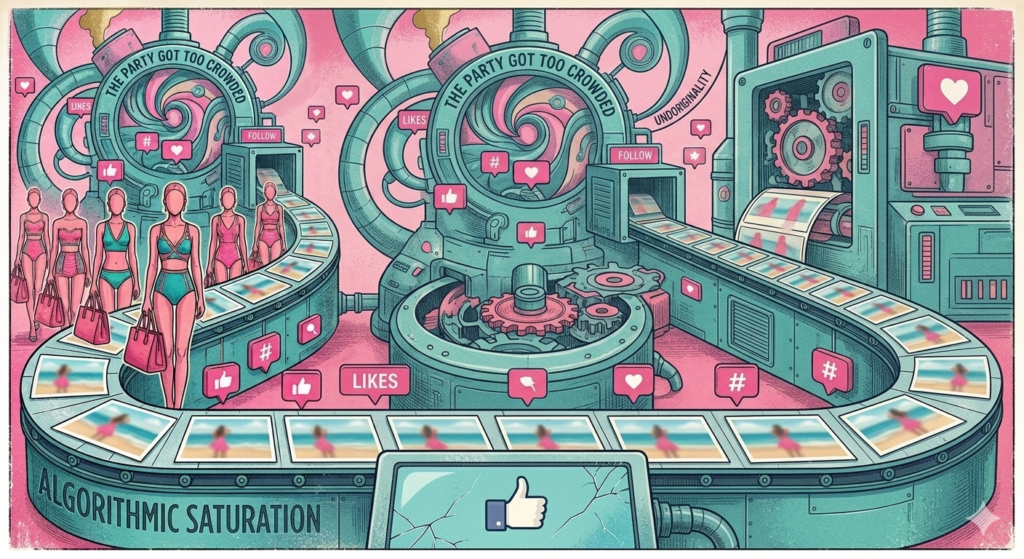
The party got too crowded
There was a time when a “like” felt like social currency. Today, however, it feels more like loose change.
Luxury, by definition, has always thrived on a certain distance. It is built on intrigue, on suggestion, on a whisper rather than a shout. Over time, though, that whisper turned into a chorus, and not always a harmonious one. For years, brands chased scale. They wanted more followers, more reach, more visibility. However, visibility has its limits. When everyone is seen everywhere, the magic begins to fade. It is a bit like wearing couture to a room where ten others are dressed identically. It may still be beautiful, but it is no longer special.
From aspiration to saturation: The shift defining luxury influencer marketing trends 2026
If you scroll through any feed today, the pattern is hard to miss. Identical beach decks, identical shopping hauls, identical captions appear in quick succession. As a result, what once felt aspirational now risks feeling algorithmic. Unsurprisingly, audiences are noticing.
A joint study by Bain & Company and Altagamma shows that high-net-worth consumers are increasingly drawn to authenticity, heritage, and craftsmanship rather than sheer visibility. In addition, insights from McKinsey & Company suggest that while influencer campaigns can boost awareness, they do not always build long-term luxury equity.
Therefore, attention may be easy to get, but respect is significantly harder to earn.
Case in point: The brands that never needed the noise
To understand this shift more clearly, it helps to look at brands that have long operated differently.
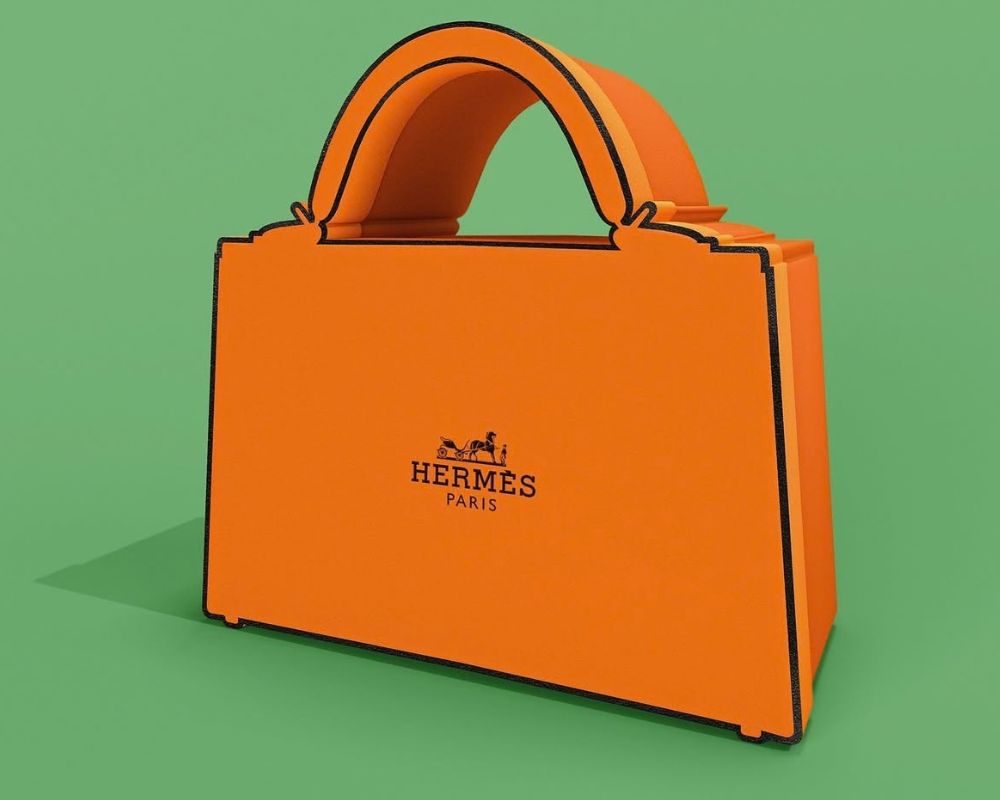
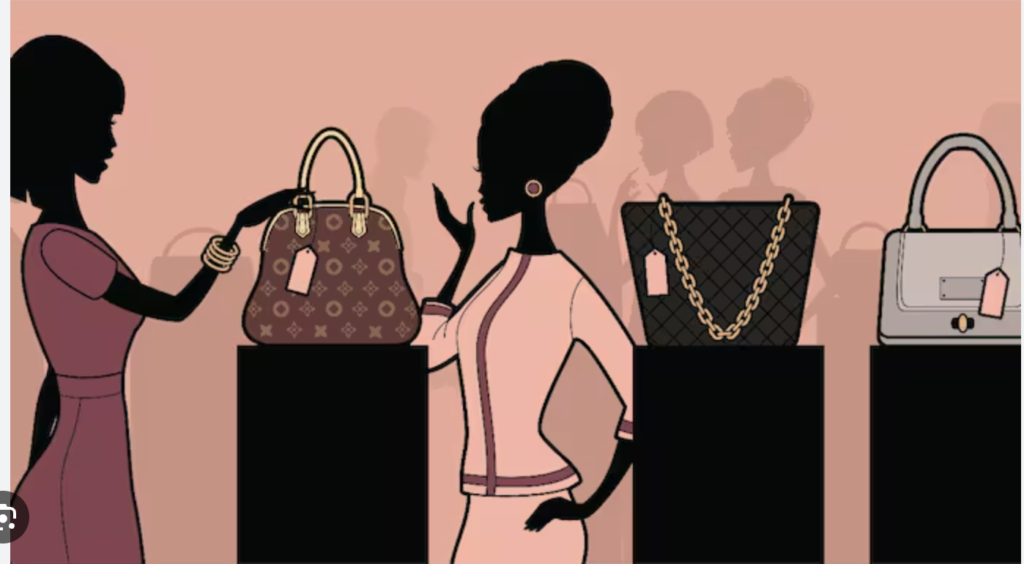
Take Hermès, for instance. The brand does not chase virality. Instead, it cultivates desire through limited supply, controlled visibility, and a sense of rarity that feels almost mythical.
In contrast, Louis Vuitton has historically embraced scale through celebrity and influencer collaborations. Even so, it continues to anchor that visibility in strong heritage storytelling, which helps maintain its luxury positioning.
Then there is Jacquemus. The label embraces viral moments, yet each campaign is rooted in a distinct creative vision. As a result, visibility feels intentional rather than excessive.
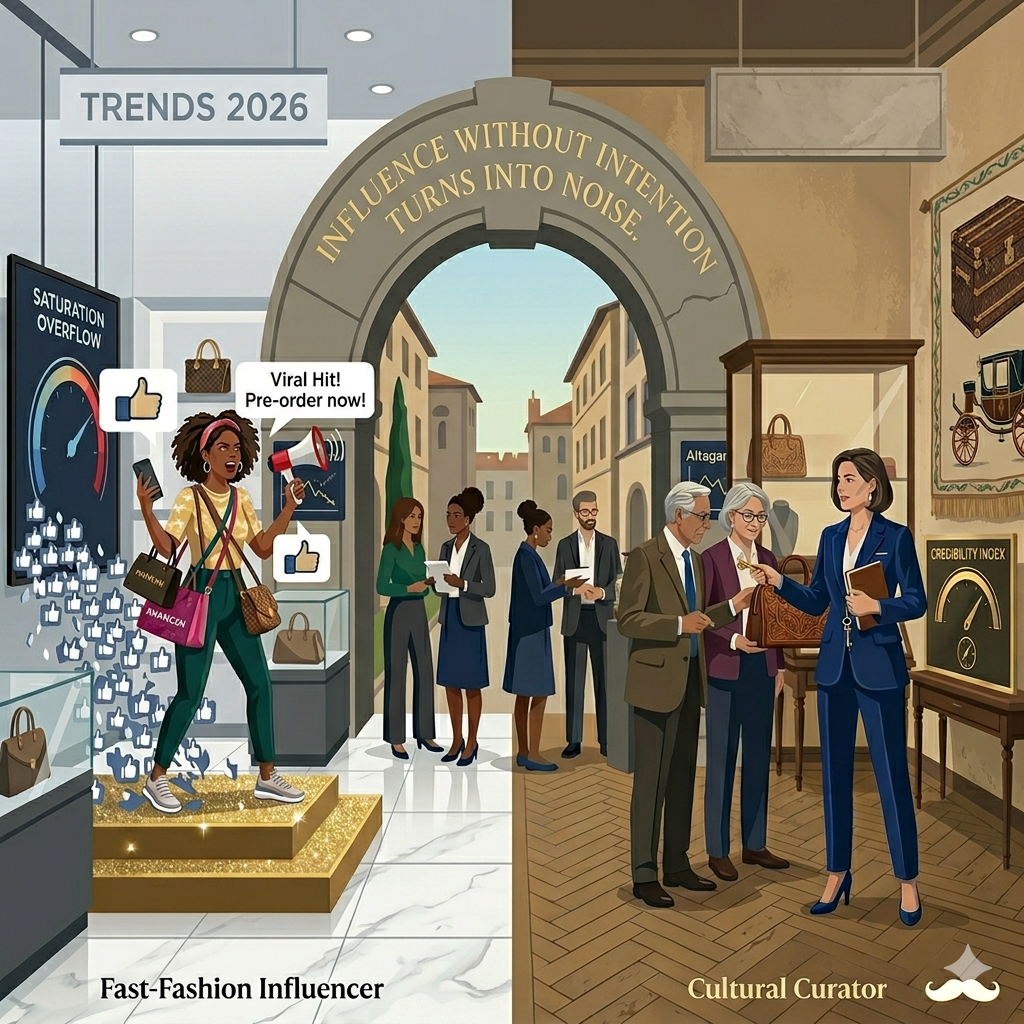
Taken together, these examples make one thing clear. Influence without intention quickly turns into noise.
The quiet return of discernment
Interestingly, the most meaningful shift is not loud. Instead, it is subtle and deliberate. Across Paris, Milan, and even in Dubai, brands are beginning to favour depth over decibels. Consequently, the new insiders are not necessarily the loudest voices in the room. Rather, they are the most informed. Stylists with a clear point of view, cultural commentators with context, and editors who understand nuance are gaining relevance.
At the same time, markets like India are reflecting this evolution. In cities such as Mumbai and Delhi, a more discerning luxury consumer is emerging. This audience increasingly values credibility over clout. As a result, the focus is shifting. It is no longer about who can post first. Instead, it is about who can say something worth remembering.
When everyone’s invited, who’s Impressed?
At the same time, a subtle fatigue is setting in.
According to the Edelman Trust Barometer, audiences are becoming more sceptical of overtly sponsored content, particularly when it feels repetitive. When the same handbag, the same resort, or the same experience appears across dozens of profiles, the effect begins to change. It feels less like aspiration and more like overexposure.
Therefore, the core principle of luxury remains unchanged. It is not about being everywhere. Instead, it is about being exactly where it matters. Put simply, a recommendation shared in the right circle will always travel further than a message broadcast to everyone.
What are luxury influencer marketing trends for 2026?
In simple terms, they reflect a shift from high-volume visibility to high-value credibility. Importantly, this does not signal the end of influencers. Instead, it signals an evolution, one that sits at the heart of luxury influencer marketing trends 2026.
Today, influence is becoming more layered and more thoughtful. It is increasingly editorial, contextual, and curated. As a result, a well-placed mention, a meaningful collaboration, or a genuine endorsement can carry more weight than a large volume of polished posts. The tools remain the same, but their role is changing.
Less Noise, More Nuance
Ultimately, if the past decade was about being seen, this one is about being remembered.
Luxury is returning to what it does best. It is embracing subtlety, storytelling, and a quiet confidence that does not rely on constant validation. True distinction never begs for a gaze; it simply commands it.
In that sense, the takeaway from luxury influencer marketing trends 2026 is clear. The “like” is not dead. However, it is no longer the point.