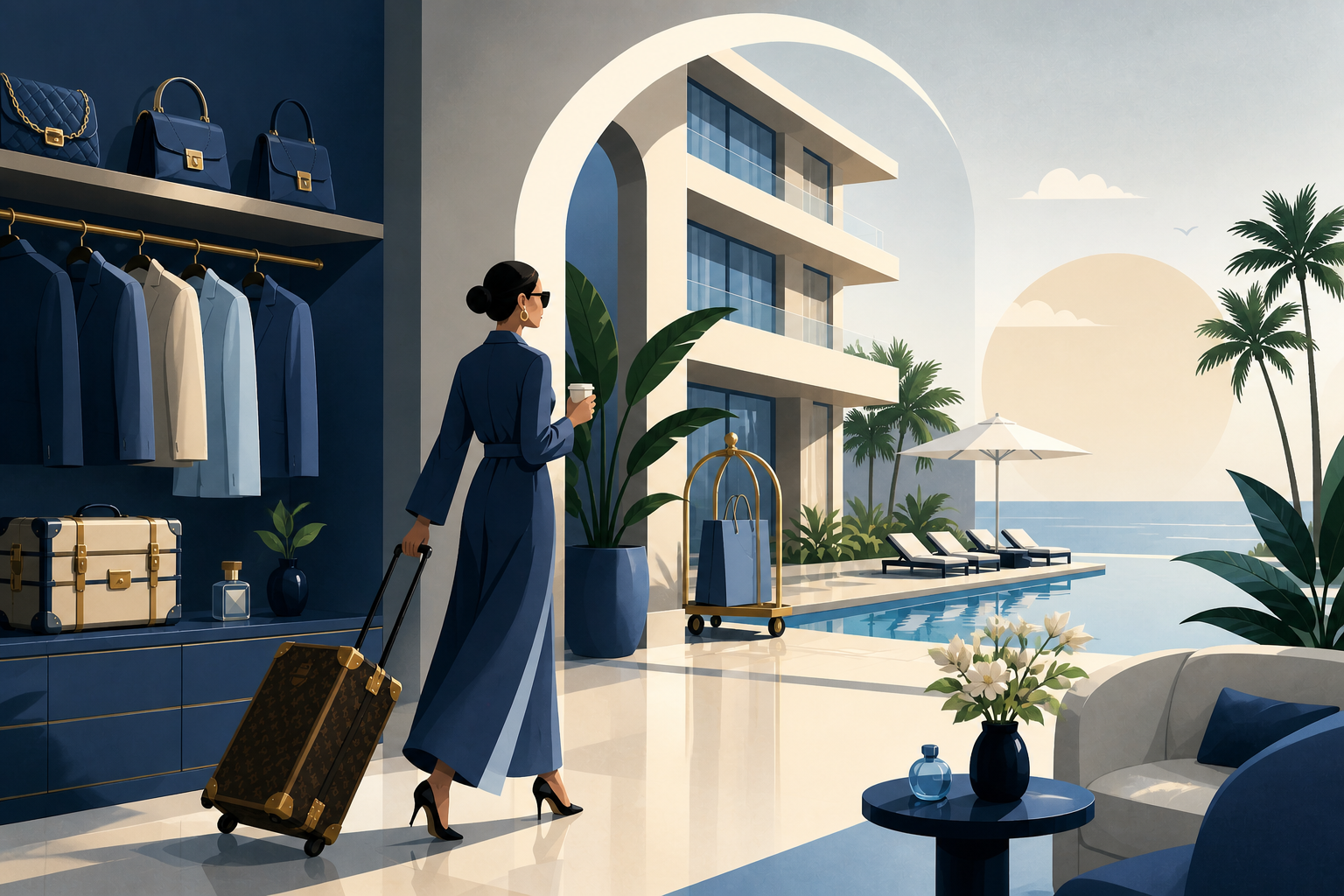


Luxury brand hotels are redefining modern indulgence, turning fashion houses into fully immersive lifestyle destinations.
From wardrobe to check-in desk
Luxury used to live in wardrobes. A bag here, a watch there, and a logo doing most of the social heavy lifting. Now, it prefers a better address. Ideally with a view, a private pool, and staff who remember your coffee order before you do.
The modern luxury consumer is no longer satisfied with owning the brand. They want to step into it, stay in it and be quietly witnessed inside it. Which explains why luxury brand hotels have gone from indulgent side projects to serious business strategy.
And no, this isn’t about aesthetics. It’s about survival, dressed up beautifully.
Luxury brand hotels: The numbers tell a less glamorous story
Behind all the marble and mood lighting, the math is doing the talking.
According to Statista, the global luxury goods market is set to cross $450 billion by 2027, but growth has steadied after the post-pandemic surge. Not exactly a crisis. But certainly not the gold rush it once was.
At the same time, Deloitte points out that brands are actively diversifying beyond core categories to sustain momentum. Put simply, when handbags stop flying off shelves at the same pace, luxury finds a more compelling way to keep selling the dream.
Meanwhile, Knight Frank reports that branded residences have expanded by over 150 percent globally in the past decade, commanding premiums of up to 35 percent. Which makes perfect sense. Once a guest buys into the stay, the sale quietly shifts to a lifestyle they never have to check out of.
Runways are lovely but lobbies are better
Take Bulgari. Its hotels feel less like places to stay and more like environments designed to recalibrate your behaviour. Polished, tightly controlled, almost intimidating in their precision. You don’t simply check in. You adapt.
Armani, meanwhile, takes the quieter route. Naturally. Minimalism so disciplined it stops feeling decorative and starts feeling ideological. Every corner appears deliberate. Every detail whispers with confidence. Which, in luxury, is usually the louder statement.
And then there is Louis Vuitton, steadily orbiting hospitality through cafés, exhibitions, private experiences, and immersive retail. A hotel no longer feels like expansion. It feels like the inevitable next chapter. Once a brand has built an entire universe, a store alone begins to feel strangely insufficient.
This is no longer about selling objects. It is about directing atmosphere, behaviour, and identity. Luxury is no longer curating products. It is staging an entire way of life.
Not every brand should be handed a room key
There was a time when status was worn, logos did the talking and subtlety was optional. Now, status is experienced. As Euromonitor International notes, experiential luxury is outpacing traditional goods among younger high-net-worth consumers. They are less interested in being seen with something and more interested in being somewhere.
However, this is where things get complicated. According to PwC, expectations in luxury hospitality are rising faster than in most sectors. This means that the margin for error is shrinking.
And then there is sameness. The real threat. Too many beautiful hotels that feel exactly alike. Too many spaces designed for photographs rather than people. Luxury does not need more places to stay. It needs places worth remembering.
Luxury has not lost its appeal but It has simply changed its setting. After all, in a world where everyone can buy the bag, the real distinction lies elsewhere.
FAQ
Which luxury fashion brands own hotels?
Several global luxury brands have entered hospitality, including Armani, Bulgari, Louis Vuitton, Dior, and Fendi through partnerships, branded residences, or standalone hotel concepts.
What makes luxury branded hotels different from traditional luxury hotels?
Branded luxury hotels often reflect the aesthetics, design philosophy, craftsmanship, and identity of the fashion house behind them, creating a more immersive and aspirational experience.
Are luxury hotels the future of experiential luxury?
Increasingly, yes. Luxury consumers are shifting from ownership-driven status toward experience-driven luxury, making hospitality one of the fastest-growing extensions for premium brands.