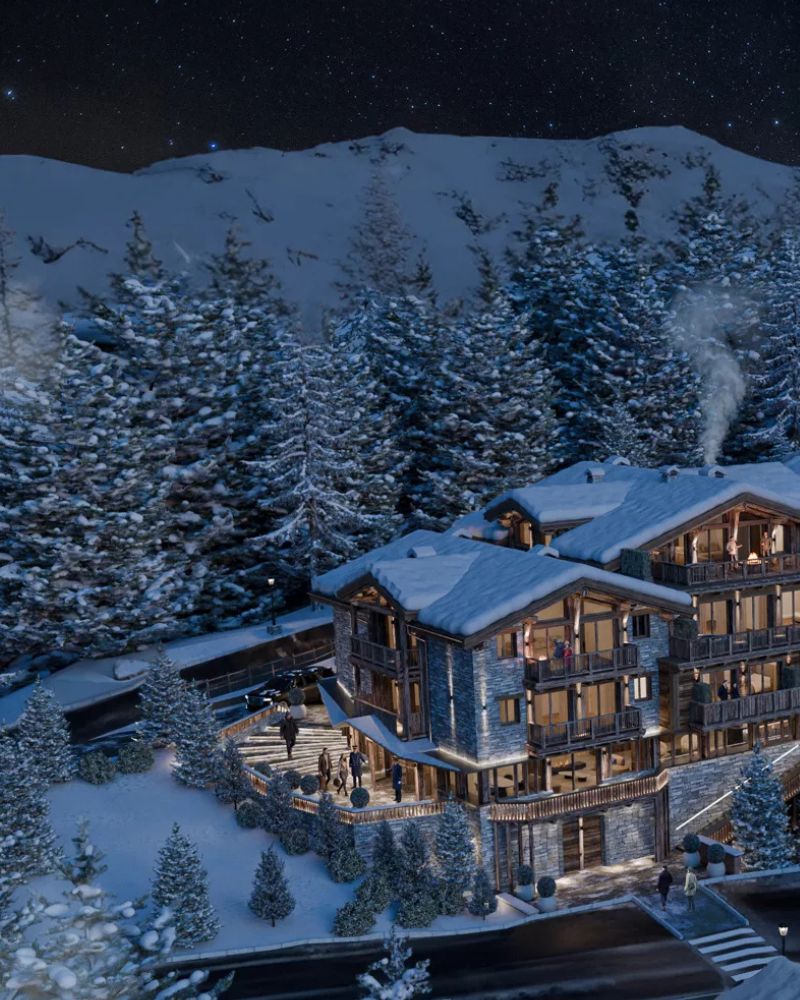




As wellness, climate-conscious escapes and nature-led hospitality reshape global tourism, luxury alpine travel is emerging as the next big obsession for affluent travellers, with Raffles Hotels & Resorts betting on the French Alps as the future of restorative luxury.
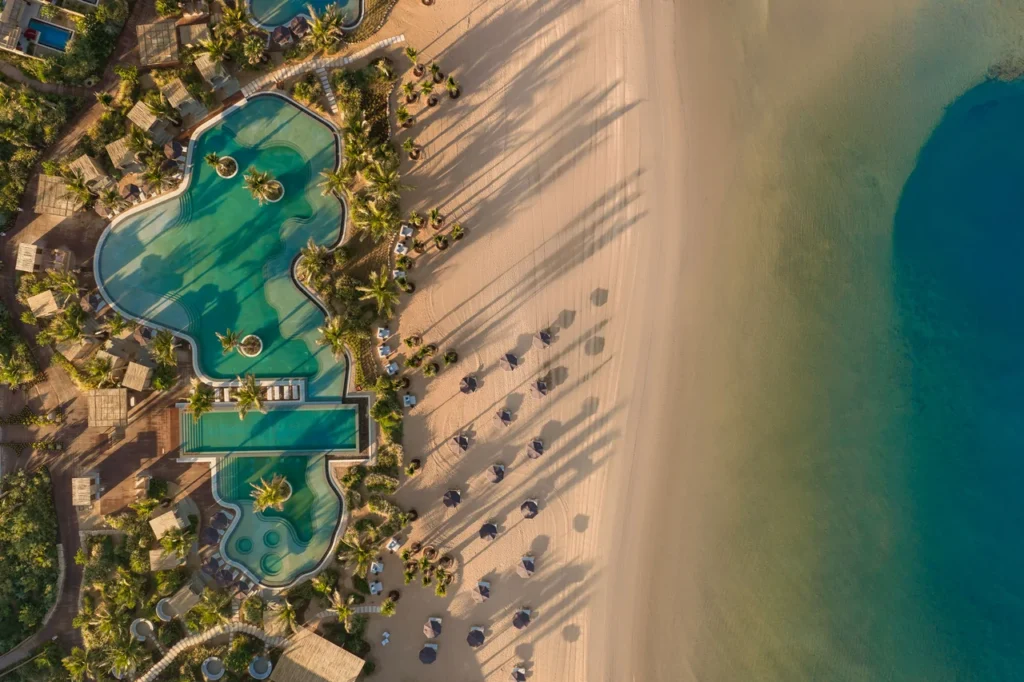
Luxury, much like fashion, is cyclical. One decade worships spectacle, while the next becomes obsessed with restraint. For years, the fantasy of luxury travel was drenched in tropical maximalism. Private islands, overwater villas and infinity pools melting theatrically into turquoise oceans defined aspiration. The richer the traveller, the farther they escaped into heat and excess. However, the mood has changed.
Today’s vision of luxury travel is colder, quieter and far more introspective. It is less St. Barths and more snow-covered solitude in the French Alps with a cashmere throw, medicinal mountain air and a spa programme promising longevity instead of late nights. This is precisely why Raffles Hotels & Resorts’ decision to open its first alpine resort feels culturally significant. On paper, it is a hospitality expansion. In reality, it reflects a much larger shift in how affluent travellers are redefining aspiration itself through wellness-led and nature-driven travel experiences. According to the Global Wellness Institute, the global wellness economy has already reached $6.8 trillion and is projected to approach $10 trillion by 2029, with wellness tourism emerging as one of its fastest-growing sectors.
Why luxury travellers are falling back in love with the Alps
There was once a time when alpine luxury belonged to a very specific social tribe. Think oligarch glamour, ski-chic excess and women in white fur descending onto Courchevel terraces as though they were stepping into a Slim Aarons photograph.
Now, the alpine fantasy looks entirely different. The modern luxury traveller wants mountains for the same reason they gravitate towards quiet luxury fashion. The appeal lies in emotional discretion. Increasingly, luxury alpine travel is no longer about being seen everywhere. Instead, it is about withdrawing elegantly from overstimulation.
As a result, the Alps now represent something almost psychological. They offer silence, privacy, clean air and the increasingly rare luxury of stillness. In fact, skiing itself is slowly becoming secondary. The new mountain traveller arrives for thermal recovery circuits, longevity treatments, sleep rituals and the deeply seductive idea of disappearing into nature without sacrificing Egyptian cotton sheets or exceptional wine. Increasingly, luxury mountain resorts are positioning themselves around wellness, restoration and immersive alpine experiences rather than traditional ski tourism alone. The wellness tourism market alone is projected to reach $2.4 trillion by 2035, driven largely by growing demand for wellness-led hospitality and nature-focused travel.
Why luxury alpine travel became the new language of wealth
Meanwhile, post-pandemic luxury travel has become deeply wellness-coded. Not in the aggressively green-juice, biohacking way Silicon Valley likes to market, but in a softer and more aesthetic form.
Today’s affluent traveller wants to feel restored. Luxury hotels understand this intimately. Consequently, wellness is no longer confined to spas tucked discreetly underground. Instead, it has become the central emotional promise of luxury alpine travel itself. Naturally, the Alps lend themselves beautifully to this shift. Mountains carry a certain cinematic purity. They suggest discipline, slowness and escape from urban exhaustion. Moreover, they are aspirational in a way tropical glamour no longer fully is. There is something deeply contemporary about wanting snow, silence and a wood-panelled suite overlooking untouched landscapes instead of another overexposed beach club.
Luxury hospitality brands are responding quickly. Raffles Hotels & Resorts is not alone in betting on the Alps. Luxury operators including One&Only and Rosewood Hotels & Resorts are also expanding into Courchevel as alpine destinations evolve into year-round luxury ecosystems rather than purely seasonal ski markets.
Climate anxiety is quietly reshaping luxury travel
At the same time, climate anxiety is beginning to reshape aspirational geography, even if luxury hospitality rarely says it too loudly.
As cities become hotter, louder and more crowded, colder destinations are acquiring a new kind of desirability. Snow feels rare now. Alpine air feels medicinal. Nature itself has become a form of ultra-premium infrastructure. This is what makes the timing of Raffles Hotels & Resorts’ alpine debut particularly interesting. The brand’s Courchevel property, slated to open in 2028, will mark its first-ever alpine resort and signals a broader hospitality pivot towards mountain-led luxury experiences.
The move reflects a broader understanding that the future of luxury alpine travel may increasingly revolve around destinations that feel climatically and emotionally removed from modern chaos. In this context, the mountains are no longer simply picturesque. Instead, they are becoming restorative sanctuaries for the globally exhausted elite.
Quiet luxury has finally reached hospitality
Even the aesthetic language of alpine hospitality has evolved. Previously, mountain luxury was associated with visible logos, overdesigned chalets and excessive opulence. Now, those codes are giving way to something softer and infinitely more sophisticated. Think natural timber, limestone, muted palettes, sculptural fireplaces and architecture that melts gently into landscapes instead of dominating them.
The modern luxury hotel increasingly wants to feel grounded. Sustainable without announcing itself constantly. Elegant without appearing eager for validation. In many ways, it is the hospitality equivalent of Loro Piana cashmere. Understated, expensive and culturally fluent enough not to scream.
This quieter visual identity is also reshaping luxury alpine travel itself. The most desirable mountain resorts today are increasingly defined by atmosphere, emotional calm and nature-led design rather than overt extravagance.
Why luxury travel is becoming more about recovery
Ultimately, what Raffles Hotels & Resorts seems to understand is that luxury travellers are no longer chasing pure indulgence. Instead, they are chasing emotional repair. The fantasy now is not endless stimulation, but intentional retreat. Somewhere colder. Somewhere quieter. Somewhere that feels psychologically distant from modern life.
And perhaps that is exactly why luxury alpine travel suddenly feels so relevant again.
Explore our Intelligence page for more stories on luxury travel, hospitality, culture and global trends.