

At the Future Hospitality Summit in Dubai this week, in the heart of the Middle East luxury hotels 2026 story, Amir Golbarg, Chief Operating Officer of Minor Hotels, said something that every brand building in the Middle East right now should tape to the wall above their project plans.
“There will ever be a time when Dubai has no space for another hotel, so long as it’s the right hotel.”
The right hotel. That phrase, delivered at the most commercially significant hospitality intelligence conference in the Middle East, landed at the exact moment the region is executing the most ambitious luxury hospitality construction programme in the history of the industry. Saudi Arabia alone is adding approximately 320,000 hotel rooms in the coming years. Dubai is adding brands from Baccarat, Gran Meliá and Wynn simultaneously. The Middle East luxury hotels 2026 story is an operational story, a profitability story and, for the brands making the right bets in the right markets, a commercial intelligence story worth understanding carefully.
The Middle East luxury hotels 2026 shift that FHS 2026 confirmed
The Future Hospitality Summit 2026 brought together executives from Radisson Hotel Group, Minor Hotels and Rotana Hotel Management Group in Dubai this week for a panel titled Does the Hospitality Industry Need Reinventing. The answer, broadly, was no. The Middle East luxury hotels 2026 market is beyond reinvention. It needs something more specific and considerably harder: the ability to generate genuine profitability from a hotel landscape that is growing faster than demand in some markets and slower than demand in others.
Eddy Tannous, Chief Operating Officer of Rotana Hotels, was direct about the operational reality. The next phase of growth in Middle East hospitality will be defined less by room count and more by asset productivity: how much revenue a hotel can generate from each available room, and whether a new property has a compelling reason to exist beyond the availability of capital to build it. In other words, the question is shifting from how many rooms the market can absorb to how much value each room can create.
That question is the most commercially significant one in Middle East luxury hotels 2026 and it is the one the brands opening right now are answering with their choices of location, positioning and brand identity.
Saudi Arabia: the beating heart of the Middle East luxury hotels 2026 story
Saudi Arabia is the story. The kingdom has 25 luxury hotels opening in 2026 and approximately 320,000 hotel rooms being added across the country in the coming years, the largest single-country hotel development programme in the history of the industry.
The brands that have already opened in 2026 tell the clearest available story about where the Saudi luxury market is heading.
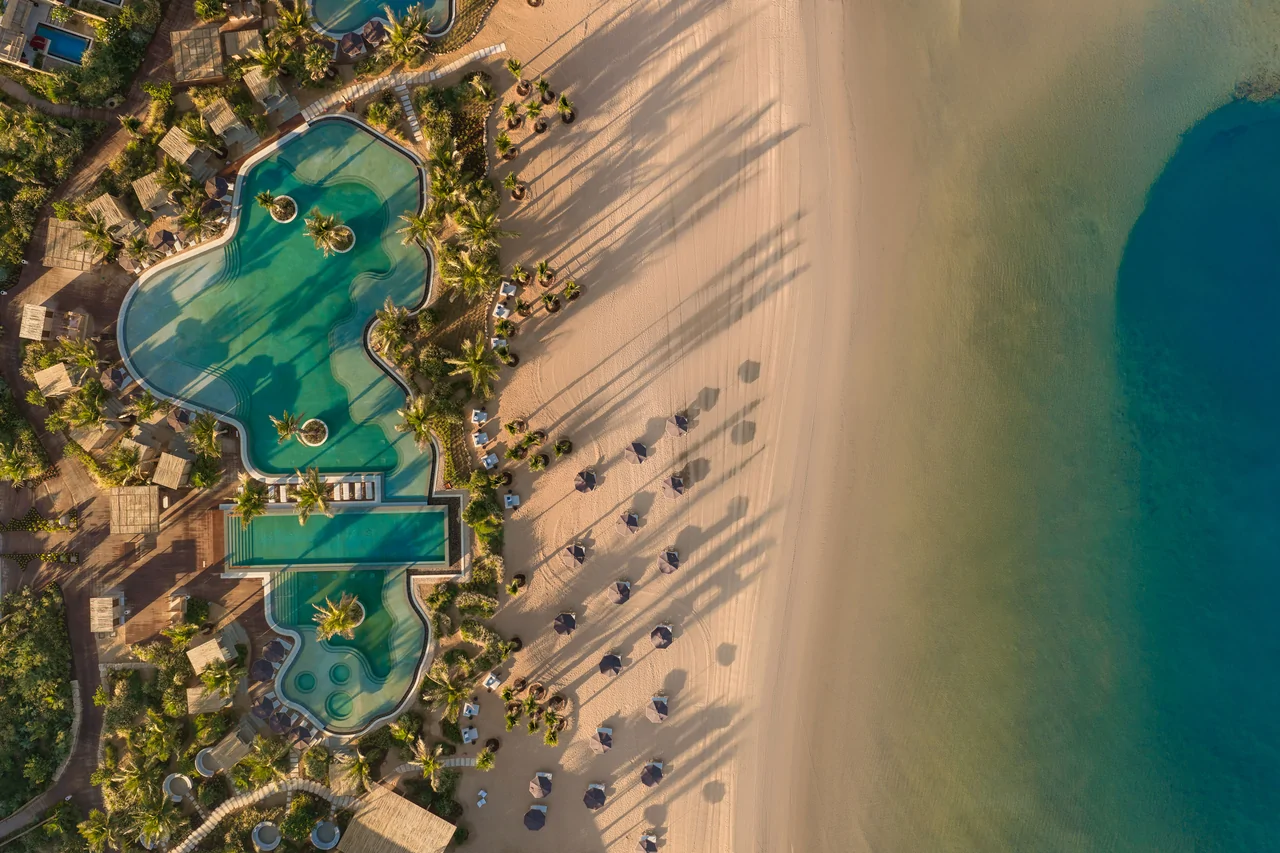
Sofitel opened its first Riyadh property in January 2026, 388 rooms and the largest luxury hotel convention centre in the Saudi capital. W Hotels made its Saudi debut in February 2026 at the King Abdullah Financial District in Riyadh, 210 rooms and seven restaurants, bringing its design-led, high-energy positioning to a city transforming itself into a global business destination. SLS The Red Sea opened on Shura Island in February 2026, the brand’s first Saudi property and one of the earliest additions to what is becoming the most commercially significant luxury hospitality destination in the region.
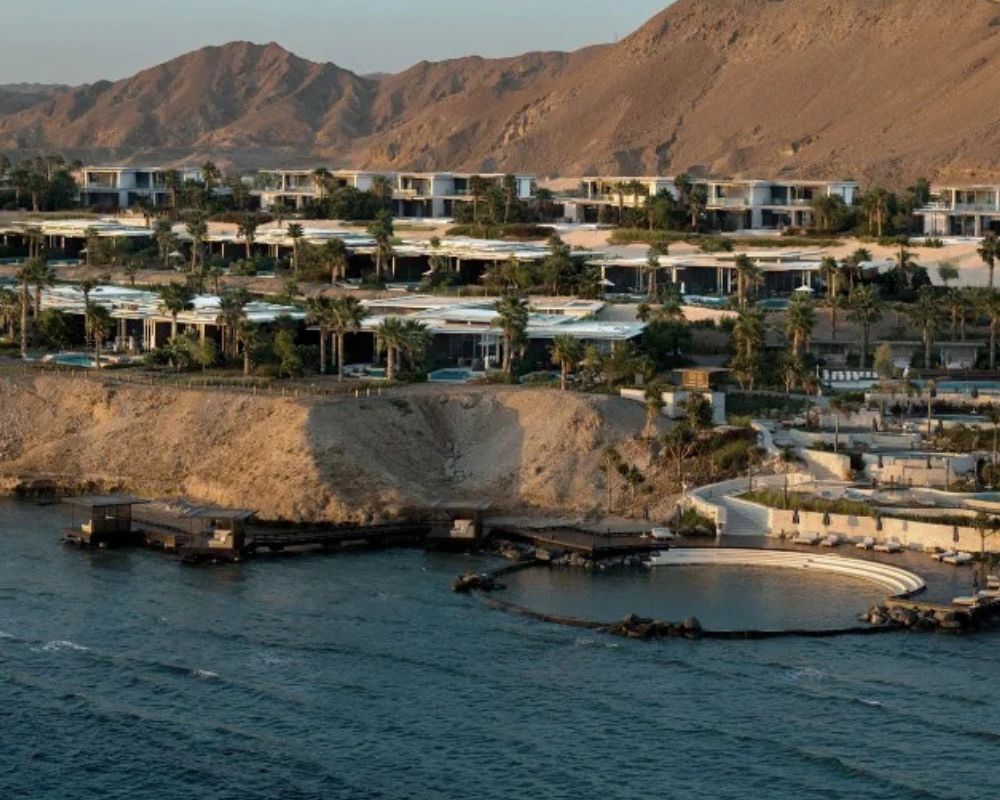
Raffles opened on the Corniche in Jeddah in April 2026, with Red Sea views and Hejazi-inspired design. Four Seasons opened on Shura Island in May 2026, 149 rooms and 31 residences, its second Saudi property in a year. Miraval, Hyatt’s adults-only wellness brand, opened on Shura Island in spring 2026, marking its first international property outside the United States. Capella opened in Riyadh in June 2026. Six Senses opened at AMAALA on July 15. Rosewood AMAALA followed on August 18.
October brings three more. The Red Palace in old Riyadh, once the residence of King Saud bin Abdulaziz, opens this month as a 70-room luxury boutique hotel by the Boutique Group, the most historically significant hospitality opening in the kingdom this year. Rosewood opens its Red Sea property on Shura Island. Nobu opens in Al Khobar. Faena arrives on the Red Sea at Hanak in the Tabuk Province.
The commercial intelligence across all of these openings is specific. Saudi Arabia is being built for a luxury traveller who exists today in smaller volumes than the country requires, and the brands opening there know it. They are making long bets on a market that Vision 2030 is constructing in real time, and the brands that have positioned most specifically, Rosewood, Six Senses and Four Seasons with their wellness and experiential credentials, are better placed than the brands that are simply putting a flag in a growing market.
Dubai and Abu Dhabi: the laboratory for new luxury formats
Dubai is the most competitive luxury hospitality market in the world and it is adding brands simultaneously that represent three completely different commercial bets on what luxury means in 2026.
Six Senses opened on the Palm Jumeirah on September 1 2026, 61 suites and 172 residences, bringing its wellness positioning to the most photographed address in Dubai. A brand built around quiet, intentional luxury opening on the Palm is the most counterintuitive brand positioning decision in Dubai hospitality this year, and the most commercially interesting one. Six Senses on the Palm is making the argument that the consumer who comes to Dubai for spectacle is increasingly seeking permission to step away from it, and that the right hotel for that consumer is the one that offers genuine calm in the middle of extraordinary noise.
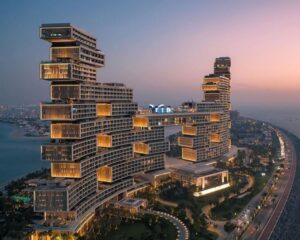
Baccarat opens in Downtown Dubai in Q4 2026, twin crystal-inspired towers designed by Studio Libeskind with 144 rooms and 49 branded residences overlooking the Burj Khalifa. A 260-year-old French crystal house in Studio Libeskind towers in Downtown Dubai is the most architecturally specific brand statement in Middle East luxury hotels 2026. It is also the most commercially legible: Baccarat is making a bet that ultra-luxury branded residences in Downtown Dubai can carry a price premium justified by crystal heritage and architectural significance rather than simply by location.
Gran Meliá opens at Port de La Mer in Jumeirah in Q4 2026, the Spanish brand’s first beachfront UAE property, 380 rooms and suites including 31 suites with private pools. The Spanish luxury brand entering Dubai’s beachfront market in the same quarter as Baccarat is the most pointed illustration of how competitive the Middle East luxury hotels 2026 market has become: two completely different brand stories, two completely different price architectures, one market.
And Wynn opened its marina in the UAE this week, October 6, redefining what a luxury hospitality brand can own in the region. The Wynn Marina is managed by IGY Marinas, the global leader in luxury marina management, and brings together the specialist infrastructure required by modern superyachts with the service and hospitality that define Wynn. A Las Vegas luxury brand extending into superyacht infrastructure in the UAE is the most unexpected Middle East luxury brand moment of the year.
The Middle East luxury hotels 2026 commercial intelligence every brand should act on
The Middle East luxury hotels 2026 story is the most commercially instructive available in global hospitality right now, and the instruction it offers is the same one that Amir Golbarg delivered at FHS 2026 this week.
The question is whether the hotels being built are right for the markets receiving them. Dubai has consistently absorbed new supply at premium rates and the appetite shows few signs of slowing. Saudi Arabia is constructing an entire luxury tourism ecosystem where almost none existed five years ago. The question is whether the hotel being built is the right hotel for the market it is entering, with a brand identity specific enough to justify its positioning, a product differentiated enough to sustain its rate and an operational capability sophisticated enough to deliver at the level its pricing promises.
Minor Hotels gave the Middle East luxury hotels 2026 clearest answer to that question today, October 6, by launching LIFE Longevity, a new wellness brand covering every season of life. The parent company of Anantara, which won Luxury Brand of the Year at the ULTRAs ceremony at the Tower of London five days ago, is simultaneously launching an entirely new wellness concept built around longevity science, preventive health and life-stage specific programming. It is the most commercially ambitious brand extension in Middle East luxury hotels 2026 and the clearest signal that the brands winning in this market are the ones building genuine product differentiation rather than adding rooms to a booming market and waiting for the demand to arrive.
The Middle East is building more luxury hotels than any region on earth. The brands getting the Middle East luxury hotels 2026 story right are the ones asking Golbarg’s question before they break ground: is this the right hotel?
Read next on The Pillar Edit: Case Study: how Saudi Arabia is disrupting luxury fashion with an $80 million private equity fund.
(Image source: amaala.com)