




Every September, fashion month arrives with the same rituals. The front rows fill up, the cameras point at the door and the reviews go up before the models have even changed.
And somewhere in all of that noise, a small number of brands are doing something that will matter long after the season is forgotten.
This September, six sustainable fashion brands are using fashion week to make a statement that is specific, operational and commercially real. Three at New York Fashion Week, which opened on September 10 and three at London Fashion Week, which opens on September 17. The Pillar Edit went looking for the sustainable fashion brands doing the actual work. Here is what we found.
1. Collina Strada ditch New York and show at a 500-acre sculpture park instead
Hillary Taymour could have shown anywhere. She chose a sculpture park.
Collina Strada, one of the most compelling sustainable fashion brands on the NYFW schedule, is taking its presentation to Storm King, 500 acres of outdoor landscape in New York’s Hudson Valley, where the rolling hills and the natural light become the backdrop for the collection. It is a decision that tells the industry everything about what this brand believes fashion is for.
The message is hard to miss. A brand built around climate awareness showing in one of the most significant natural landscapes within reach of New York. And the commercial numbers are there to prove it is working: business up 95 percent on Shopify. Sustainable fashion with genuine conviction is commercially viable. Among sustainable fashion brands, Collina Strada is the proof.
The brand has been building its materials practice through a partnership with TômTex, a Brooklyn-based biomaterials company developing proprietary biodegradable vegan materials that have appeared in Collina Strada accessories. At Storm King this week, the collection continues a creative methodology that treats sustainability as the starting point rather than the afterthought.
2. Conner Ives to debut at NYFW with a collection built entirely from vintage and deadstock
Conner Ives builds his entire label from fabric that already exists. That has always been the rule.
This season he will make his official NYFW debut as one of ten new additions to the CFDA calendar, showing a collection built entirely from upcycled and vintage materials. It is the most interesting debut this month and the most coherent argument available that sustainable fashion requires zero aesthetic compromise.
He trained at Central Saint Martins and worked with John Galliano at Maison Margiela. His work transforms vintage American sportswear, found fabrics and deadstock into pieces with a specific and recognisable identity. The sustainability is structural. It is built into the creative process from the very beginning, which means the work looks like itself rather than like a sustainability statement.
His upcoming NYFW debut is the most commercially interesting among sustainable fashion brands making their first appearance because it signals that the American fashion establishment, through the CFDA’s curatorial decisions, is actively choosing to elevate designers whose sustainability practice is fundamental rather than decorative. Among sustainable fashion brands making their debut this September, Conner Ives is the most commercially interesting new proposition coming up on the schedule.
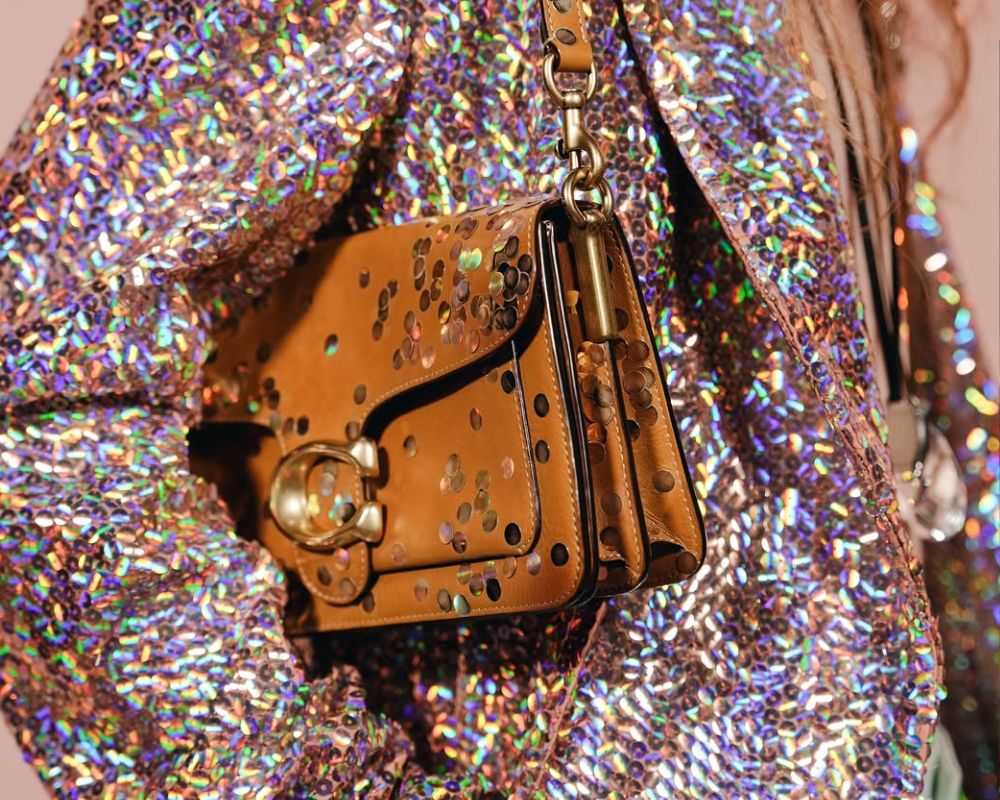
3. Coach is turning eighty years of old leather into something completely new
Coach has been making leather goods for over eighty years. Among sustainable fashion brands, it is making one of the most credible arguments of the season: new things from the old ones.
Presenting on the eve of New York Fashion Week, Coach continued its commitment to circularity as commercial strategy rather than obligation. Through its Coachtopia sub-brand, the brand has been reworking, repairing and repurposing existing leather into new collection pieces, using a craft heritage that gives the circularity argument a credibility that newer brands are structurally unable to replicate.
The brand’s history with leather, its archive of patterns and its deep manufacturing expertise make circularity genuinely credible at Coach in a way that it is less credible for brands without that heritage infrastructure. The sustainable fashion brands case for Coach is specific: a brand that has been making leather goods for over eighty years has the craft knowledge and the material relationships to rework, repair and repurpose those materials in ways that are structurally unavailable to newer brands. Coach’s circularity is heritage made productive rather than aspiration made decorative.
Among the sustainable fashion brands in New York this September, Coach is the most instructive example of what heritage looks like when it is put to genuinely productive use.
4. Stella McCartney will close LFW with 98 percent sustainable materials
Ninety-eight percent.
That is the proportion of Stella McCartney’s SS2027 collection that is made from sustainable materials. One hundred percent is cruelty-free. When she closes London Fashion Week this September, she will do it with the most specific and the most defensible materials claim of any sustainable fashion week brand on the calendar.
Behind that number sits the most extensive next-generation materials library in luxury fashion. Mylo mushroom leather. MIRUM plastic-free leather. UPPEAL apple leather. VEGEA grape leather. Kelsun seaweed yarn. KOBA recyclable fur-free fur.
The 98 percent applies to the entire collection. Already produced. Showing from September 17. Among sustainable fashion brands, that distinction matters more than almost anything else. Most sustainability claims at fashion week are targets for future seasons, or percentages applied to small capsule ranges that the brand will quietly discontinue. This is the whole collection. Every piece.
Stella McCartney announced in 2026 her appointment as the first industry ambassador for the M School at Central Saint Martins, bringing the next generation of fashion students into direct contact with her materials innovation practice. Twenty-five years of building the most principled sustainability model in luxury fashion is being formally recognised by one of the world’s most significant fashion education institutions. That recognition is the commercial validation that twenty-five years of operating losses and material innovation have been building toward.
5. Burberry is the only carbon neutral luxury brand in Britain
On September 21, Burberry will close London Fashion Week, the most commercially loaded moment in British fashion this month. Daniel Lee’s creative reset on one shoulder. The brand’s recovery story on the other.
Almost nobody will mention that the brand closing the show is also the only carbon neutral luxury brand in Britain. Burberry achieved carbon neutrality across all global operations in FY2021/22, validated by PricewaterhouseCoopers. Its net-zero target was validated by the Science Based Targets initiative in July 2022. It is targeting climate positive by 2040. It has a Regeneration Fund for carbon insetting projects. It is working with wool producers in Australia on regenerative agriculture.
Among sustainable fashion brands making commitments this season, these are the ones with independent validation and a timeline attached. That is a sustainability fact, independently verified.
Among sustainable fashion brands, Burberry is the most commercially significant because it demonstrates that a brand can execute a major creative reset and lead the industry on climate simultaneously. The two ambitions are complements rather than alternatives, and Burberry is the clearest available proof of that commercial argument. The brands still treating sustainability as a separate workstream from their core creative and commercial strategy will watch Burberry close London Fashion Week on September 21 and miss the most important lesson of the season.
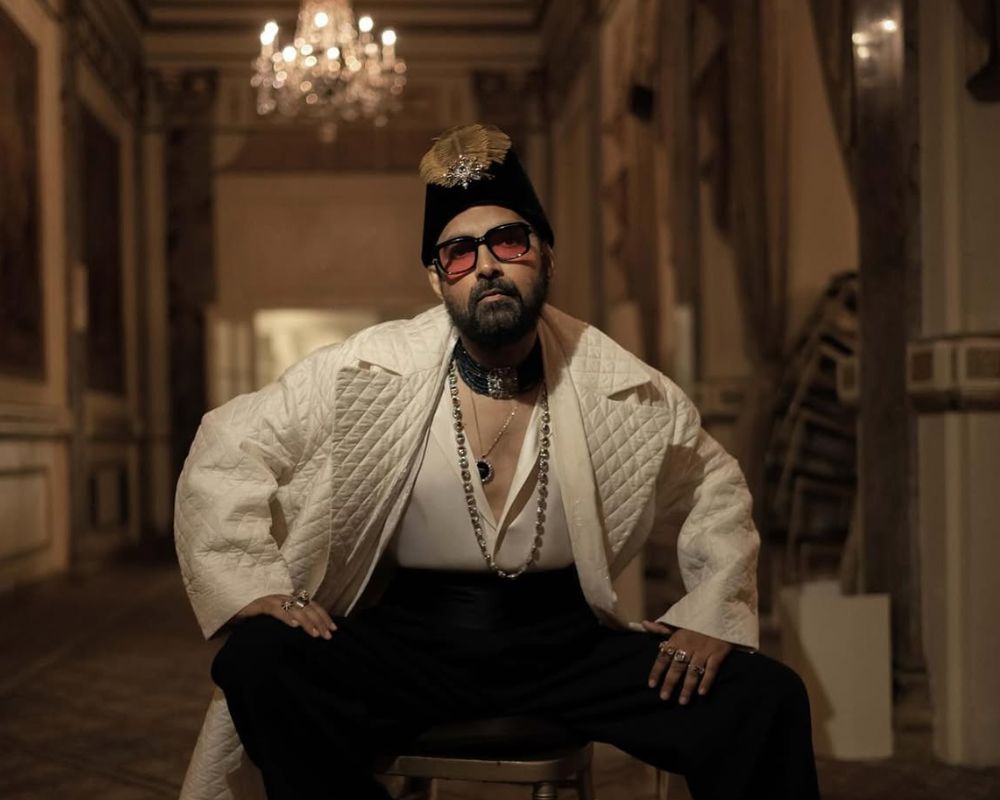
6. Every piece in Sabyasachi’s upcoming NYFW collection is handcrafted by Indian master artisans
On September 15, Sabyasachi will walk into New York Fashion Week with six pieces of high jewellery and one of the most quietly radical sustainability arguments on the entire schedule.
Every piece is handcrafted in India by master artisans working in an unbroken tradition of goldsmithing and gemstone setting that is among the oldest in the world. Small-batch. High-skill. Locally sourced. Built to last across generations.
He calls it craft. The sustainability follows.
Among sustainable fashion brands, Sabyasachi occupies a completely different position. His sustainability argument is rooted in craft preservation, in the idea that the most sustainable luxury object is the one made so well that replacement becomes irrelevant.
At a moment when provenance, traceability and genuine artisanal heritage are becoming the most commercially significant sustainability credentials a luxury brand can hold, Sabyasachi’s September 15 debut places Indian craft at the very centre of the sustainable fashion brands conversation. The craft is the statement. Everything else is decoration.
Read next on The Pillar Edit: Case Study: How Stella McCartney built a successful brand with no leather, no fur and no animal products.
(Feature image credit: coach/Instagram)