

Nine years ago, before the LVMH-Publicis story began, WPP created something extraordinary for LVMH.
It built L’Atelier, a bespoke agency constructed entirely around the world’s most powerful luxury group. In China alone, L’Atelier employed around 200 people, a dedicated team whose entire professional existence was devoted to planning and buying media for Louis Vuitton, Dior, Tiffany and Co., Bulgari, Fendi, Celine and every other LVMH maison across the Asia-Pacific region. The account was valued at between $450 million and $500 million in annual billings. It was, by any measure, one of the most significant luxury media relationships in the world.
Yesterday, the LVMH-Publicis shift made it end.
LVMH has quietly made a rather interesting move. From January 2027, its Asia-Pacific media and planning account will move from WPP Media to Publicis, covering the region apart from Japan, which remains with Dentsu.
What makes it interesting is how LVMH got there. There was no pitch, no RFP and no competitive process. The group simply decided to move the business. And that decision tells us something important about where luxury marketing is heading.
So why did LVMH choose Publicis?
The luxury industry runs on relationships. Brand principals and their agency partners build trust across years, sometimes decades, of working together on the most commercially sensitive communications decisions a luxury house makes. The idea that a relationship of this size and this duration could end without a competitive process is, by the normal conventions of the industry, extraordinary.
Sources told Campaign that LVMH wants to move away from the tightly controlled whitelist system on the current account towards a less labour-intensive, AI and data-driven model. This change would allow the agency to service the client with a smaller team.
That is the sentence behind the LVMH-Publicis decision that the luxury industry needs to read carefully. LVMH is replacing a 200-person dedicated agency team with a smaller, AI-driven operation. The tightly controlled whitelist system, which required human oversight of every media placement to protect brand safety and maintain the precise positioning that luxury brands demand, is being replaced by an algorithmic model that Publicis has been building since it acquired Epsilon in 2019 and accelerated through its CoreAI platform.
Publicis already handles a large part of LVMH’s North American media business, which it picked up in 2023, and has since added US media duties for Tiffany & Co.. The APAC win completes a global consolidation that gives Publicis control of LVMH’s media operations across North America and Asia-Pacific simultaneously, covering the two most commercially significant growth regions for the group’s maisons.
The question every luxury brand professional should be asking is the one the luxury press is failing to ask: what does it mean when the world’s most commercially sophisticated luxury group decides that 200 human media specialists can be replaced by an AI-driven model?
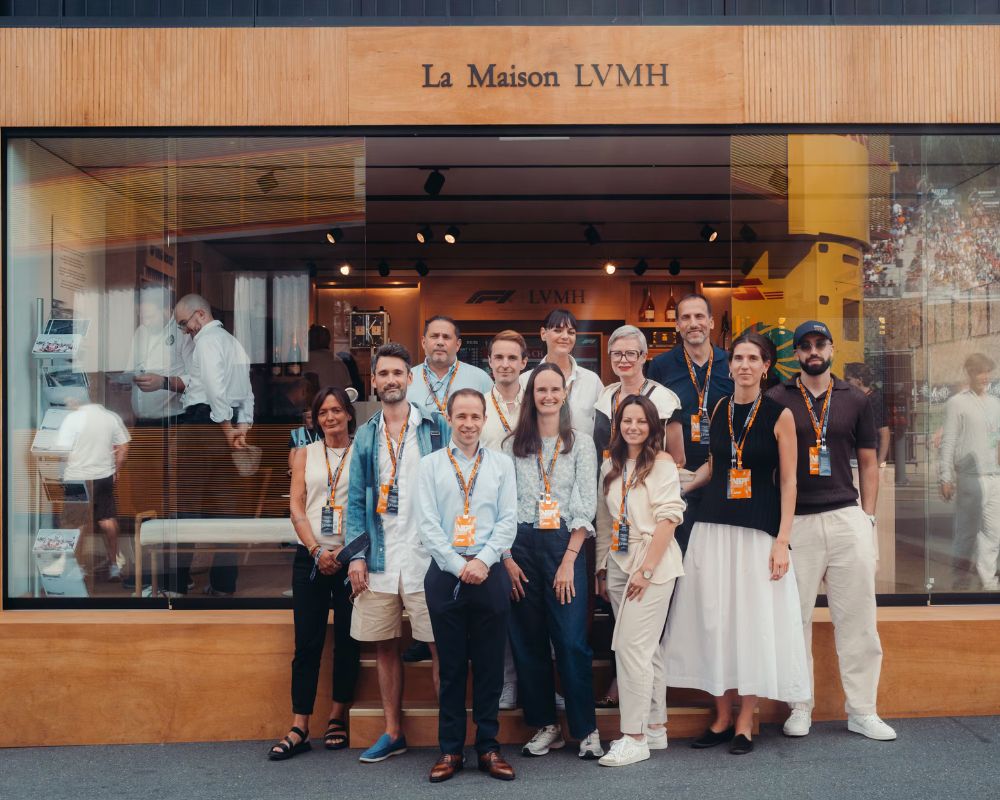
What the LVMH-Publicis shift means for the future of luxury marketing
The LVMH-Publicis decision published yesterday is the most commercially significant signal in luxury marketing in 2026, and understanding it requires reading it as a brand strategy decision rather than a media industry story.
LVMH is the benchmark luxury organisation. When it makes a structural change to how it builds and deploys its marketing infrastructure, the brands watching it, Kering, Richemont, Chanel, Hermès and every independent luxury house, begin asking themselves whether they need to make the same change. The nine-year WPP relationship was itself the benchmark for how luxury brands build dedicated agency partnerships. The fact that LVMH ended it in favour of an AI-driven model signals that the benchmark has moved.
Publicis dominated 2025 new business with $10 billion in wins and slim losses, widening the gap as competitors like WPP stumbled. The WPP-LVMH loss is the most visible single account departure in a broader pattern. WPP’s earnings have been under pressure from AI disruption across its client base, and the LVMH decision is the most commercially legible proof that the disruption is reaching even the most relationship-dependent category in global marketing.
For luxury brands, the commercial implications are specific. The tightly controlled whitelist model that WPP’s L’Atelier maintained for LVMH was expensive, slow and human. It was also extraordinarily effective at protecting brand safety, maintaining the precise media environment that luxury brands require and building the deep contextual understanding of luxury consumer behaviour that makes media planning at this level genuinely sophisticated. The question LVMH has answered with the LVMH-Publicis shift is whether an AI model can do all of that at lower cost. The answer, implicit in the decision, is yes.
What happens to WPP and what it means for the agency industry
Mark Patterson, global president of markets and business operations at WPP Media, said it had been a privilege to serve as LVMH’s growth partner across Asia Pacific over the past nine years, a period of remarkable transformation.
The wording reads like a gracious exit from a relationship WPP would have preferred to continue. Yet the statement leaves some obvious questions unanswered: what happens to L’Atelier, the 200-person team built specifically around the account, and what does the loss mean for WPP Media’s wider APAC operation, which has just lost its most prestigious luxury client at a moment when the region is seeing its strongest luxury growth since the pandemic?
Meanwhile, LVMH is also rebalancing its European media. LVMH is shifting part of its European media business from Publicis to Havas, while maintaining its US partnership with Publicis. Havas’s Argentina-based agency Forward Media, already the media agency of record for LVMH in Italy and Latin America, will now take on additional European markets.
The full picture of the LVMH-Publicis shift is more complex than a simple account move. LVMH is operating a multi-agency model by region, with Publicis handling North America and APAC, Havas covering parts of Europe and Dentsu retaining Japan. Bringing Publicis into two of its fastest-growing regions, alongside a broader reshaping of its European media relationships, points to a deliberate rethink of how LVMH manages a global operation spanning more than 75 maisons and virtually every category of luxury.
What luxury brands should take from the LVMH-Publicis shift
The LVMH-Publicis shift is the most specific brand intelligence for every luxury house currently running a traditional agency model for its media operations, and the commercial lesson is specific enough to be immediately useful.
The first lesson is that relationship tenure is no longer a sufficient reason to retain an agency partner. LVMH ended a nine-year relationship without a pitch because it had a specific and commercially defensible reason to do so. Any luxury brand that is retaining its agency partner primarily on the basis of the relationship rather than on the basis of the model’s commercial performance should be asking whether that logic would survive the same scrutiny LVMH applied.
The second lesson is that AI-driven media models are no longer a future consideration for luxury brands. LVMH, the most commercially sophisticated luxury organisation in the world, has decided that an AI-driven model is ready to replace a 200-person dedicated human team for its most commercially critical regional markets. That decision is the most credible available validation of AI media capability in the luxury context, and it comes from a source whose commercial judgment every luxury brand trusts.
The third lesson is about scale and consolidation. The LVMH-Publicis shift gives Publicis oversight of LVMH’s media across North America and APAC simultaneously, creating a single view of the group’s media investment and consumer data across the two regions that matter most for its growth. For luxury brands still running fragmented agency relationships by market, the LVMH model suggests that consolidation around a single partner with genuine AI capability is the direction that commercial logic is pointing.
The world’s most powerful luxury group has just made a very telling move in media, and AI sits at the heart of the shift. The LVMH-Publicis decision signals a new benchmark for what luxury brands may expect from their agency partners, raising a bigger question for the industry: who will move next?
Read next on The Pillar Edit: Jin, Kate Moss, Shawn Mendes: how Demna is making Gucci culturally irresistible again.
(Image credits: LVMH.com)