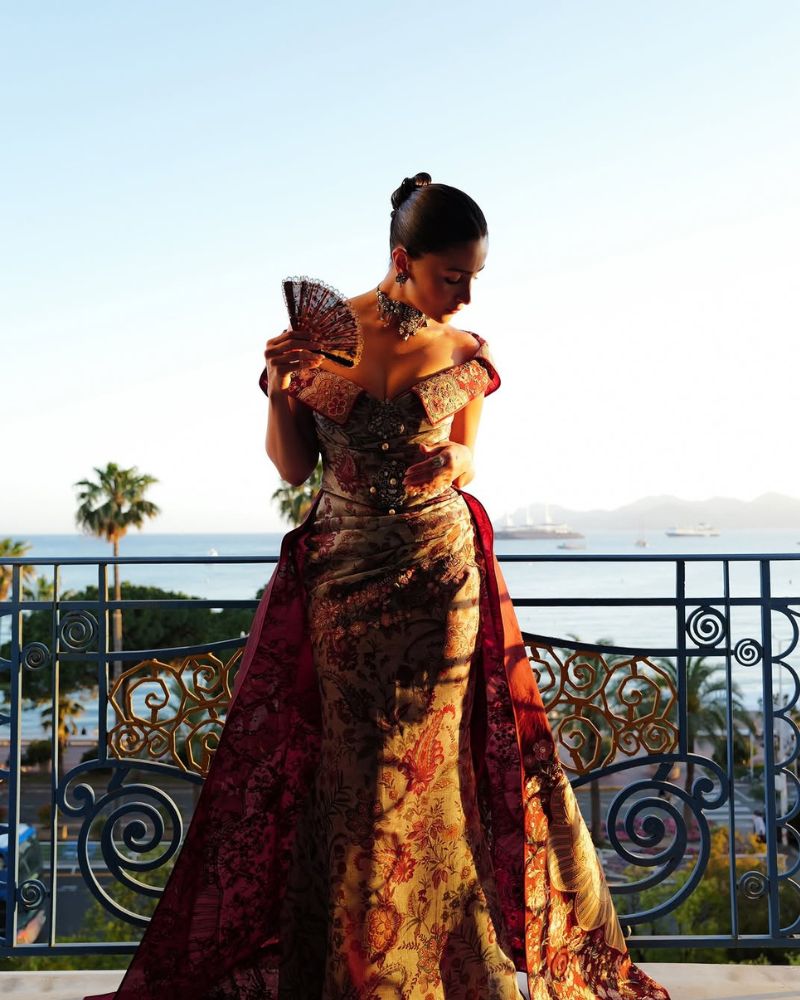
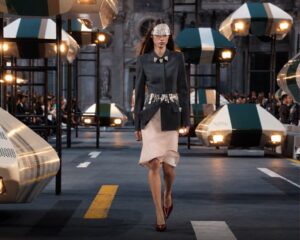
The death of quiet luxury at Cannes 2026 became impossible to ignore, where the red carpet abandoned years of restraint in favour of spectacle, cinematic glamour, and fashion engineered for maximum visibility. For nearly three years, luxury fashion operated under the assumption that real wealth no longer needed visibility in order to feel aspirational. Logos disappeared from runways, celebrity wardrobes became intentionally restrained, and entire aesthetics were built around the idea that the most expensive things in the room should also appear the least noticeable.
But watching Cannes this year, I couldn’t help noticing how dramatically the mood had shifted.
The gowns were sharper, the diamonds were louder, and the beauty direction felt unapologetically polished again. Instead of understated dressing designed to whisper status, Cannes embraced glamour that demanded to be photographed, reposted, and dissected online. The shift was not subtle and that is precisely the point. Because luxury brands are no longer dressing celebrities for exclusivity alone. They are dressing them for algorithms.
Cannes has quietly become luxury’s $1.1 billion marketing stage
What unfolded on the Cannes red carpet this year was less about fashion trends and more about visibility economics. According to a Cannes Film Festival report by Launchmetrics, the festival generated an estimated $1.1 billion in Media Impact Value in 2025, cementing its position as one of luxury’s most commercially powerful global events. A separate report by Net Influencer revealed that Instagram alone generated nearly $203 million in earned media value during the festival, proving that the modern Cannes red carpet now functions less like a celebrity appearance and more like a real-time global content machine.
And honestly, once you look at those numbers, the strategy becomes impossible to ignore.
A minimalist beige gown may communicate taste in person, but it struggles to dominate TikTok feeds, paparazzi grids, fan edits, or Instagram carousels moving at algorithmic speed. A dramatic couture silhouette, however, can generate millions of impressions within hours. Fashion houses understand this now, which is why Cannes 2026 felt intentionally louder, sharper, and more cinematic than the muted “stealth wealth” aesthetic that defined the post-pandemic luxury era.
Quiet luxury stopped feeling exclusive the moment TikTok discovered it
Quiet luxury succeeded because it arrived during a cultural moment obsessed with restraint after years of hyper-visibility and logo fatigue. Consumers gravitated toward investment dressing, neutral palettes, and aesthetics that projected permanence rather than excess. Looking wealthy became less aspirational than looking culturally fluent enough to avoid obvious displays of wealth. The problem is that fashion trends collapse the second they become universally legible.
Once TikTok transformed “old money dressing” into an endlessly repeated formula of cream knitwear, oversized sunglasses, and succession-core tailoring, the fantasy lost its exclusivity. Quiet luxury stopped feeling insider and started feeling performative. And if I’m being honest, by the time every second reel started looking like a “how to dress rich” tutorial filmed in neutral tones, the aesthetic already felt culturally exhausted.
Cannes feels like luxury’s response to that exhaustion.
Quiet luxury at Cannes: Fashion brands want cultural domination
Luxury brands are rediscovering the value of visual impact because spectacle performs better online than restraint ever could. Cannes 2026 proved that the industry has quietly moved away from subtle minimalism and back toward emotionally charged fashion moments capable of dominating the internet in real time.
According to influencer marketing intelligence platform WeArisma, L’Oréal generated €93.6 million in earned media value during Cannes 2025, while Chopard generated €43.3 million and more than 1,000 brand mentions through celebrity placements and red carpet amplification. The numbers reveal how aggressively luxury brands are investing in visual visibility rather than understated elegance.
The strategy is obvious: glamour scales better digitally.
This year’s Cannes looks leaned heavily into sculptural couture, oversized jewellery, metallic textures, dramatic trains, archival references, and beauty designed specifically for flash photography. Even celebrities who traditionally leaned minimalist appeared noticeably more polished and theatrical. The industry understands that visual drama now functions as cultural currency.
And personally, I don’t think this is simply fashion becoming louder again. I think luxury brands have realised that subtlety no longer creates the same emotional reaction online that fantasy does.
Cannes red carpets are now designed for screenshots, not photographers
The modern red carpet no longer exists solely for the photographers standing outside the Palais. Every celebrity appearance is now created with the expectation that it will immediately circulate across TikTok edits, YouTube breakdowns, Instagram reels, fan accounts, Reddit discussions, and “best dressed” rankings within minutes. This is precisely why Cannes has become one of luxury’s most strategic global stages.
According to luxury research firm Digital Luxury Group, online searches related to Schiaparelli surged by more than 1,900% after Bella Hadid wore the house’s surreal lung necklace at Cannes in 2021. The moment became a case study in how red carpet fashion now operates as instant commercial visibility, capable of generating more cultural traction than traditional advertising campaigns.
Luxury no longer wants to whisper wealth. It wants to dominate feeds.
Even Cannes hotels have become part of the luxury performance economy
The spectacle extends far beyond the red carpet itself. Hotels such as Hotel du Cap-Eden-Roc and Carlton Cannes have evolved into highly visible luxury stages where yacht arrivals, terrace interviews, after-parties, and invitation-only dinners become part of the broader content ecosystem surrounding Cannes.
Increasingly, the atmosphere around the festival generates almost as much media attention as the films themselves. Online conversations across Reddit, TikTok, and fashion forums now treat Cannes as a hybrid ecosystem of cinema, influencer culture, hospitality branding, celebrity commerce, and luxury marketing.
The end of quiet luxury at Cannes: 2026 proved that fashion wants fantasy again
More than anything, the death of quiet luxury at Cannes signals that consumers may once again be gravitating toward fantasy after years of aesthetic restraint. Fashion thrives on aspiration, spectacle, emotion, and transformation, and there is only so much excitement audiences can derive from tonal knitwear and understated tailoring before craving something more visually expressive.
Watching Cannes unfold this year, it genuinely felt like the industry was collectively done with understatement. Whether it was Bella Hadid’s high-impact Schiaparelli moments, Naomi Campbell’s archival glamour, or the return of sculptural couture silhouettes across celebrity appearances, Cannes 2026 carried a level of theatricality that fashion has intentionally avoided for years. Even beauty felt sharper and more cinematic, replacing the understated “clean girl” aesthetic that dominated post-pandemic celebrity culture.
Cannes 2026 felt important because it confirmed something the industry has quietly understood for months: subtlety no longer dominates culture the way it once did.
(Feature image credit: aliaabhatt/Instagram)
FAQ
What is quiet luxury in fashion?
Quiet luxury refers to an understated fashion aesthetic built around minimal branding, timeless tailoring, neutral palettes, and discreet displays of wealth. The trend became widely popular through brands like Loro Piana, The Row, and Brunello Cucinelli, as well as the rise of “old money” aesthetics on TikTok.
Which celebrities defined the Cannes 2026 red carpet aesthetic?
Celebrities such as Bella Hadid and Naomi Campbell helped define Cannes 2026’s return to high-glamour dressing through dramatic couture silhouettes, archival fashion moments, and statement jewellery looks that dominated online conversations.
What are the biggest Cannes fashion trends in 2026?
The biggest Cannes fashion trends in 2026 include sculptural couture gowns, oversized diamonds, metallic textures, archival fashion references, old Hollywood-inspired beauty, and theatrical celebrity styling designed for social media visibility.