
There is a moment in the life of every great city when it stops competing and starts leading. Paris had it in the nineteenth century. New York had it in the twentieth. And on a stretch of coastline on Saadiyat Island, Abu Dhabi is engineering its own version of that moment with a precision and ambition that the luxury travel world has not yet fully registered.
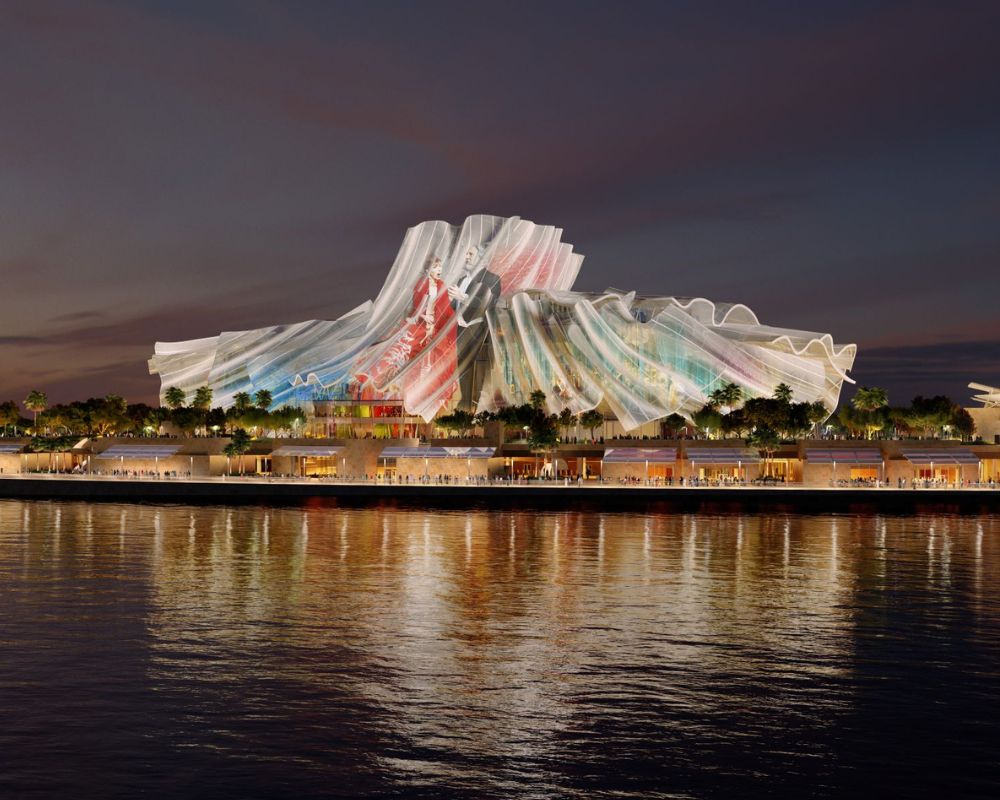
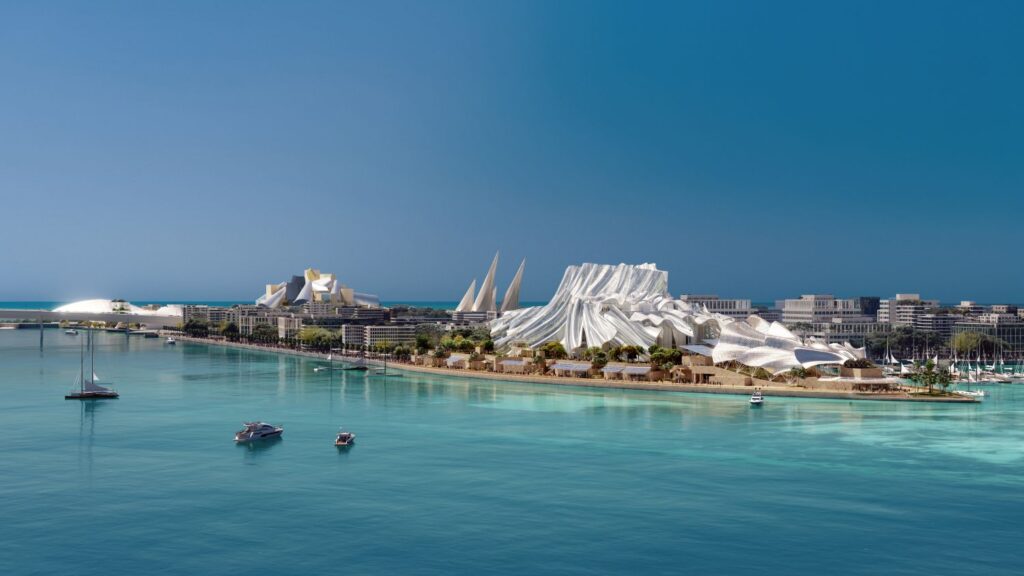
In June 2026, the Department of Culture and Tourism Abu Dhabi announced the commencement of construction on Dar al Funoon Abu Dhabi (House of the Arts), a Frank Gehry-designed performing arts institution set to open in 2030. The venue will host world-class opera, ballet, theatre, jazz and live performances throughout the year across four distinct venues with a combined capacity of more than 6,000. It will also feature a rooftop terrace, an orchestra pit designed for 120 musicians, artistic residency programmes and international co-productions, all housed within a striking, fabric-inspired structure that appears to billow like cloth suspended in the Gulf breeze.
By any measure, Dar al Funoon Abu Dhabi is one of the most ambitious cultural investments in the world right now. And for the luxury traveller who has seen everything, it may be the most compelling reason yet to put Abu Dhabi at the very top of the list.
Dar al Funoon Abu Dhabi and the making of the world’s most important cultural address
Picture Saadiyat Island as it stands today. The Louvre Abu Dhabi, designed by Jean Nouvel, opened in 2017. The Zayed National Museum by Foster and Partners is under construction. The Natural History Museum by Mecanoo has opened. TeamLab Phenomena Abu Dhabi is operating. The Guggenheim Abu Dhabi, also designed by Frank Gehry, is expected to open later in 2026.
That is the Louvre. The Guggenheim. Foster and Partners. Jean Nouvel. Mecanoo. TeamLab. All on one island.
No cultural district anywhere in the world has assembled this concentration of landmark institutions within such a short span of time. Now, joining them is Dar al Funoon Abu Dhabi, completing the district in a way only a performing arts institution can.
Museums preserve history. A performing arts venue creates it in real time. Every opera, ballet, theatre production and concert exists for a single moment, making each performance unique and impossible to replicate. Increasingly, those live cultural experiences are exactly what the world’s most discerning travellers are seeking.
Frank Gehry’s final act and why it matters for Dar al Funoon Abu Dhabi
There is a detail about Dar al Funoon Abu Dhabi that gives the story a weight no press release can fully capture.
Frank Gehry passed away in December 2025 at the age of 96. The building whose construction commenced in June 2026 is among his final completed works. The man who gave the world the Guggenheim Museum Bilbao, the Walt Disney Concert Hall in Los Angeles, the Fondation Louis Vuitton in Paris and the Pierre Boulez Saal in Berlin spent a career asking what a building can do for the art it holds. And as one of his last gifts to the world, he left behind a performing arts institution in the Arabian Gulf.
Gehry envisioned one building on Saadiyat Island to hold objects and another to hold voices, instruments and performers. The Guggenheim Abu Dhabi will be the former. Dar al Funoon Abu Dhabi is the latter. Together they represent the complete expression of one architect’s lifelong dialogue with culture, and they sit side by side on the same island.
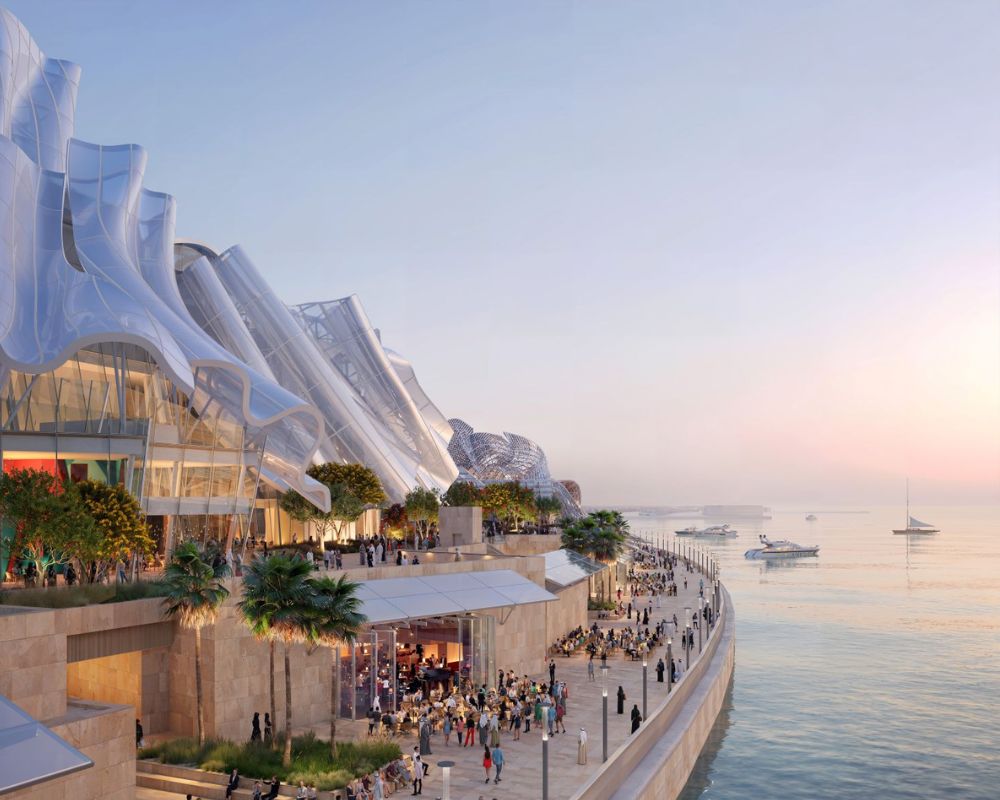
Gehry’s design for Dar al Funoon Abu Dhabi was inspired by the rhythms of the local landscape and the movement of wind and water. The result is a cluster of pale, billowing forms pulled together like fabric around the main halls. Its transparent facade is designed to bring the public into the artistic process rather than keep them at a distance. The design team described it as a building that reveals the creative process while strengthening the relationship between the building, the city and its audiences, turning artistic practice into a shared public experience.
For the luxury traveller, that distinction matters enormously. The building invites participation rather than passive observation. It offers a sense of belonging, and as every great luxury brand understands, belonging is the most compelling invitation of all.
What the world’s most discerning travellers are actually looking for
The ultra-high-net-worth traveller of 2026 has already experienced many of the world’s most celebrated destinations, from the Maldives and Kyoto to the Amalfi Coast and the Swiss Alps. They have stayed in legendary palace hotels, dined at three-Michelin-starred restaurants and travelled by private charter to the world’s most exclusive islands.
What they increasingly seek is something impossible to replicate: a performance that exists for one evening, an artistic residency found in only one destination, or a building created by an architect whose work can never be repeated. In the luxury economy, rarity is increasingly defined by experience.
Mohamed Khalifa Al Mubarak, Chairman of DCT Abu Dhabi, framed the ambition with precision: “Dar al Funoon Abu Dhabi will be a permanent home for performance at the highest international level, bringing together leading artists, companies and creative talent from the UAE, the region and across the world. Through artistic residencies, international partnerships and world-class productions, it will expand opportunities for cultural exchange, inspire new generations of creatives, and further strengthen Abu Dhabi’s position as a global centre for creativity, exchange and artistic excellence.”
Every word in that statement is carefully chosen to communicate a long-term vision. The commitment to permanent programming, the highest international standards, artistic residencies and global partnerships reflects an ambition that extends far beyond architecture. These are the qualities that transform a venue into a cultural destination. For the luxury traveller, they also create a compelling reason to return, again and again.
The strategic sequencing Abu Dhabi got exactly right
What makes Dar al Funoon Abu Dhabi especially significant is the strategy behind it as much as the architecture itself. The building is the culmination of a much larger cultural vision.
Abu Dhabi established the ecosystem first through the Louvre, world-class museums, galleries, its UNESCO Creative City of Music designation in 2021, the Abu Dhabi Festival, Berklee Abu Dhabi, the Bait Al Oud music academy and International Jazz Day 2025. Dar al Funoon emerges as the centrepiece of that carefully orchestrated cultural landscape, and the sequence is what gives the project its strength.
It is the kind of long-term thinking more commonly associated with the world’s leading luxury brands, applied at the scale of an entire emirate.
The most successful luxury houses build the world before they unveil the flagship. Heritage, craftsmanship and cultural relevance create the foundation, ensuring every new launch carries greater meaning from the moment it arrives. Abu Dhabi has followed the same playbook for more than two decades. With Dar al Funoon Abu Dhabi set to open in 2030, that long-term cultural strategy reaches its fullest expression.
What Dar al Funoon Abu Dhabi means for luxury hospitality on Saadiyat Island
The arrival of Dar al Funoon Abu Dhabi will do something very specific to the luxury hospitality landscape on and around Saadiyat Island and it will extend the reason to stay.
A museum visit takes half a day. A gallery takes an afternoon. But a performing arts institution offering 365 days of programming, opera one evening, jazz the next, an experimental theatre production the night after, gives a luxury traveller a reason to stay for a week rather than a weekend. It transforms Abu Dhabi from a cultural stopover into a cultural destination in the truest sense of that word.
For the luxury hotels already operating on and around Saadiyat Island, that extension of dwell time is significant. The impact extends across the luxury hospitality economy, driving longer stays, higher restaurant footfall, increased spa bookings and greater demand for premium experiences. More importantly, it positions Abu Dhabi to compete with the world’s leading cultural capitals through the depth, diversity and continuity of the experiences its institutions create together, rather than through the strength of individual landmarks alone.
A closing thought
One line in the Department of Culture and Tourism Abu Dhabi’s announcement stands out. His Excellency Mohamed Khalifa Al Mubarak described Dar al Funoon Abu Dhabi as being “rooted in our values, shaped by our people, and open to the world.”
Those words capture the ambition behind the project. Abu Dhabi is building a long-term cultural identity, one that places the emirate alongside the world’s leading cultural capitals. When Dar al Funoon opens in 2030, it will stand as the defining expression of that vision.
The only question worth asking now is whether you’ll be there when the curtain rises in 2030. By then, Abu Dhabi will have redefined what luxury cultural travel can be. At the heart of that vision is the performing arts, and the enduring power of experiences that give travellers a reason to return.
Knowing where to go is only half the story. Knowing how to get there seamlessly is the other half.
Read next: From chauffeurs to insurance: The firms behind luxury travel’s most seamless experiences.