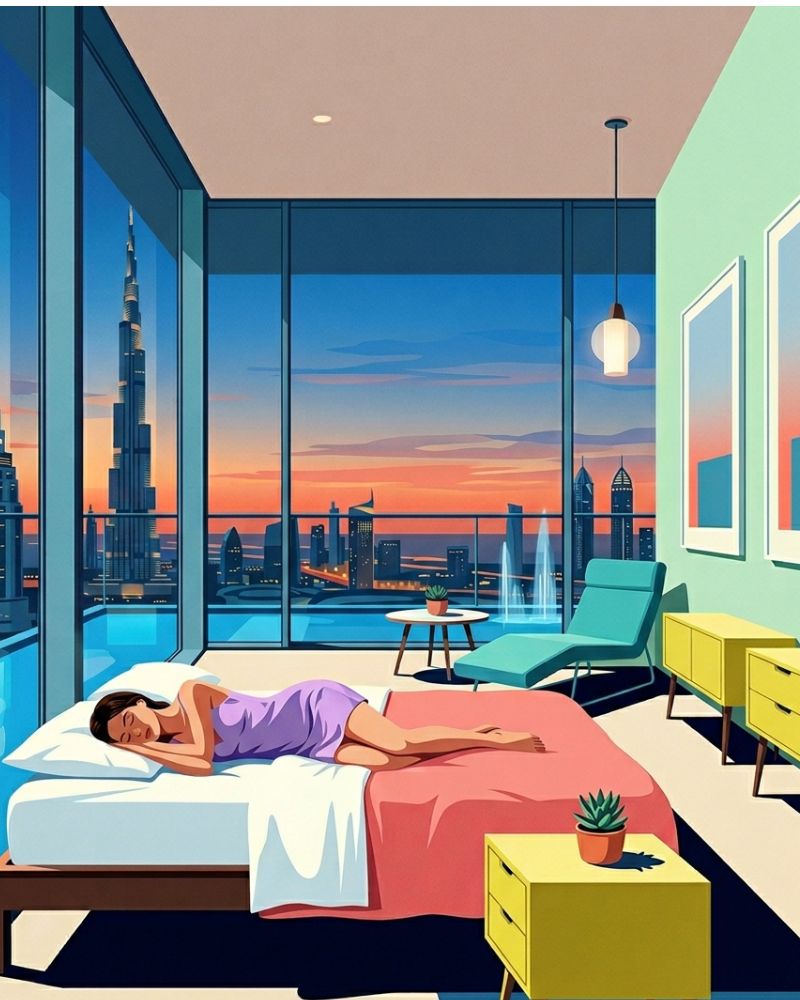


Dubai wellness hospitality is quietly shifting from a world defined by excess to one increasingly shaped by recovery, longevity, and performance. In cities like Dubai, luxury hospitality is no longer only about scale or spectacle. It is increasingly about how well a guest sleeps, recovers, and functions after their stay.
For decades, luxury travel was built around excess. Bigger suites, skyline views, private beaches, celebrity chefs, and highly visible experiences defined what premium hospitality looked like. However, a quieter shift is now underway, where sleep quality and recovery outcomes are becoming just as valuable as design or location.
This is where sleep tourism Dubai is beginning to emerge as a serious category. Brands such as SIRO and SHA, are already positioning sleep, recovery, and longevity as core pillars of luxury hospitality rather than add-on wellness experiences.
Dubai wellness hospitality is shifting from experience to outcomes
The modern luxury traveller is no longer only seeking escape. Instead, they are actively seeking recovery. Burnout, digital fatigue, stress overload, and high-performance work culture have created a traveller who increasingly evaluates a hotel not just on aesthetics, but on outcomes: how rested they feel, how well they sleep, and how quickly they recover. As a result, hotels are now being designed around circadian lighting, sleep optimisation menus, acoustic engineering, meditation programming, recovery diagnostics, and nervous system regulation. In this context, sleep tourism Dubai is no longer niche. It is becoming a logical extension of how luxury travel is evolving. According to the Global Wellness Institute, wellness tourism is projected to surpass $1.3 trillion by 2028, making it one of the fastest-growing segments in global travel. Within this, sleep and recovery are increasingly central to demand rather than secondary wellness services.Why sleep tourism Dubai is becoming a new form of status
Interestingly, sleep tourism Dubai is also becoming a subtle new status signal. Luxury was once defined by visibility: what could be seen, photographed, and shared. Today, however, status is increasingly internal. It is defined by control over time, health, energy, and recovery. Being able to invest in better sleep and deeper restoration signals a different form of wealth, one rooted in longevity rather than excess. This shift is visible in how Six Senses is expanding its sleep-focused hospitality model, including Six Senses The Palm Dubai and the upcoming Six Senses Residences Dubai Marina, both designed around integrated wellness and biophilic living. Similarly, SIRO is building performance-led hospitality experiences. Across all of these, the direction is consistent: luxury hospitality is moving from escape to optimisation.The future of Dubai wellness hospitality is outcome-driven
Dubai is uniquely positioned to lead this shift. The city sits at the intersection of luxury real estate, global mobility, high-performance lifestyles, and wellness-led development. As a result, Dubai wellness hospitality is evolving in parallel with a growing population of founders, executives, athletes, and long-stay residents focused on longevity and recovery. Unlike traditional wellness tourism, this shift is not limited to short retreats. Instead, it is expanding into integrated stays and residential experiences designed to improve sleep quality, recovery, and long-term wellbeing.Conclusion: Sleep is the new luxury currency
Sleep is no longer just a biological necessity. Within sleep tourism Dubai, it is becoming a designed experience, a measurable outcome, and potentially one of the most valuable categories in future hospitality. And in a city like Dubai, where luxury constantly reinvents itself, the real transformation is already underway.FAQ
Which hotels are leading wellness hospitality in Dubai?
Brands such as Six Senses, SIRO, and SHA Wellness Clinic are among the key players shaping wellness-led hospitality in and around Dubai, with a strong focus on recovery, fitness, sleep, and longevity experiences.
How big is the wellness tourism industry?
According to the Global Wellness Institute, wellness tourism is projected to surpass $1.3 trillion by 2028, making it one of the fastest-growing sectors in global travel, with sleep and recovery becoming increasingly important sub-segments.
Why is Dubai well positioned for wellness hospitality?
Dubai has strong infrastructure in luxury hospitality, real estate, global connectivity, and high-income travellers, making it an ideal market for wellness-driven and recovery-focused luxury experiences.