




I have stayed in enough “sustainable” luxury hotels to recognise the formula instantly. There is usually a polite card beside the bed asking guests to reuse towels, a farm-to-table breakfast involving heirloom vegetables with biographies, and perhaps a discreet row of solar panels positioned somewhere nobody will ever actually see. Sustainability, in most luxury hospitality spaces, often feels like a beautifully marketed side note. So when I first heard about the latest Six Senses sustainability projects in Kyoto and Miami, I expected more of the same. A little reclaimed wood, some bamboo straws, a wellness menu with chlorophyll shots and lofty intentions.
Instead, what Six Senses is building feels far more ambitious. The new Six Senses sustainability strategy is not about layering eco-conscious features onto traditional luxury hotels. It is about designing properties where sustainability shapes the architecture, operations, guest experience, and even the long-term environmental impact of the destination itself. In a hospitality industry where “green luxury” is often reduced to aesthetics, that distinction feels significant. Building responsibly inside dense urban centres like Kyoto and Miami is a far more complex challenge.
That is precisely why the latest Six Senses sustainability developments matter.
Six Senses Kyoto turns sustainability into an emotional experience
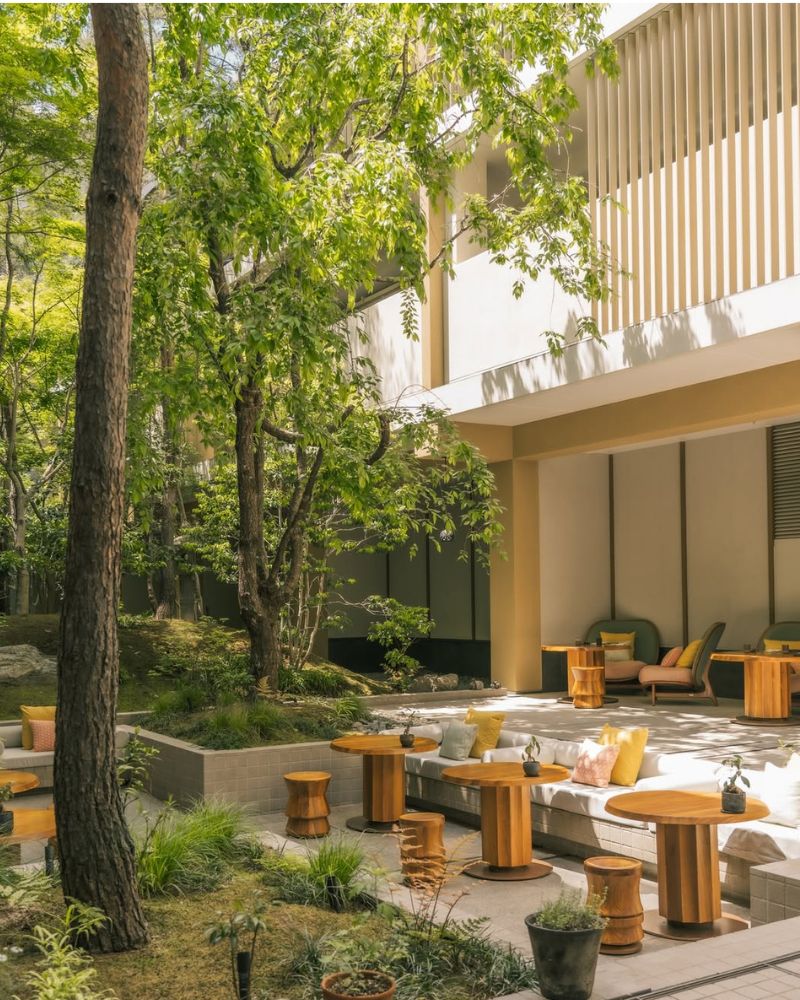
What makes Six Senses Kyoto so fascinating is not just the design, but the larger sustainability idea behind it. The hotel sits in Kyoto’s historic Higashiyama district, surrounded by tourists, cafes, traffic lights, and the constant rhythm of city life. Yet the moment you enter the property, the atmosphere shifts completely. The noise softens. The pace slows down. Suddenly, the city feels far away without ever actually disappearing.
For years, sustainable luxury hospitality has relied on escape. However, cities are where most environmental pressure actually exists. So rather than building another remote eco-retreat, Six Senses Kyoto asks a far more interesting question: what if urban hospitality itself could feel restorative, nature-connected, and environmentally intelligent? That idea shapes the entire property.
Through biophilic design, landscaped courtyards, seasonal planting, natural materials, and soft light transitions, the hotel brings nature directly into the guest experience. Instead of treating greenery as decoration, the architecture uses it to influence mood, stillness, and emotional comfort.
The guest experience feels intentionally restorative
What makes the hotel especially compelling is how subtly it changes your emotional rhythm. The muted interiors slow the visual pace, the greenery softens urban noise, and the architecture creates a feeling of calm that feels increasingly rare in modern luxury hospitality. Instead of treating wellness as an add-on, the property integrates it directly into the guest experience.
Importantly, the sustainability measures feel equally seamless. Drinking water is filtered and bottled on-site in reusable glass bottles to reduce plastic waste and transport emissions. Waste reduction systems operate across dining spaces, while local sourcing supports Kyoto artisans and regional producers.
The Earth Lab, a signature across many Six Senses sustainability projects, introduces guests to biodiversity, circular living, and local environmental initiatives in ways that feel immersive rather than performative. Even the wellness philosophy reflects this larger mindset. Global Wellness Pioneer Anna Bjurstam helped shape experiences that connect personal wellbeing with environmental awareness rather than escapism.
Perhaps that is what makes Six Senses Kyoto feel so modern. The hotel does not ask guests to sacrifice luxury for sustainability. Instead, it quietly suggests that the future of luxury may depend on spaces that reconnect people to nature, slowness, and ecological intelligence even within the middle of a city.
The urban blueprint: Bringing eco-resort DNA to the concrete jungle
If Kyoto feels quiet and meditative, Six Senses’ actual upcoming urban rollouts reveal a much sharper, future-facing chapter for the brand. Look no further than the highly anticipated openings in London and Tel Aviv. Both projects sit firmly within the brand’s official global pipeline under IHG Hotels & Resorts, serving as the ultimate test cases for translating a wellness-led luxury philosophy into major metropolitan hubs.
Instead of hiding behind vague eco-conscious buzzwords, these high-density properties are tackling the real logistical headaches of the modern city. The Tel Aviv location, for example, is a complex preservation project spanning five historic buildings, and it is actively tracking to achieve a strict LEED Platinum certification.
Across all these new urban developments, Six Senses is enforcing its mandatory corporate performance metrics rather than cutting corners for the city crowd. This means high-efficiency mechanical systems, superior indoor air quality, localized zero-waste programs run out of their on-site Earth Labs, and a total ban on single-use plastics. It is a calculated move that successfully shifts the definition of city luxury away from mere aesthetics and directly into high-performance, measurable sustainability.
Why Six Senses sustainability projects feels different
What makes the latest Six Senses sustainability projects genuinely compelling from a traveller’s perspective is the idea that guests are no longer passive consumers of a destination. At many luxury hotels, sustainability remains largely invisible. Guests participate only indirectly, perhaps by declining housekeeping or reusing towels. Here, the relationship feels far more active.
The Earth Labs encourage environmental participation. Local sourcing creates stronger regional economic ecosystems. Conservation initiatives directly connect guest experiences with ecological outcomes. Even the architecture itself encourages a more conscious relationship with urban environments, natural light, air quality, water systems, and biodiversity.
For decades, high-end hospitality largely sold the fantasy of escape. Escape from cities, stress, routines, and responsibility. But the newest Six Senses sustainability model suggests something more interesting: that luxury might increasingly revolve around intelligent coexistence rather than isolation.
You still experience extraordinary design, exceptional wellness programming, beautiful suites, and world-class service. But alongside that, there is a growing sense that the destination itself benefits from your presence rather than suffers because of it.
Discover more stories on luxury, sustainability, design, and the future of travel in our Intelligence section.
Image credit: sixsenseskyoto/Instagram
FAQ
Where is Six Senses Kyoto located?
Six Senses Kyoto is located in Kyoto’s historic Higashiyama district, close to Toyokuni Shrine and the Kyoto National Museum. The hotel officially opened in 2024 and blends biophilic design with Japanese wellness traditions and sustainability-focused hospitality.
What makes Six Senses’ new city hotels structurally different from standard luxury properties?
Instead of building massive, carbon-heavy concrete towers from scratch, Six Senses is executing some of the most complex adaptive reuse and historic preservation projects in the industry. The newly opened Six Senses London is housed entirely within a restored, Grade II-listed Art Deco emporium, while the upcoming Tel Aviv project meticulously incorporates five 110-year-old heritage structures at the base of its modern tower to achieve a rare LEED Platinum sustainability rating.
What is the sustainability philosophy behind Six Senses hotels?
Six Senses sustainability projects focus on integrating wellness, environmental responsibility, local sourcing, waste reduction, biodiversity initiatives, and regenerative design directly into the guest experience rather than treating sustainability as a separate add-on.