



I have covered a great many luxury hotel openings over the years, and the pitch is almost always the same: extraordinary location, exceptional design, unrivalled service, a spa with a name in Sanskrit. What I am genuinely less accustomed to hearing is this: we designed the entire lighting strategy around where the turtles nest.
That is what Rosewood AMAALA did. And when I learned that endangered hawksbill and green sea turtles maintain active nesting sites on the beaches around the property, and that every construction zone, every external light fitting and every architectural placement decision was shaped by the requirement to leave those sites entirely undisturbed, I had to stop and think about what that actually means for a luxury resort development. The turtles were there first. Rosewood AMAALA built around them. Remarkable!
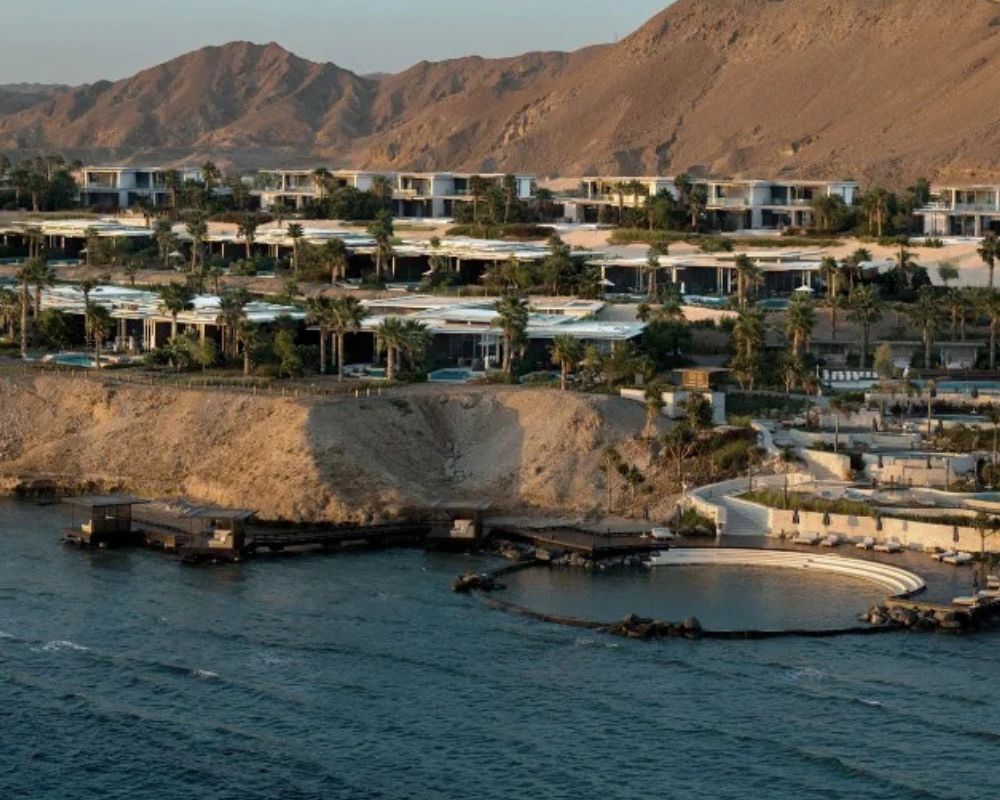
The Rosewood AMAALA Red Sea resort opened officially on August 18 2026, which makes this, as I write it, a story that is less than 24 hours old. It sits within AMAALA Triple Bay, Red Sea Global’s 1,600-square-mile regenerative tourism destination on Saudi Arabia’s north-western coast. Offshore lies part of what is described as the world’s fourth-largest barrier reef. The Tabuk mountains rise behind the property and between the reef, the mountains and the turtles, Rosewood AMAALA had the most demanding and the most interesting architectural brief I have come across in years of writing about where the world chooses to build its finest hotels.
The result is genuinely worth examining. Rosewood AMAALA Red Sea is beautiful by every account, and that beauty is earned rather than applied. The constraints that shaped it produced something more considered, more specific and more rooted in its location than almost anything else opening in luxury hospitality this year.
What Rosewood AMAALA is and how it was built
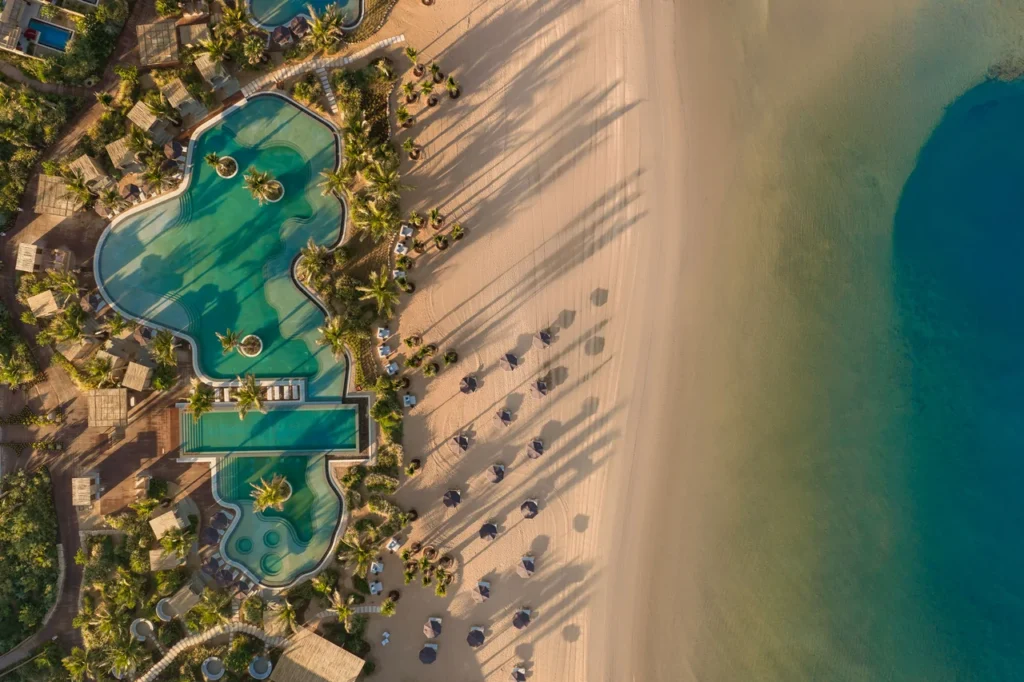
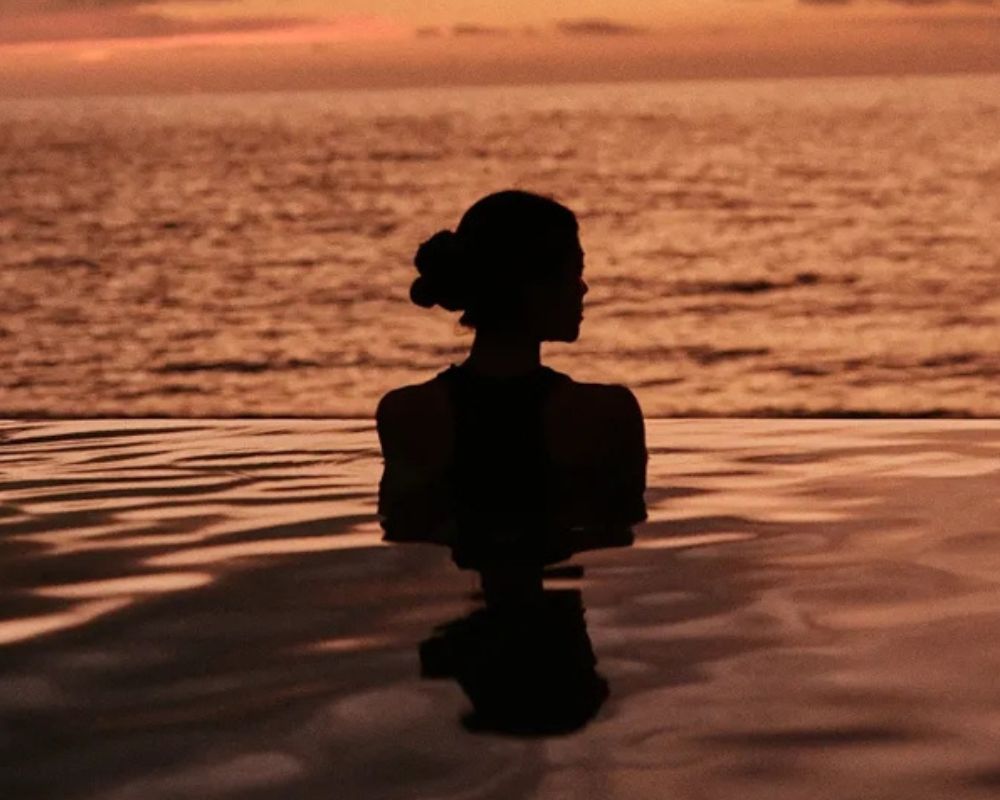
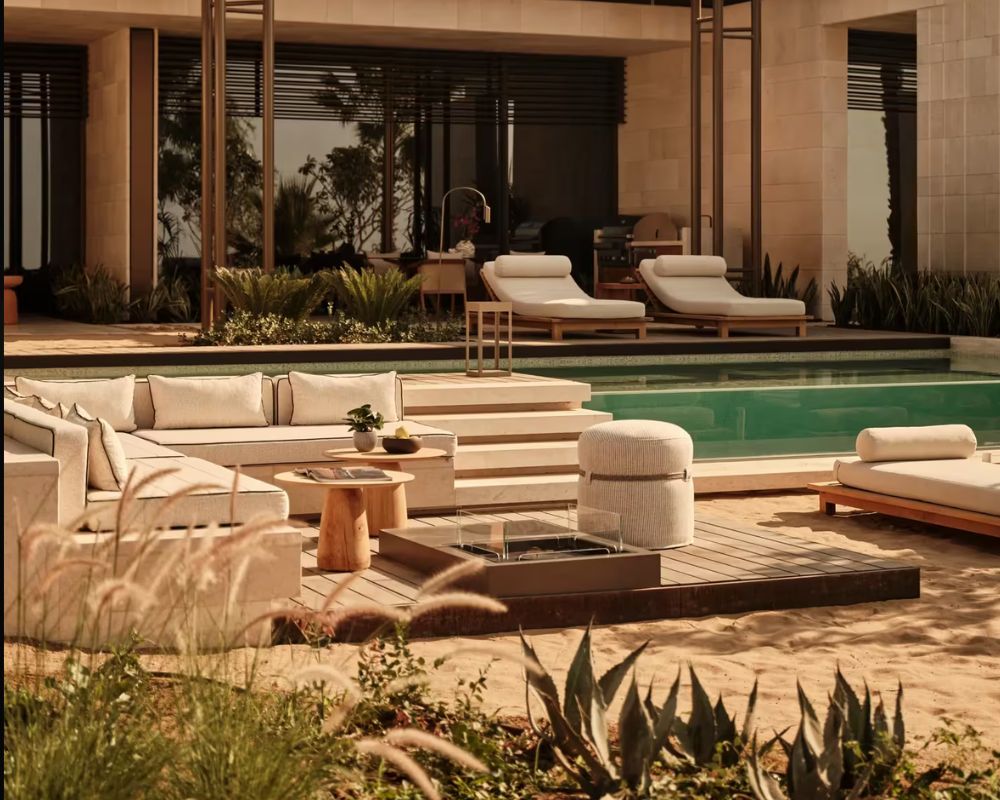
Rosewood AMAALA Red Sea spans approximately 40 hectares of coastline and features 110 keys arranged in clusters within green sanctuaries. The accommodation spans pavilions, suites and villas, with Sea View options set within the resort and Sea Front villas positioned directly along the shoreline. Every key includes a private swimming pool, a sand-lined terrace and indoor-outdoor living spaces designed to bring the Red Sea landscape into the daily rhythm of the stay. The resort also features 25 branded residences for those seeking a permanent foothold in the destination.
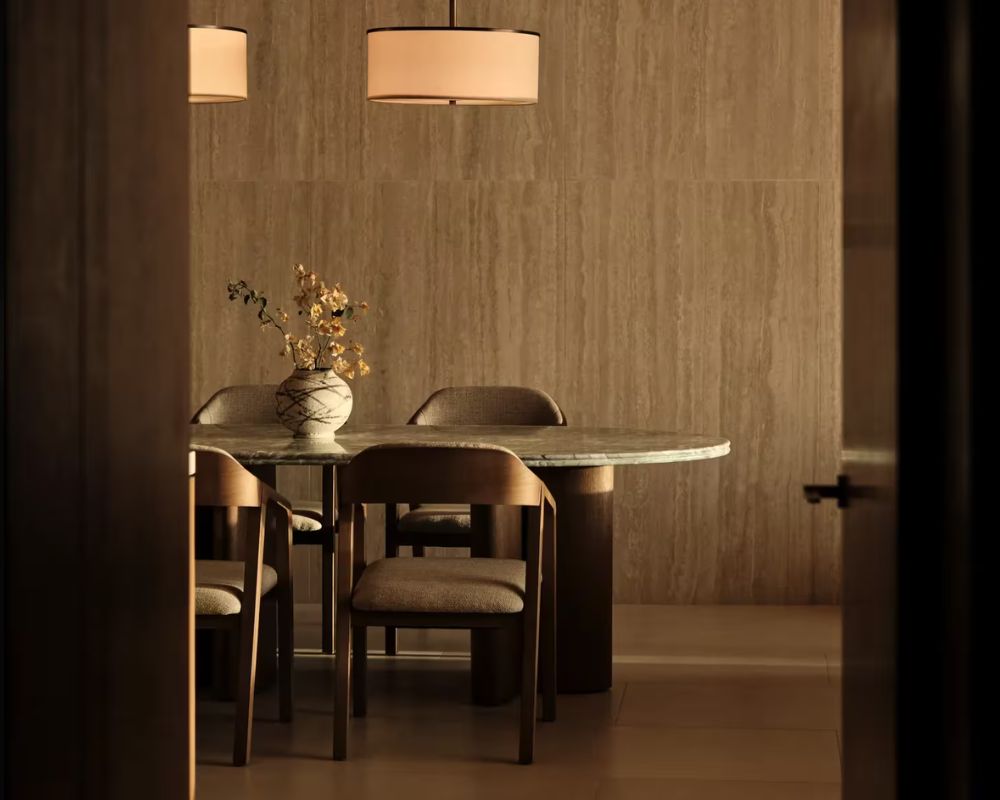
The Rosewood AMAALA Red Sea architecture was designed by ACPV Architects Antonio Citterio Patricia Viel, with interiors by Tristan Auer. The brief, which Red Sea Global issued to all AMAALA development partners, was built around the landscape rather than imposed upon it. The result is a low-density resort that sits gently within the terrain, with contemporary Arabian design vocabulary expressing the natural character of the coastline and the Tabuk mountains rising behind it.
The turtle nesting constraint shaped the entire development. Hawksbill and green sea turtles maintain nesting sites on the beaches around Rosewood AMAALA, and the entire construction and design programme was structured to leave those sites undisturbed. No construction took place near the nesting areas. The lighting strategy was designed to produce no bright lights in the relevant zones, eliminating the risk of disturbing the turtles during nesting season. These decisions are visible in the form of the resort: the low footprint, the clustering of accommodation away from beach edges, the absence of the kind of perimeter lighting that most luxury resorts consider standard.
The Asaya Spa and wellness proposition
The Rosewood AMAALA Red Sea wellness offer is anchored by the Asaya Spa, which covers 2,100 square metres and is positioned within the rolling landscape to create a sanctuary removed from the resort’s social spaces. The spa includes six treatment rooms and a double suite, a private hammam, wet areas for men and women with sauna and steam rooms, and a programme designed around the intersection of traditional Arabian wellness practices and contemporary therapeutic approaches.
The Arabian Apothecary is one of the most distinctive elements of the Rosewood AMAALA experience. Here guests work with regional botanical herbs and traditional practices to create their own preparations, connecting the wellness offering directly to the specific plant heritage of the Red Sea region rather than importing a generic luxury spa programme. This is the kind of detail that distinguishes a resort genuinely embedded in its location from one that simply occupies it.
The daily Sukūn Hour, named after the Arabic word for stillness, is another expression of the same philosophy. As daylight fades, the ritual moves location around the resort. On any given evening it might involve Saudi coffee at the Wadi Library, guided breathwork at Saha, or an intention ritual beneath the olive tree at Olea. The practice of stillness as a daily hotel ritual, one that changes location and form rather than being fixed to a single venue or a single type of experience, reflects the Rosewood AMAALA ambition to integrate wellness into the texture of the stay rather than contain it within the spa’s walls.
Eight dining venues and the culinary philosophy
Rosewood AMAALA Red Sea offers eight restaurants and lounges, ranging from fine dining to beachside venues and poolside bars. The culinary philosophy follows the same principle as the wellness offering: rooted in the specific cultural and natural context of the Red Sea region, with global culinary languages arriving through that filter rather than displacing it.
The resort’s Mediterranean dining and modern grill concepts bring established flavour traditions to a setting that makes them feel simultaneously familiar and entirely new. The beach club and poolside venues operate as social anchors across the day, with fresh food and lighter refreshments calibrated for the pace and temperature of the Red Sea coastline. Private dining is available throughout the property and on villa terraces, including dinners prepared by private chefs, which turns the villa experience into something closer to a serviced private residence than a conventional hotel stay.
The regenerative philosophy and what it actually means
Every property in the Rosewood AMAALA Red Sea destination has committed to the same overarching environmental framework: zero carbon footprint, 100 percent renewable energy, zero waste to landfill. These are destination-level commitments that apply to Rosewood AMAALA as they do to every other resort within Triple Bay.
For the Rosewood AMAALA Red Sea property specifically, the regenerative philosophy is most visibly expressed in the relationship between the resort and the marine ecosystem offshore. The world’s fourth-largest barrier reef lies immediately beyond the Rosewood AMAALA shoreline. The resort’s programming incorporates reef-inspired activities, marine education and direct participation in the conservation work that Red Sea Global is conducting across the wider destination. The Corallium Marine Life Institute, which includes a coral nursery and research laboratories, is part of the AMAALA destination that Rosewood AMAALA guests can access.
Two rock pools have been designed to allow guests safe access to the water and sand while protecting the coral reefs from the foot traffic that typically accompanies beachfront resort activity. This is one of the most practically specific expressions of the regenerative commitment: an architectural solution to a conservation problem, built into the guest experience rather than communicated through signage.
The Rosewood Explorers Club programme for children aged four to twelve incorporates the Red Sea environment and Saudi culture directly into its programming, including reef-inspired activities, environmental storytelling and hands-on craft experiences. The intention is explicitly to connect the next generation of guests to the conservation context of the destination rather than simply providing supervised entertainment.
What Rosewood AMAALA tells the global luxury hospitality industry
Rosewood AMAALA Red Sea opened as the third major property at AMAALA Triple Bay in 2026, following the Four Seasons Resort and Residences AMAALA in June and Six Senses AMAALA in July. Together these three openings have established the Red Sea’s AMAALA destination as the most concentrated expression of regenerative luxury hospitality available anywhere in the world.
For the global luxury hospitality industry, the Rosewood AMAALA Red Sea opening represents something worth examining carefully. The constraints that shaped the resort, the turtle nesting sites, the coral reef, the zero-carbon mandate, the regenerative framework applied at destination level, are exactly the kinds of environmental considerations that luxury hospitality in established markets has historically treated as obstacles to be managed rather than principles to be designed around. At AMAALA, and at Rosewood AMAALA specifically, those constraints became the brief.
The result is a resort that feels genuinely rooted in its location, in ways that many luxury properties around the world have learned to simulate rather than truly achieve. The Sukūn Hour ritual belongs to this coastline. The Arabian Apothecary draws from the region’s rich botanical heritage. The rock pools exist because this particular reef demands protection. Even the absence of certain types of lighting is a deliberate response to the turtles that return to these very beaches.
Rosewood AMAALA Red Sea may well be the most considered luxury resort to open in 2026. Every detail feels intentional, deeply connected to place and extraordinary. And this is only the beginning. The destination it anchors is still taking shape, with much more to come.
Read next on The Pillar Edit: Six Senses sustainability: how the only hotel group proving its eco metrics actually does it , because the most instructive comparison for Rosewood AMAALA’s regenerative ambition is the brand that has been doing this longer than anyone else.
(Image credits: redseaglobal.com, rosewoodhotels.com)