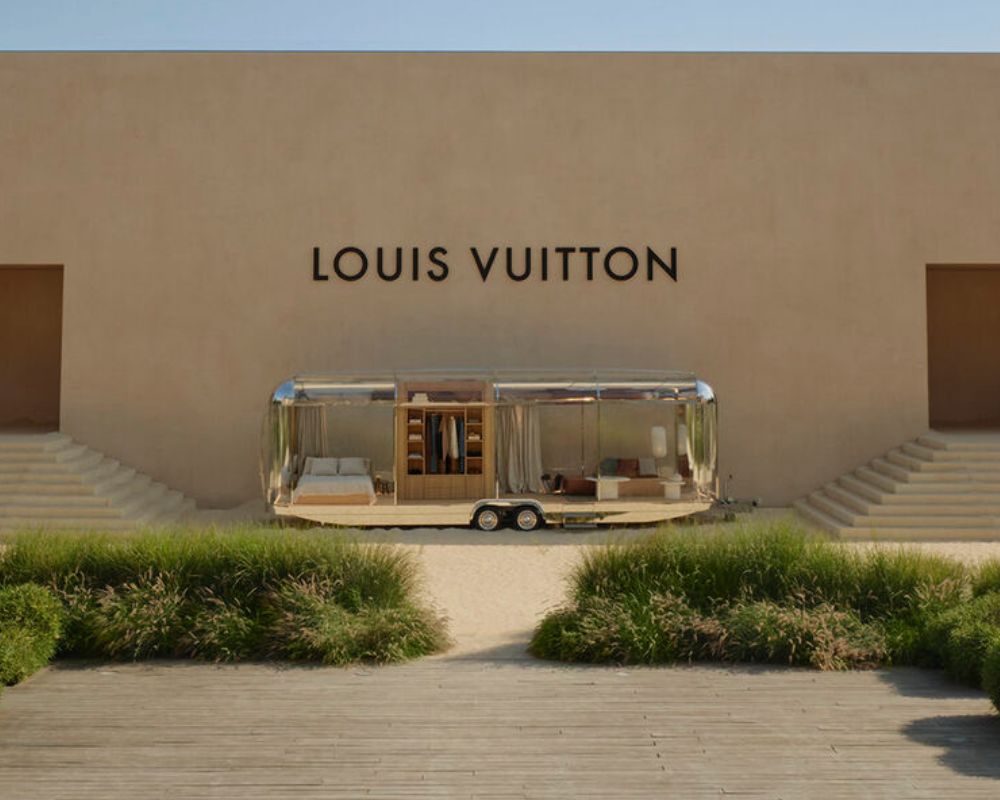
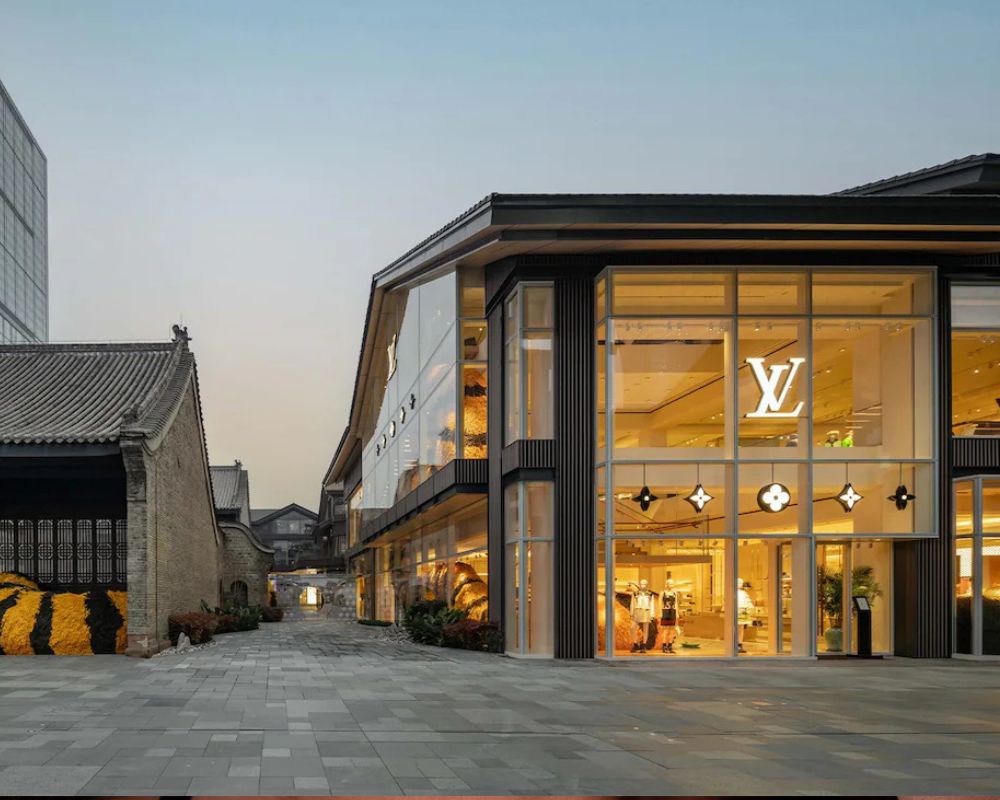


In June 2025, Louis Vuitton opened a store in Shanghai shaped like a cruise ship. It was one of the most spectacular retail openings the city had seen in years, drawing crowds and a star-studded guest list that included the brand’s Chinese ambassadors Lin Yi and Gong Jun. It felt like a declaration. Louis Vuitton China was thriving, and the whole world could see it.
Fourteen months later, the same brand went quiet.
Louis Vuitton China’s accounts on Douyin, Weibo and Xiaohongshu fell silent, and with them, Louis Vuitton China sales. The brand with 11 million Weibo followers stopped posting entirely during the peak of a controversy it had completely failed to anticipate. The Louis Vuitton China sales crisis had begun in a courtroom in Suzhou. It ended in the court of Chinese public opinion, where the verdict went very differently.
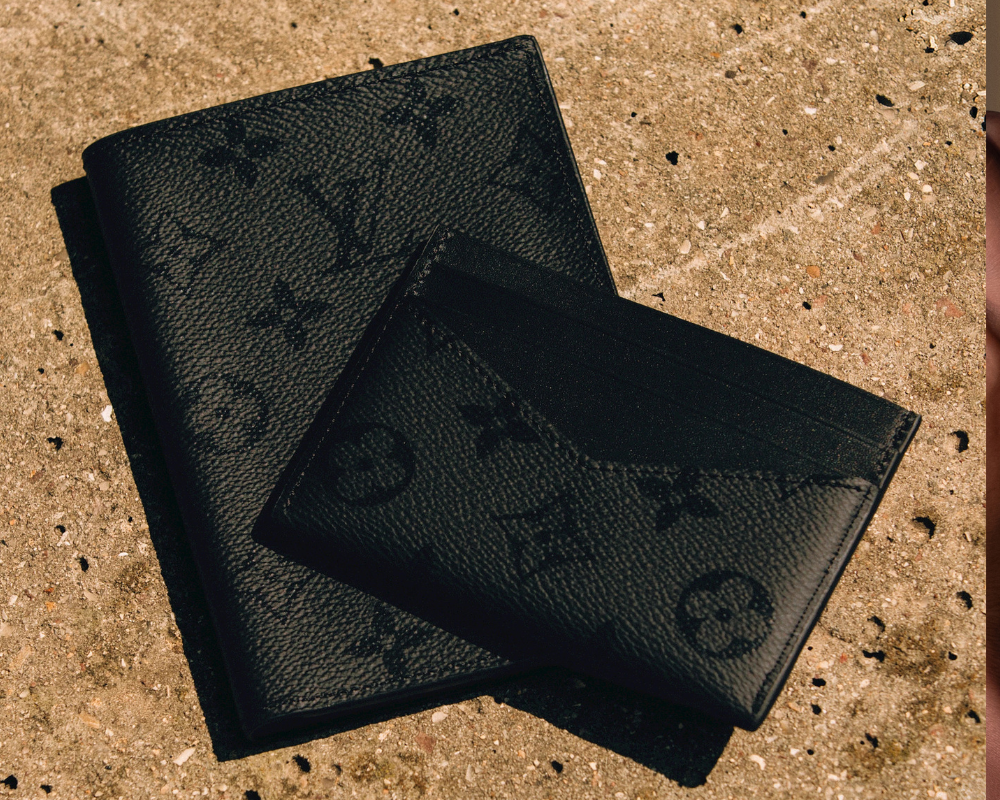
The case itself was legally simple. Molly Tea, a Chinese tea chain known for jasmine and floral teas, had a four-petal flower logo. A court in Suzhou decided it looked too much like Louis Vuitton’s famous monogram and ordered Molly Tea to pay 10.3 million yuan, approximately $1.5 million, in damages.
Louis Vuitton won and then China’s internet caught fire.
How a trademark victory turned into a brand crisis
China’s internet saw something Louis Vuitton’s lawyers had missed entirely: a cultural argument.
Users across Douyin, Weibo and Xiaohongshu pointed to the baoxianghua, a four-petal floral motif that has appeared in Chinese decorative art since the Tang Dynasty. They asked a question that spread fast: why is a 130-year-old French fashion house claiming ownership over a design that Chinese artisans were using centuries before Louis Vuitton existed?
The tone shifted fast. What had started as a trademark case became a conversation about power and cultural arrogance. Critics pointed out the absurdity of it: a global luxury house whose handbags cost more than Molly Tea makes in a month, pursuing a small local tea chain that poses zero commercial threat to anyone. The scale comparison became devastating and Louis Vuitton had no good answer to it.
Robert Wu, CEO of Shanghai-based research firm Baiguan, put it with precision. “For foreign brands, the Chinese market is a complex, multi-stakeholder market,” he said. “You may win in a court, and you may have the government’s seal of approval, but the court of public opinion is also strong and may deviate from both.”
It deviated and the sales data confirmed it almost immediately.
The Louis Vuitton China sales numbers behind the backlash
JL Warren Capital published its estimates on Louis Vuitton China sales and they were stark. Louis Vuitton China sales fell approximately 30 percent in July and 20 to 25 percent in August. Louis Vuitton China sales are expected to narrow to approximately 13 percent in September as the immediate fury subsides.
An estimated 30% drop in July sales. That is what JL Warren Capital is forecasting for Louis Vuitton in China, a striking figure for the most profitable brand within the world’s most valuable luxury group. And in a market as important to luxury as China, the number raises a much bigger question: what is really happening to Louis Vuitton?
August matters more than July for Louis Vuitton China sales, because Chinese Valentine’s Day falls on August 19. JL Warren’s data confirmed what boutique observers had already seen: the day was quieter than usual for Louis Vuitton. The gifting that had historically made August one of the brand’s strongest months in China was simply missing.
To understand why the Louis Vuitton China sales numbers matter so much, consider what Louis Vuitton is to LVMH. Chinese consumers account for roughly 30 percent of LVMH’s total revenue. Louis Vuitton alone contributes approximately 25 percent of group sales and 60 percent of group EBIT. It is the engine that powers everything else.
A 20 to 30 percent Louis Vuitton China sales decline, even for two months, is a very significant number.
HSBC downgraded LVMH to Hold this week, with analysts led by Anne-Laure Bismuth noting that while the impact of the negative social media reaction is likely short-term, it probably had a negative impact on Louis Vuitton’s sales in the China market during Q3 2026.
What the Louis Vuitton China sales data tells every luxury brand about operating in China
The Louis Vuitton China sales collapse following the Molly Tea case is the most instructive brand intelligence story of the year, and it leaves three lessons that are specific enough to be immediately useful.
The first is about the relationship between legal rights and cultural authority in China. Louis Vuitton had every legal right to protect its trademark. The court agreed and the commercial consequences of exercising that right, in that way, against that opponent, were severe. Analysts note that a legal victory in China translates into a commercial win only when the court of public opinion agrees.
Controversies involving Western brands including Nike, Adidas and H&M have previously escalated into patriotic consumer campaigns in China. Dolce and Gabbana also endured a prolonged boycott after a 2018 advertising controversy. The Louis Vuitton China case joins a list of Western brand miscalculations in China that all share the same underlying dynamic: the brand prioritised its institutional rights over its cultural relationships.
The second is about scale and how it can work against a brand. The gap between Louis Vuitton’s scale and Molly Tea’s scale aggravated rather than mitigated the public reaction. The perception that a global luxury giant with billions in revenue had chosen to pursue a local tea chain for a design associated with Chinese cultural heritage was commercially damaging in ways that no court ruling could repair.
Every luxury brand operating in Louis Vuitton China’s market needs to understand that its scale, which is its greatest commercial asset in almost every other market, can become a liability when it is perceived to be used against a smaller Chinese opponent.
The third is about cultural heritage and what happens when trademark strategy collides with it. The baoxianghua argument, accurate or otherwise as applied to Louis Vuitton’s specific monogram design, landed with Chinese consumers because it connected to a genuine and deeply felt cultural narrative. The idea that a French brand controls a design derived from Chinese artistic tradition is the kind of argument that resonates on Chinese social media in ways that Western brand managers frequently underestimate. Louis Vuitton China’s positioning as a brand that loves and respects Chinese culture is incompatible with a legal action that Chinese consumers experienced as the opposite.
What happens to Louis Vuitton China sales next
HSBC thinks the Louis Vuitton China sales impact is short-term. That may be right. The social media fury has already begun to subside as fashion week takes over the global luxury conversation and Chinese consumers move on to the next story.
But the Louis Vuitton China story is more durable than the news cycle suggests. The baoxianghua argument has been planted in Chinese cultural consciousness. Every time a Western luxury brand brings a similar case in a Chinese court, that argument will be there waiting. The precedent is cultural. Cultural precedents last longer than legal ones.
Louis Vuitton’s recovery in China will depend on what it does in the coming months to rebuild the cultural authority that the Molly Tea case damaged. The cruise ship store in Shanghai is still open. The ambassadors are still posting. The product is still extraordinary. But the brand’s relationship with Chinese consumers has been complicated by a court case it won and lost simultaneously, and navigating that contradiction will require more than a new campaign.
Louis Vuitton won in court. However, it paid a price in the market. The distinction between those two outcomes is the most important thing any luxury brand can understand about operating in China right now.
Winning in court and winning in culture are two entirely different games. And in China, the second one matters more.
Read next on The Pillar Edit: Jin, Kate Moss, Shawn Mendes: how Demna is making Gucci culturally irresistible.
(Image credit: louisvuitton.cn)