



Mulberry is entering a fascinating new phase of its recovery. Group revenue rose 23 percent in the first quarter of fiscal 2027, gross margin reached 72 percent in fiscal 2026, and growth has returned across several of its key international markets. Now, on September 20, Christopher Kane will present his first collection for Mulberry at London Fashion Week, bringing another important dimension to the British luxury house’s comeback.
The numbers and the runway tell two sides of the same story. The financial performance suggests that CEO Andrea Baldo’s efforts to restore commercial discipline are gaining traction, while Kane’s appointment brings something equally important to the table: renewed fashion relevance.
That makes the Mulberry Christopher Kane story much bigger than a designer appointment. After two years of tightening pricing, rebuilding distribution and bringing heritage products back into focus, Mulberry is now looking to connect those foundations with a younger, more fashion-conscious consumer while protecting the identity that has made the brand distinctive.
And that is where things get interesting!
Mulberry’s turnaround has been built on commercial discipline
When Andrea Baldo joined Mulberry in 2024 from Ganni, the company was emerging from a prolonged period of strategic uncertainty. Creative direction had been inconsistent, revenue had declined and the brand had moved further away from the leather goods proposition that had historically defined its place in British luxury. An attempted takeover by Frasers Group added another layer of pressure.
Baldo’s response, articulated through the Back to the Mulberry Spirit strategy, has focused firmly on the fundamentals. Mulberry reduced promotional activity, prioritised full-price selling, returned heritage products to the centre of its offer and expanded its wholesale and franchise network.
The impact is particularly visible in gross margin. Mulberry’s full-year fiscal 2026 gross margin rose to 72 percent from 67 percent the previous year. In luxury, that matters because it points to healthier sales quality and a stronger reliance on full-price demand.
The latest trading figures add to the picture. For the 13 weeks ending June 27, 2026, group revenue increased 23 percent year on year. Retail and digital revenue rose 21 percent on a like-for-like basis, with Europe up 35 percent, North America up 23 percent and Asia-Pacific up 32 percent.
The previous fiscal year had already marked a return to growth, with revenue increasing 4 percent to £125.5 million. For the Mulberry Christopher Kane story, the timing is significant. Kane is arriving as the commercial foundations of the recovery are beginning to take shape.
The strategy is to make heritage commercially relevant again
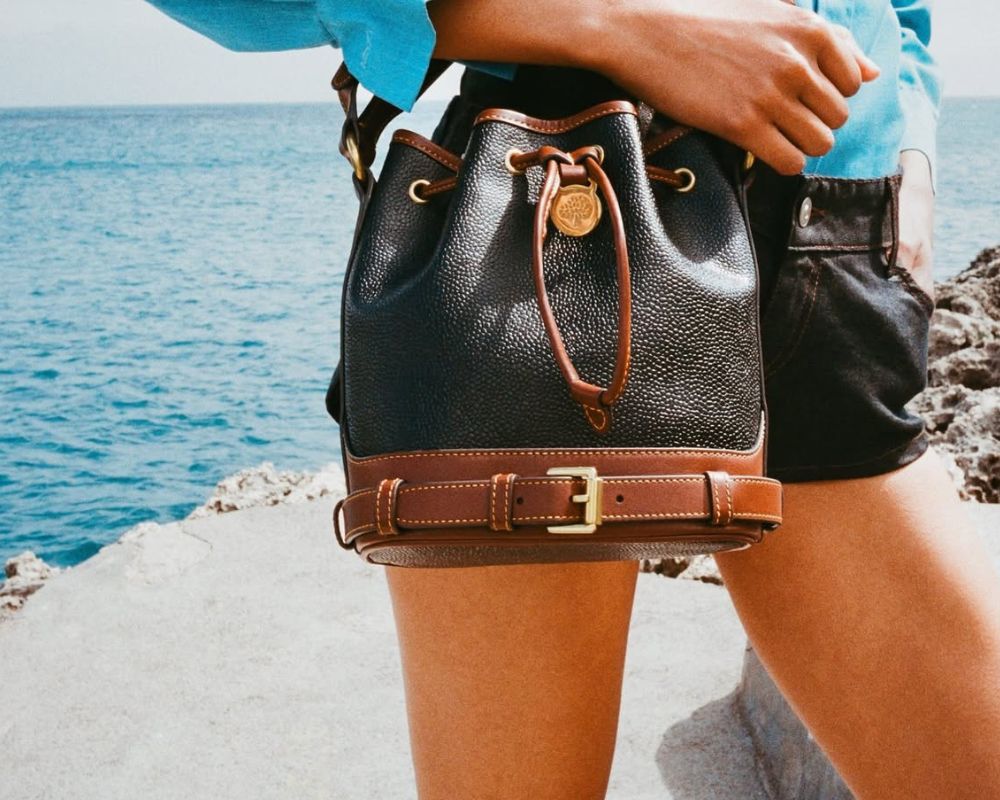
Baldo’s approach has also involved a renewed focus on Mulberry’s established icons. The Bayswater, launched in 2003, and the Roxanne remain important commercial products, with prices broadly between £800 and £1,200.
It is a simple idea, but an important one in luxury: heritage only creates value when it continues to connect with contemporary demand. Mulberry does not need to manufacture a history or borrow cultural credibility from elsewhere. It already has the raw materials. The opportunity is to make those assets feel relevant to consumers whose cultural reference points are evolving.
Distribution has become another important part of the strategy. Franchise and wholesale revenue increased 33.3 percent in fiscal 2026, supported by partnerships with John Lewis, Liberty and Harvey Nichols in the UK, alongside Nordstrom and Saks in North America.
Taken together, the strategy is relatively straightforward: protect price, strengthen product and broaden distribution. What makes it compelling is the consistency of the execution at a brand that had spent several years moving in another direction.
That creates the perfect setup for the next question: what happens when Mulberry starts investing more aggressively in fashion again?
Why Christopher Kane is a strategic appointment
Mulberry appointed Christopher Kane as Creative Director of Women’s Ready-to-Wear in March 2026. The appointment brings a designer with strong British fashion credentials, an established relationship with the industry and a distinctive creative language back into the Mulberry conversation.
Kane is a Central Saint Martins graduate and a multiple British Fashion Award winner, including Womenswear Designer of the Year. His eponymous label became one of Britain’s most critically recognised independent fashion businesses before closing in 2023. He also understands the dynamics of a larger luxury structure, having operated within Kering, which owned a stake in his business between 2013 and 2018.
For Mulberry, that combination is particularly useful. The brand needs stronger fashion credentials, but it does not necessarily need to reinvent itself from the ground up. Kane’s remit is therefore more focused than that of a traditional all-encompassing creative director. He is responsible for seasonal womenswear and the runway presentation, while Mulberry’s internal Creative Studio continues to oversee leather goods and the wider product system.
That makes the Mulberry Christopher Kane appointment a targeted investment in fashion relevance rather than a complete creative reset. And that distinction could prove crucial.
London Fashion Week is the next test
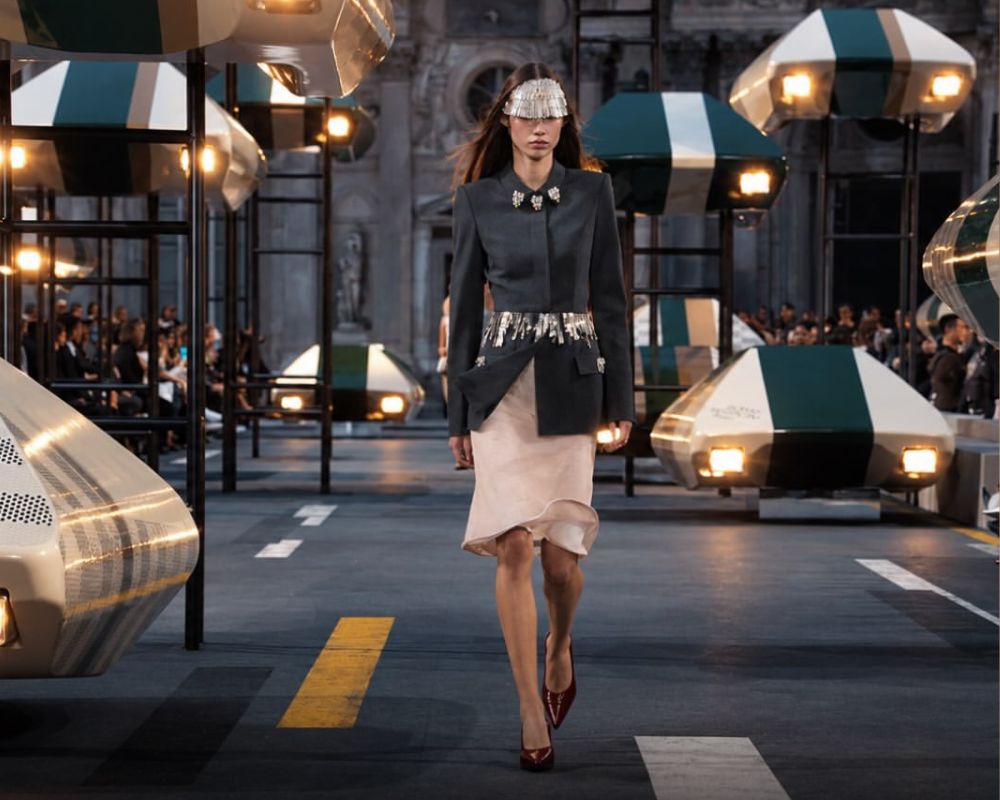
On September 20 at 3pm, Mulberry by Christopher Kane will return to the London Fashion Week runway for the first time since 2017. The collection will launch in stores and online in January 2027.
The collection has been positioned around a contemporary interpretation of British town-and-country life, with an ambition to connect with a younger, more fashion-forward customer than Mulberry’s existing core.
For Baldo, the runway is therefore both a creative statement and a major commercial and communications moment. He has described the return to fashion week as an opportunity to reach a younger consumer and create a significant marketing moment for the brand. The early wholesale response is encouraging. Selfridges in the UK and The Webster in the US are among the retailers that have committed to the collection.
The real opportunity for the Mulberry Christopher Kane strategy, however, begins once the runway lights go down and the collection reaches customers. That is when Mulberry will discover whether the renewed fashion conversation can translate into commercial value and deeper consumer engagement.
Mulberry is taking a different route back to relevance
Luxury has seen plenty of examples of brands attempting to restore relevance through creative change. A major designer appointment can generate enormous attention, but lasting brand momentum comes from the combination of product, pricing, distribution, storytelling and consumer connection.
Mulberry’s sequencing is different. The company has spent the past two years strengthening its commercial infrastructure before introducing its biggest creative statement in almost a decade. That makes the Mulberry Christopher Kane story less about dramatic reinvention and more about the relationship between commercial discipline and creative ambition.
It also makes Mulberry an interesting case study for heritage brands facing a familiar question: how do you attract a younger consumer while preserving the codes that existing customers already value? Mulberry’s answer so far has been to protect the core while expanding the conversation around it.
The Bayswater and Roxanne remain central. The wholesale network is expanding. Full-price selling has improved. At the same time, Kane is being given room to introduce a more fashion-forward perspective and reconnect the brand with London’s creative ecosystem.
The approach is measured, but that may be precisely where its strength lies.
What the numbers still need to prove
There is always a temptation to declare a luxury turnaround as soon as growth returns. Mulberry’s recent performance is encouraging, but the more interesting question is whether that momentum can be sustained.
The 23 percent increase in Q1 revenue is significant, particularly because growth is broad-based across Europe, North America and Asia-Pacific. The 72 percent gross margin is arguably even more telling because it suggests that the recovery is being supported by stronger full-price performance.
The next phase will show whether that commercial progress can coexist with greater investment in fashion and brand building. That is where the Mulberry Christopher Kane appointment becomes strategically important. Fashion can generate attention and desirability, while also requiring substantial investment and precise execution. For Mulberry, the opportunity is to convert the excitement around Kane into stronger customer acquisition, greater demand and, ultimately, deeper brand equity.
The runway is only the beginning!
Why Mulberry matters beyond Mulberry
The company’s recovery is worth watching because it offers an alternative model for an independent British luxury brand with significant heritage and an opportunity to rebuild contemporary relevance.
Mulberry does not have the scale of the major luxury conglomerates, nor the financial resources of the largest global fashion houses. Its advantage is different: a distinctive British identity, established leather goods icons and a history that still carries meaning for consumers. The question is whether those assets can sit comfortably alongside renewed fashion credibility without diluting what makes the brand valuable.
Christopher Kane is now central to that experiment.
If the collection succeeds in bringing a younger audience into the Mulberry ecosystem while the core leather goods business continues to grow at healthier margins, the company could have something much more meaningful than a successful fashion week moment. It could have a repeatable model for rebuilding a heritage luxury brand from within. That is ultimately why the Mulberry Christopher Kane story deserves attention.
The financial recovery is already visible. The creative recovery is about to take centre stage. And for Mulberry, the opportunity is no longer simply to grow again. It is to become culturally relevant again while building a healthier, more resilient luxury business. That is a much bigger ambition. And September 20 could be the moment we start to see whether it can work.
The bottom line
The Mulberry Christopher Kane strategy brings together two things the brand needs right now: the commercial discipline of its recent recovery and the creative energy of a major fashion appointment.
If Mulberry can make those two forces work together, the next chapter could be one of the most interesting British luxury stories to watch!
Read next: Isha Ambani just showed global luxury brands how to win India with SKIMS, and what the strategy reveals about winning the next generation of luxury consumers.
(Image credits: mulberryengland/Instagram)