


Philanthropy on a 50-year clock
Most luxury sustainability programmes are built around campaigns. A house picks a cause, runs a 12-month activation, photographs an ambassador holding something biodegradable, and moves on to the next quarterly priority. Audiences rarely see the next one from the same brand on the same cause. The Rolex Perpetual Planet Initiative is the opposite of this. It runs a portfolio. The Initiative as currently named launched only in 2019, but the work it absorbed runs back to the 1950s, when Rolex first started backing exploration in the Mariana Trench, on Everest, and alongside Jacques Cousteau. The Rolex Awards themselves, the programme through which Ikemeh was honoured, began in 1976, originally to mark the 50th anniversary of the Oyster, the world’s first waterproof wristwatch. Read that timeline carefully. Rolex has been funding science, exploration and conservation continuously for nearly 70 years. The Perpetual Planet branding is the wrapper. The actual programme is one of the longest-running private philanthropic commitments in luxury, and arguably in any consumer category.That continuity is the thesis. The Rolex Perpetual Planet Initiative is a brand strategy disguised as a philanthropy strategy, and the rest of the luxury industry has not yet learned how to copy it.The architecture of patient capital
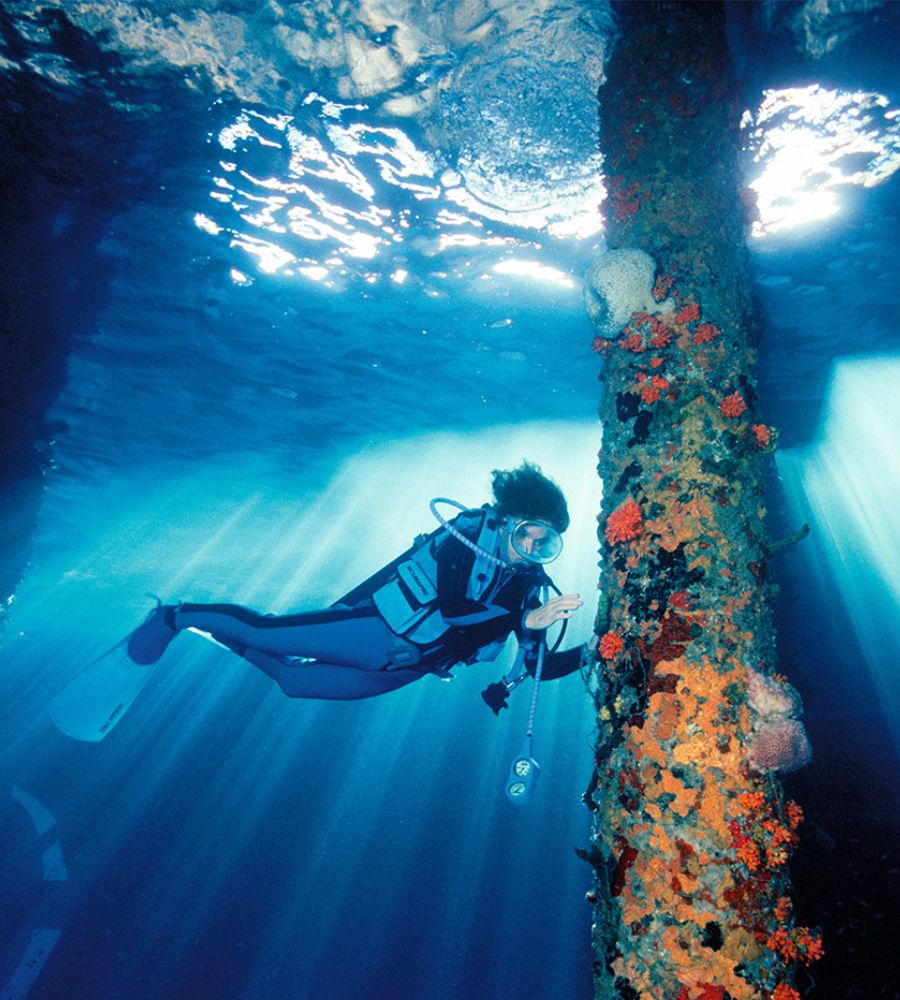
To understand how the Rolex Perpetual Planet Initiative actually functions, it helps to see it as three concentric layers rather than a single programme. At the centre sits the Rolex Awards. The five Laureates announced each year are the public face of the Initiative. Over 50 years, the Awards have supported 165 Laureates working across 67 countries. The cumulative impact, as reported by Rolex itself, includes more than 50 million trees planted, 137 endangered species protected, 32 major ecosystems preserved including 57,600 square kilometres of Amazon rainforest, hundreds of new species described to science, 25 significant expeditions completed, and roughly 50 innovative technologies developed. Around the Awards sits a second layer of long-standing institutional partnerships. The most important is with the National Geographic Society, which has been a Rolex partner since 1954, a 72-year relationship that survives across multiple management generations on both sides. Rolex also funds Sylvia Earle’s Mission Blue, the marine conservation organisation responsible for designating over 160 protected Hope Spots in pursuit of the global 30 by 30 ocean conservation target. More recent partnerships include Coral Gardeners, the reef-restoration network founded by Titouan Bernicot in French Polynesia. Around those institutions sits a third layer: individual testimonees and ambassadors who do not endorse watches so much as carry the philosophy of the programme. Conservation photographer Cristina Mittermeier, co-founder of SeaLegacy, is one of these. She has documented over 765 species across more than 45 expeditions, much of it with Rolex backing. The photographs she takes circulate far beyond watch enthusiasts, and they carry the Initiative’s narrative further than any advertising campaign could. The Rolex Perpetual Planet Initiative operates all three simultaneously, and has done so for decades.Rolex Perpetual Planet Initiative: The fifty-year discipline
What makes this programme genuinely difficult to copy is also what makes it almost invisible to short-term competitive analysis. It is built on time. When the Rolex Awards launched in 1976, the very first cohort included a Belgian researcher studying gorilla behaviour in Rwanda. The programme has run continuously every two years since. It has weathered three global recessions, the digital revolution, the rise and fall of three dominant luxury holding groups, and four generations of Rolex executive leadership. Throughout all of that, the funding cadence, the partner relationships, and the basic theory of the work have remained recognisably the same. The Rolex Perpetual Planet Initiative does not need to justify itself quarter by quarter, because Rolex itself is structured as a private foundation. The Hans Wilsdorf Foundation, which has owned the company since 1960, is not accountable to public shareholders or quarterly analyst calls. That structure is what makes 50-year philanthropic continuity possible. Without it, no marketing director, however well-intentioned, could protect a programme through three or four CEO transitions. There is a lesson here for brands operating inside public-company structures. Most luxury houses live inside LVMH, Kering or Richemont. Their philanthropic programmes inherit the time horizons of their parent companies, which means roughly three to five years. The Rolex Perpetual Planet Initiative operates on a 50-year horizon because Rolex’s ownership structure allows it to. Copying the surface strategy is possible. However, copying the underlying patience requires copying the corporate structure, which almost no one can.What changed in February 2026
This is the part of the Rolex Perpetual Planet Initiative story most coverage missed, and it is the part most worth the attention of anyone studying brand strategy. In February 2026, Rolex announced its 2026 Laureates and made two structural changes to the Awards. First, the brand renamed the programme. What had been called the Rolex Awards for Enterprise for half a century is now simply the Rolex Awards. Second, and more importantly, the brand switched the Awards from a biennial to an annual cycle.The parts the press release does not say
The Rolex Perpetual Planet Initiative is genuinely impressive, but a few things are worth noting honestly. First, the disclosed numbers are about outputs, not inputs. Rolex publishes how many trees were planted and how many species were protected, but does not publish how much it actually spends on the Initiative each year. The Hans Wilsdorf Foundation’s accounts are not public. Independent estimates of Rolex’s annual philanthropic spend range from 30 to 70 million Swiss francs, but no one outside the company can verify this. The absence of an input figure makes it impossible for external observers to calculate efficiency, compare the programme to peer initiatives, or benchmark it against industry norms. Second, the Initiative is most visible in regions and causes where Rolex’s commercial interests are also strong. Oceans, mountains and rainforests photograph beautifully. They also align with the iconography Rolex uses to sell watches. The harder, less photogenic conservation problems, such as urban air quality, soil contamination or freshwater pollution in industrialised regions, receive less attention. This is not a hidden secret. It is simply how the programme is calibrated. Worth noting because every philanthropic portfolio has a shape, and the shape tells you what the funder finds easy to talk about. Third, the language of the Initiative remains carefully apolitical. The Niger Delta in which Rachel Ikemeh works is one of the most environmentally devastated regions on the planet, primarily because of foreign oil extraction over six decades. Rolex’s framing of her work focuses on the monkey, the community, and the conservation outcome. It does not name the oil companies whose operations created the crisis she is solving. This is not unique to Rolex. Most corporate philanthropy avoids naming structural causes. But it is worth observing that the programme operates inside that convention, not against it. None of this diminishes what the Rolex Perpetual Planet Initiative has actually achieved. It does mean that the work is best read as a brand strategy with significant real-world impact, rather than as activism.What comes next for luxury
The honest question for the rest of the luxury industry, after studying the Rolex Perpetual Planet Initiative, is whether any of it can actually be copied. Some of it can. Other brands can identify a continuous through-line in their own brand history and build a programme around it the way Rolex built around exploration. LVMH has Métiers d’Excellence and its craftsmanship apprenticeships, which are heading in this direction. Hermès has its foundation work on artisanal skills, which has similar bones. Kering has its women’s-safety work through the Kering Foundation, which is the most politically pointed luxury philanthropy programme today. None of these are yet at 50-year scale, but they are operating in the same logic. Some of it cannot be copied easily. The ownership structure that makes Rolex’s patience possible is, for almost every other luxury group, structurally unavailable. LVMH, Richemont and Kering all sit inside public capital markets, with shareholders who expect philanthropy to perform on a much shorter horizon than seven decades. The third lesson, the under-discussed one, is about cadence. The 2026 shift to annual awards is the move other brands should be paying closest attention to. Treating philanthropy as content infrastructure rather than as periodic ceremony is the kind of operational change that does not require a private ownership structure. It only requires the discipline to commit to a calendar. A year from now, when the 2027 Rolex Awards Laureates are announced, the Initiative will have begun to feel less like a 50-year heritage programme and more like a rolling annual conversation. That is the version of the Rolex Perpetual Planet Initiative that other luxury houses should be studying. Not the half-century-old story. The half-year-old change. Back in the Niger Delta, Rachel Ikemeh’s red colobus population has doubled since 2021. There are no rigorous numbers yet on the next generation, but she expects there will be soon. Her work continues at the same pace it always has, on the same forests, in the same canoes. Watch for her name in luxury and conservation press for the next decade. Rolex’s programme guarantees she will be in both conversations. That is the case study, in one line. Read next: If Rolex represents luxury’s most patient bet on saving the planet, Louis Vuitton just made the most ambitious one. (Image credit: rolex.org)FAQ
What is the Rolex Perpetual Planet Initiative?
The Rolex Perpetual Planet Initiative is the brand’s umbrella philanthropy programme, formally launched in 2019. It absorbs the long-running Rolex Awards, partnerships with the National Geographic Society and Sylvia Earle’s Mission Blue, and a wider network of conservation testimonees and projects. The Initiative is structured around three areas: oceans, landscapes, and science, health and technology.
How much has Rolex spent on the Perpetual Planet Initiative?
Rolex does not publish its annual philanthropic spend. The brand is owned by the Hans Wilsdorf Foundation, a private Swiss foundation whose accounts are not public. Independent estimates of total annual giving range widely, but cannot be verified externally. What Rolex does publish are output metrics, including over 50 million trees planted, 137 endangered species protected and 57,600 square kilometres of Amazon rainforest preserved over the course of the Awards programme
Who are the 2026 Rolex Awards Laureates?
The 2026 Laureates are five women working in Indonesia, Nigeria, Peru, China and the United States. The Nigerian Laureate, Rachel Ashegbofe Ikemeh, has spent fifteen years protecting the critically endangered Niger Delta red colobus monkey, which had fewer than 200 surviving individuals as of 2021 and whose population has since doubled under community conservation work led by her organisation, SW/Niger Delta Forest Project.