



Walk into any serious sustainability conversation in luxury and someone will mention Stella McCartney sustainable fashion. The mention is earned on conviction rather than scale, because it is the one that has been making the same argument, with the same conviction and the same non-negotiable commitment, since 2001. While every other major luxury house has spent the past decade catching up to a conversation she started twenty-five years ago, she has been doing something the rest of the industry is only now beginning to understand as commercially serious: building a luxury fashion business as if the materials and the model actually mattered.
The brand generates approximately $295 million in annual revenue and operates across 863 retail points globally. It has partnered with Adidas since 2004 and designed the kit for Team GB at two Olympic Games. In January 2025 it returned to full independence by buying back the minority stake it had sold to LVMH. And it has done all of this, every single bit of it, without using a piece of animal leather, fur, feather, skin or animal glue in any product across any collection in twenty-five years of operation.
Twenty-five years in, the Stella McCartney sustainable fashion numbers are in. The argument has been won.
The non-negotiable that changed everything
Stella McCartney was raised vegetarian on an organic farm in England by Paul McCartney and Linda McCartney, one of the most prominent animal rights campaigners of her generation. She studied at Central Saint Martins, succeeded Karl Lagerfeld as Creative Director at Chloé at twenty-five and launched her eponymous label in 2001 as a fifty-fifty joint venture with the Gucci Group, which later became Kering.
The non-negotiable from day one was absolute: zero leather. Zero fur. Zero feathers. Zero skins. Zero animal glues. At a moment when animal materials were celebrated without question as the defining markers of luxury quality, this was a position the industry regarded as commercially limiting at best and commercially suicidal at worst. Stella McCartney sustainable fashion held it anyway.
What followed over the next two decades is one of the great commercial stories in sustainable fashion. McCartney’s refusal to use leather left her nowhere to hide and no choice but to reinvent the materials luxury fashion was built on. No leather meant finding something better. Then finding something better again. And again. Twenty-five years of that relentless pursuit has become the brand’s most powerful and commercially distinctive asset.
Mushroom leather, seaweed yarn and apple leather: the Stella McCartney sustainable fashion portfolio nobody else has
The Stella McCartney sustainable fashion material portfolio is extraordinary. It is what twenty-five years of having no other choice looks like when the person making that choice is genuinely brilliant.
Mylo mushroom leather, grown from mycelium by Bolt Threads, arrived in luxury fashion through McCartney before any other house had the courage to try it. Her Frayme Mylo bag became the first proof that mushroom-based leather could be genuinely luxurious. Hermès followed eventually, with its Victoria bag in Sylvania. But she got there first. In material innovation, that matters enormously.
Then there is MIRUM, plastic-free leather from Natural Fiber Welding. UPPEAL, made from apple industry waste. VEGEA, grown from the grape marc left over after winemaking. Kelsun, a yarn made from seaweed. KOBA, a recyclable fur-free fur. PURE.TECH, developed entirely within the brand’s own R&D pipeline. The SS2026 collection was 98 percent sustainable and 100 percent cruelty-free across every single piece. That is the Stella McCartney sustainable fashion portfolio, and it is the portfolio of a house that has been building something specific for twenty-five years.
That portfolio is the most commercially significant and most defensible competitive advantage Stella McCartney sustainable fashion possesses. Luxury brands that are now beginning to investigate alternative materials, driven by the CFDA fur ban, the EU Digital Product Passport requirements and the consumer sentiment documented in the Collective Fashion Justice 2026 UHNW report, are discovering that Stella McCartney sustainable fashion has a decade or more of practical experience with these materials and the commercial relationships with the suppliers producing them that give it a structural head start the rest of the industry is finding very difficult to close quickly.
From Kering to LVMH and back to herself: the ownership story
The Stella McCartney sustainable fashion ownership history reads like a map of where the sustainable fashion conversation has travelled.
The brand launched in 2001 as a fifty-fifty joint venture with Gucci Group. Kering, which emerged from the Gucci Group reorganisation, held a fifty percent stake for seventeen years. In 2018, McCartney acquired full control of the brand, buying out Kering’s stake entirely. In 2019 she sold a forty-nine percent minority stake to LVMH, in a partnership that made the world’s most valuable luxury conglomerate a direct investor in the most sustainably principled brand in the industry. In January 2025, McCartney reacquired LVMH’s stake, returning the Stella McCartney brand to full independence.
That trajectory is a statement of quiet, confident commercial intelligence. Stella McCartney sustainable fashion returning to full independence in January 2025, at precisely the moment when everything the brand has been building for twenty-five years is becoming commercially urgent for the rest of the industry, means McCartney captures the full value of what she built without sharing it with anyone else.
McCartney continues as LVMH’s Global Ambassador for Sustainability, a role that gives her sustained access to the most commercially significant conversations about sustainable luxury at the highest level of the industry, while the brand operates with the independence to make decisions based entirely on its own commercial and ethical priorities.
The climate data is specific, verified and more impressive than most luxury brands will admit
The brand has committed to reducing absolute Scope 3 greenhouse gas emissions by 46.2 percent by 2030 using a 2019 baseline. The Scope 3 commitment is the most commercially significant of the brand’s climate targets because Scope 3 emissions, those produced across the supply chain rather than in direct operations, represent the overwhelming majority of a fashion brand’s total environmental impact.
In 2023, the Stella McCartney brand reported a 36 percent reduction in Scope 3 emissions compared to the restated 2019 baseline. That is a meaningful and verified reduction at a point in time when most luxury brands are still in the early stages of understanding the full extent of their supply chain emissions. Eighty-one percent of the brand’s owned and leased sites were powered by renewable electricity as of 2022, a figure that was among the highest in the luxury fashion industry at the time of reporting.
The brand pioneered Environmental Profit and Loss accounting from 2012, monetising impacts across its supply chain to understand the true cost of its operations in environmental terms. It is a signatory to the UNFCCC Fashion Industry Charter for Climate Action and holds Science Based Targets initiative commitments. It was awarded PETA Person of the Year 2024.
The Stella McCartney sustainable fashion climate data tells a consistent and genuinely impressive story: real, verified progress against meaningful targets, using methodologies the broader luxury industry is only now beginning to adopt.
The honest financial picture and why it matters
Stella McCartney sustainable fashion sustainability coverage rarely mentions the operating losses. Here they are.
UK Companies House filings show the brand recorded sales of £40 million in 2022 with an operating loss of £8.8 million. Building a luxury brand around next-generation materials that cost more to source, develop and produce than conventional animal materials is genuinely expensive, and the financial data reflects that investment. The brand has faced significant financial challenges across its history, challenges that every commercially serious assessment of the Stella McCartney brand model acknowledges.
The more important commercial question in 2026 is whether those challenges reflect the cost of being early or a structural limitation of the model. The evidence from 2026 suggests the former rather than the latter. The regulatory environment is moving rapidly toward the positions this brand has held since 2001.
The consumer sentiment data from the most commercially significant luxury demographic is moving in the same direction. The material innovations the brand has pioneered are being adopted by Hermès, LVMH brands and Kering brands that spent years dismissing them. The Stella McCartney brand is the institution that built the infrastructure, developed the supplier relationships and accumulated the practical knowledge that everyone else is now trying to acquire.
Stella McCartney’s position is the result of two decades of sustained investment in sustainable fashion. That kind of advantage cannot simply be bought or replicated overnight.
What twenty-five years of this tells the entire luxury industry
Twenty-five years of Stella McCartney sustainable fashion data reveal one consistent truth about what the shift from conventional to sustainable materials actually demands.
It requires founding conviction strong enough to hold non-negotiable positions through seventeen years of Kering partnership and five years of LVMH partnership. It requires investment in material innovation at a scale and over a timeframe that produces genuine competitive advantage. And it requires transparency about financial challenges as well as environmental achievements, because the credibility of any sustainability story depends on the honesty of the commercial one.
In 2026, the brand was appointed the first industry ambassador for the M School at Central Saint Martins, collaborating with students on material innovation and regenerative design. That appointment is the luxury industry saying, quietly but unambiguously, that what she built matters.
The operating losses are real. The twenty-five year head start is real. The regulatory tide moving in her direction is real. And the brands that have been waiting to see how this story ends are running out of time to write their own version of it.
Read next on The Pillar Edit: Report: 95 percent of UHNW consumers say fur damages luxury status.
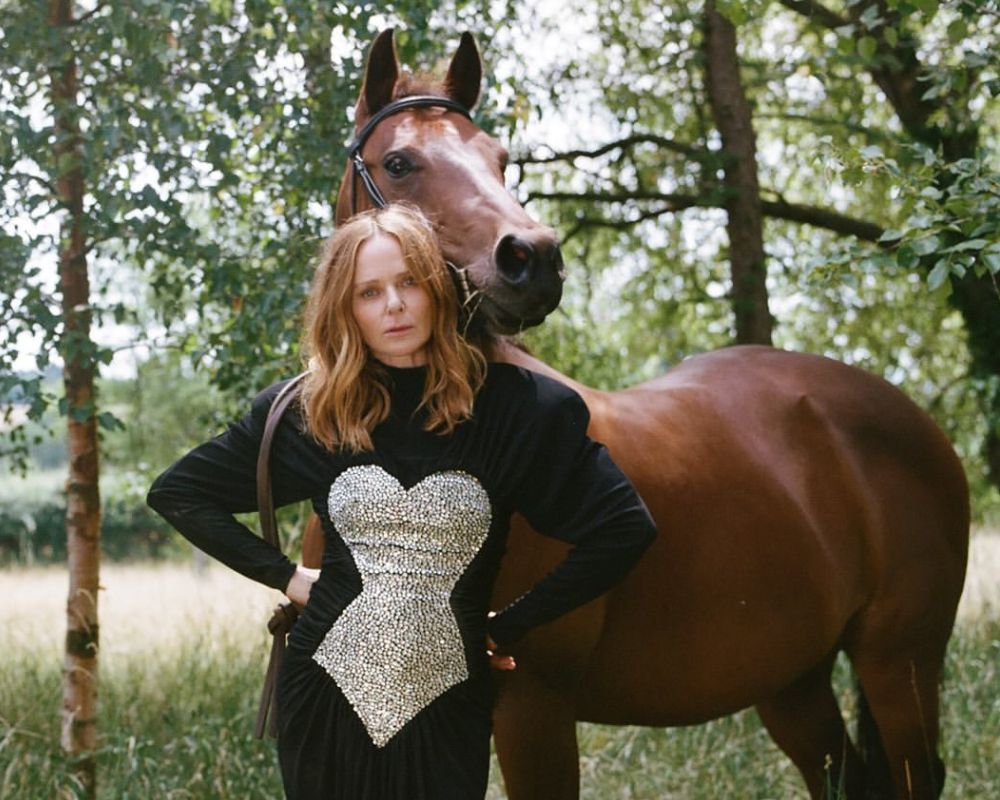
(Image credit: stellamccartney/Instagram)
FAQ
What material innovations has the Stella McCartney brand pioneered?
The Stella McCartney brand has pioneered more commercially significant alternative material innovations than any other luxury house, including Mylo mushroom leather developed from mycelium by Bolt Threads, MIRUM plastic-free leather by Natural Fiber Welding, UPPEAL apple leather, VEGEA grape leather from wine industry grape marc, Kelsun seaweed yarn, KOBA recyclable fur-free fur and PURE.TECH. The SS2026 collection featured 98 percent sustainable and 100 percent cruelty-free materials. The brand’s Frayme Mylo bag was the first commercially available luxury product made from mushroom leather, preceding similar products from Hermès and other luxury houses.
What are the Stella McCartney brand's climate commitments?
The Stella McCartney brand has committed to reducing absolute Scope 3 greenhouse gas emissions by 46.2 percent by 2030 using a 2019 baseline, with the Science Based Targets initiative validating the commitment. In 2023 the brand reported a 36 percent reduction in Scope 3 emissions compared to the restated 2019 baseline. Eighty-one percent of owned and leased sites were powered by renewable electricity as of 2022. The brand pioneered Environmental Profit and Loss accounting from 2012, is a signatory to the UNFCCC Fashion Industry Charter for Climate Action and was awarded PETA Person of the Year 2024.
What is the Frayme Mylo bag and why does it matter?
The Frayme Mylo is the world’s first luxury handbag made from mycelium, the root structure of mushrooms, grown by Bolt Threads. First shown at Paris Fashion Week in October 2021 and launched commercially in 2022 as a limited edition of 100 numbered bags, it retailed at £1,995 and was handcrafted by Italian artisans. It matters because it was the first proof that mushroom-based leather could be genuinely luxurious at a luxury price point, and it opened a category that Hermès, LVMH and others have since followed into.