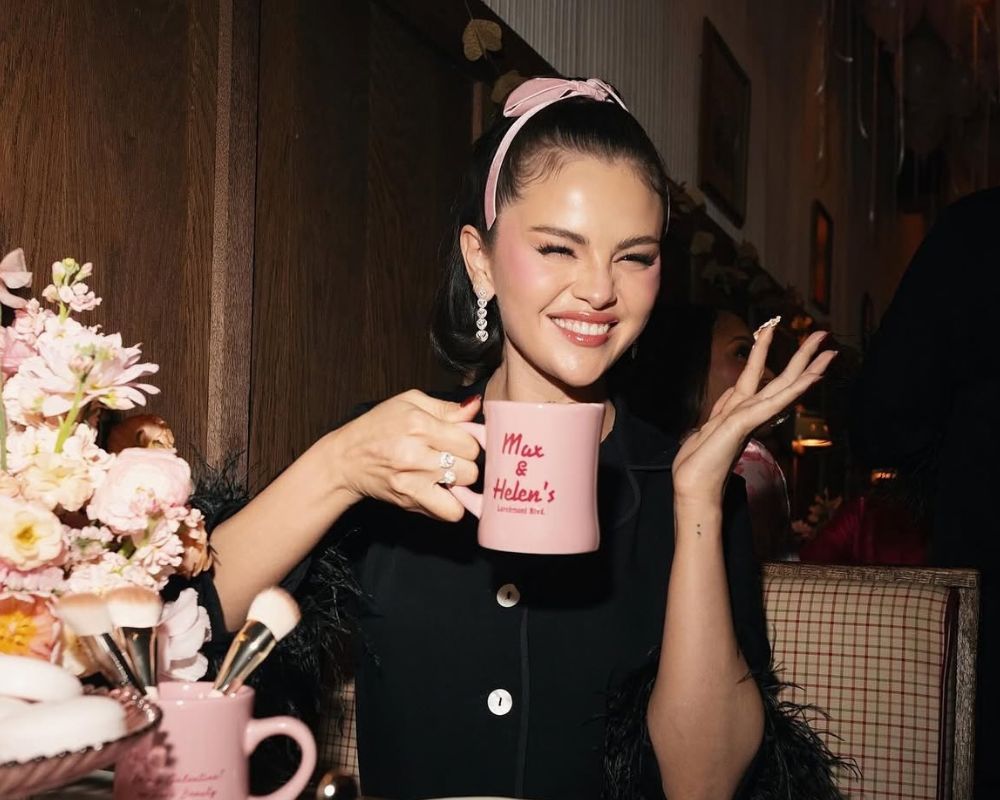




There is a version of the Rare Beauty mental health story where Selena Gomez launches a beauty brand, puts her face on the packaging and lets the marketing team handle the rest. It would have made her rich. It would have been fine.
She chose a different version.
By 2020, she had been public about her mental health struggles for years with the kind of unflinching honesty that costs most celebrities something. She had spoken about her bipolar disorder. She had spoken about the lupus that led to a kidney transplant in 2017 and the depression that arrived quietly in the years that followed. She had made a documentary, My Mind and Me, that faced unflinchingly the moments when the weight of being Selena Gomez felt genuinely impossible to carry.
When Rare Beauty launched, one percent of every single sale went to the Rare Impact Fund, committed to raising $100 million over ten years for youth mental health organisations around the world. The fund was built into the founding architecture of the brand from day one. Before the first lipstick had been sold. Before the first review had been posted. Before anyone knew whether this was going to work.
That is the decision that turned the Rare Beauty mental health mission into a $2.7 billion brand and the beauty industry is only now beginning to understand why.
The Rare Beauty mental health fund is the business model
Most beauty brands with a philanthropic component treat the Rare Beauty mental health model as something to aspire to while treating their own commitments as seasonal gestures. A limited-edition product in October, a percentage of sales on World Mental Health Day, a well-designed campaign that runs for four weeks and then disappears from the brand’s social media as quietly as it arrived.
Rare Beauty is structured differently, and the difference is everything.
One percent of every product sold, every single day, in every market where Rare Beauty operates, goes to the Rare Impact Fund. When the brand expanded into all 1,500-plus Ulta Beauty stores in February 2026, the fund grew with it. When Sephora donates 100 percent of global Rare Beauty sales on World Mental Health Day every October 10, the fund receives that too. The commercial success of the brand and the scale of the mental health programme are the same story.
Elyse Cohen, president of the Rare Impact Fund, put it to Forbes in August 2026 in terms that are worth sitting with. The fund is strengthening “an entire ecosystem of organisations working in youth mental health,” she said, one that gives young people access to people and organisations that understand them, while giving those organisations the resources to make an even bigger impact. By that point, the Rare Impact Fund had raised over $30 million, supported 30 organisations across five continents and was reaching 3.5 million young people every year.
Rare Beauty has managed to turn an everyday beauty purchase into something with a much bigger purpose. The brand has raised $30 million for mental health initiatives and reached 3.5 million young people along the way. A mascara, a blush or a lip liner suddenly becomes part of a much larger conversation about mental health. That is what makes the model so interesting.
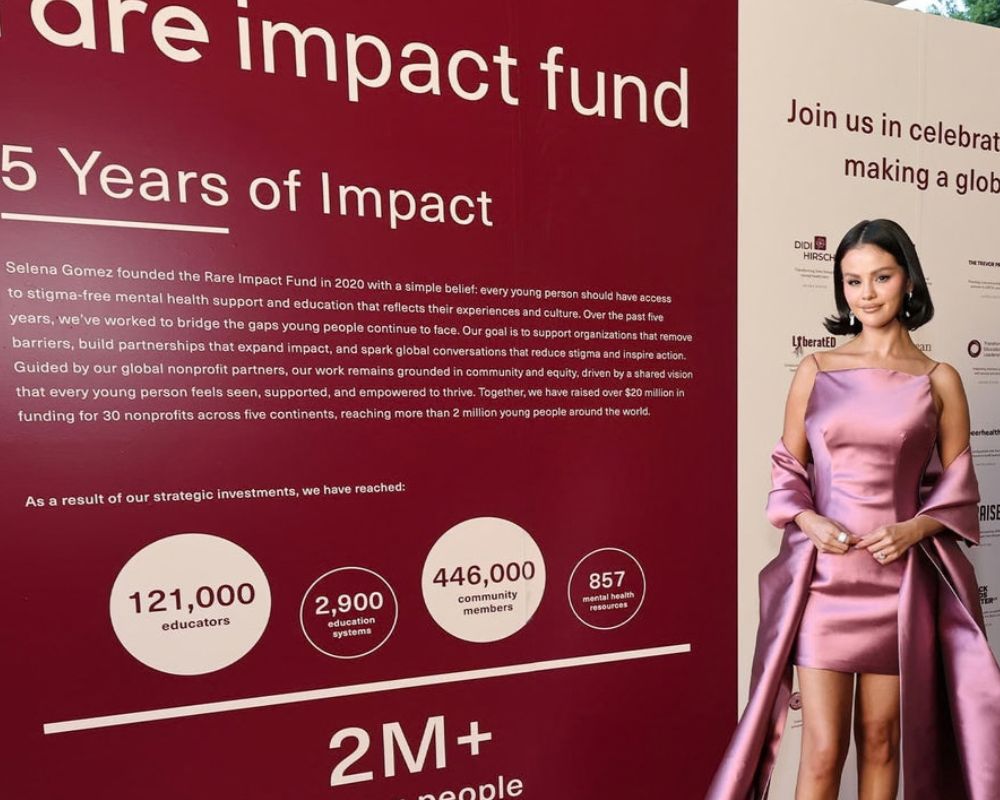
The $2.7 billion valuation and why the mental health mission is the reason for it
Six years after launching, Rare Beauty is valued at approximately $2.7 billion, and the Rare Beauty mental health fund is the architecture beneath that number. Selena Gomez’s personal net worth sits somewhere between $1.3 billion and $1.5 billion, most of it tied to her equity in the brand. The first fragrance, Rare Eau de Parfum, launched in 2025. The Ulta Beauty expansion brought the brand into more than 1,500 stores in February 2026. The numbers are extraordinary for any beauty brand. For one built on a mental health mission, they are almost without precedent.
She has been offered a way out. Several times, reportedly. She has said no.
The decision to reject every buyout offer on behalf of the Rare Beauty mental health mission is the one that most investors and brand strategists find hardest to understand, and the one that reveals most about how she thinks. Gomez understands something that most founders learn only after they have already sold: the brand’s value and the mission are the same thing. Rare Beauty is worth $2.7 billion because people believe it means what it says. The moment it is acquired by a conglomerate whose primary obligation is to shareholders rather than to the Rare Impact Fund‘s mission, the authenticity that drives that valuation begins, slowly and then quickly, to evaporate.
She has watched enough brands go through that process to know how it ends. She is choosing a different ending.
The fourth annual Rare Impact Fund Benefit and what it tells us about where the brand is going
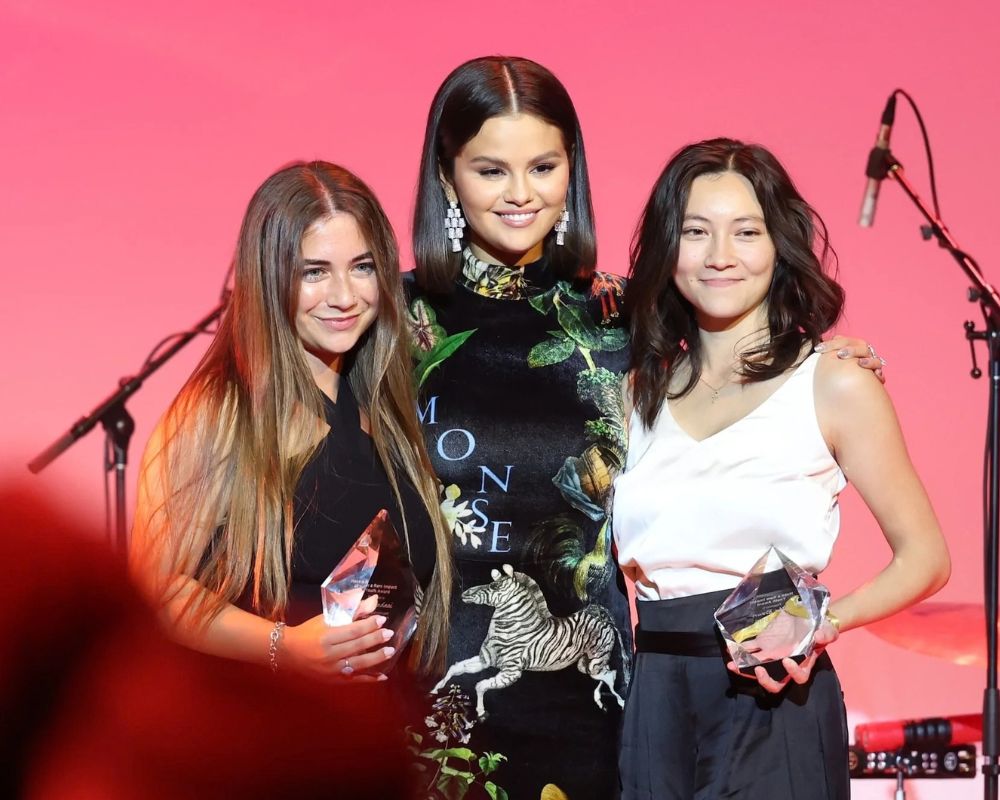
On August 24 2026, Gomez announced that the fourth annual Rare Impact Fund Benefit will be held on October 14 at The Hollywood Palladium in Los Angeles, emceed by Emmy-winning comedian Sean Hayes.
Four years. Four consecutive fundraisers. Each one building on the last. The Rare Impact Fund Benefit is the event that makes the clearest case for what Rare Beauty actually is beneath the packaging and the product launches. Entertainment executives, business leaders, philanthropists and advocates gather for an evening that is genuinely about something, a quality increasingly rare in a beauty industry where purpose-washing has become its own aesthetic.
In her announcement about the fourth annual Rare Beauty mental health benefit, Gomez said something that stayed with me. “One of the things I’ve learned through this work is how much it can mean for a young person to have someone in their corner, especially during the moments when they feel most alone.”
There is no marketing language in that sentence. There is something more valuable and more difficult to manufacture: the specific weight of someone who has been in that place herself, who knows what it costs to feel most alone, and who built a $2.7 billion company so that fewer people would have to feel it without help.
The Giving Circle and the most commercially intelligent expansion
Two things happened in 2026 that reveal where this is going.
The first is the Giving Circle, launched in partnership with Dollar Donation Club, inviting anyone, anywhere, to donate as little as $1 a month to youth mental health organisations. The architecture of this matters. Rare Beauty has always connected product purchase to philanthropic impact, but the Giving Circle decouples the two, extending the mission to people whose relationship with the cause runs deeper than their shopping habits. It is building a philanthropic community rather than simply a customer base, and it is doing so with the same structural permanence that has defined everything the Rare Impact Fund has done since 2020.
The second is the launch of the fund’s first public Request for Proposals, inviting organisations to apply for grants through a formal process rather than through the internal networks the fund has historically relied on. An RFP means the fund is now operating at institutional scale, with the infrastructure of a serious funder rather than a founder’s passion project. It means the Rare Impact Fund is being built to outlast any single campaign, any single product launch and any single cultural moment.
It is being built to last.
What every luxury brand should take from the Rare Beauty mental health story
The beauty industry has spent years trying to work out what made the Rare Beauty mental health model so commercially extraordinary while producing a stream of purpose-led launches that land with a flatness that its audience immediately detects.
The answer is uncomplicated. It is just difficult.
Selena Gomez built the Rare Beauty mental health fund because she has lived with her own mental health journey, publicly and painfully and with a candour that most people in her position would have been advised to dial back. The Rare Impact Fund is the direct consequence of that lived experience, structured into the brand before the brand had proven itself, before there was a $2.7 billion valuation to protect, before anyone could be certain it would work.
That is what brands that choose their cause from a strategic brief rather than from a life are structurally unable to replicate. The audience rarely articulates the difference consciously, but they feel it. They feel it in the way Gomez speaks about the fund, in the language she uses at the annual benefit, in the sentence she wrote about young people having someone in their corner during the moments when they feel most alone. That sentence came from somewhere real rather than from a copywriter. It came from somewhere real, and the audience knows it.
Rare Beauty is worth $2.7 billion because the Rare Beauty mental health commitment is genuine, irrevocable and structural to something that its founder actually cares about. Everything else, the beautiful packaging, the inclusive shade range, the Ulta expansion, the fragrance, follows from that single founding decision.
The brands wondering how to build something like the Rare Beauty mental health model should probably start by asking themselves whether they are willing to put one percent of every sale into something they believe in before they have sold a single unit. If the answer is yes, there is a model here worth studying. If the answer is a calculation about what percentage of the marketing budget it represents, they already have their answer.
Read next: How LVMH is giving underprivileged youth a future in luxury craftsmanship.
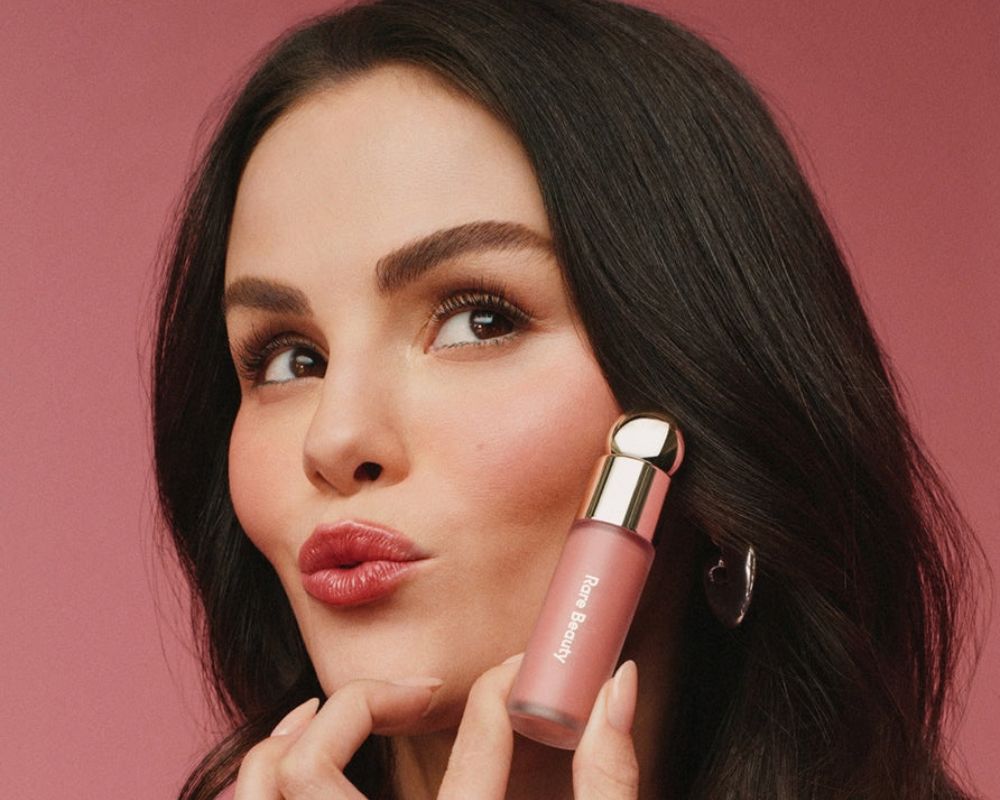
(Image credit: rarebeauty/Instagram)