



A discerning buyer needs no introduction to luxury. They have experienced the serenity of the Four Seasons in Bali, driven the Amalfi Coast, and considered a penthouse above Dubai’s skyline. Yet their definition of true luxury has evolved. Today, they are drawn to something more personal, more enduring: exceptional, luxury mountain homes in India. Not as an alternative on a global shortlist, but as a deliberate conviction where privacy, natural grandeur and a sense of legacy become the ultimate expressions of luxury.
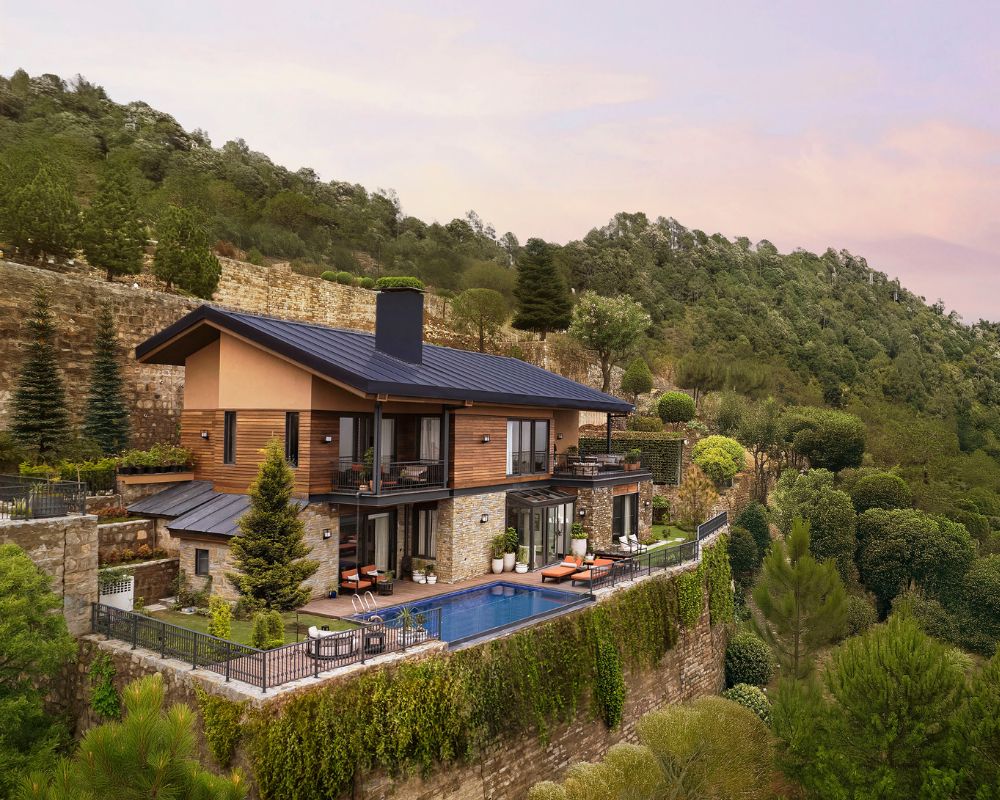
Terra Grande is that conviction, translated into stone, timber and altitude, the luxury homes vertical of the Eldeco Group, creating one of India’s most ambitious collection of luxury mountain residences. Spanning five projects across 61 acres, the collection features residences priced between ₹8 crore and ₹28 crore, set amid the pine-covered ridges of Sirmaur and Kasauli in Himachal Pradesh and the forested hills above Rishikesh in Uttarakhand.
Nothing about these developments feels conventional. Density has been kept deliberately low, materials have been chosen with uncompromising attention to quality, and every project reflects the belief that luxury in the mountains should be defined by permanence rather than spectacle. More importantly, each location was selected for qualities that are far rarer than a beautiful view: the right altitude, convenient access to a major airport, and the kind of silence that no city of ten million people can ever recreate.
This is a home where the morning begins on a terrace with pine air and no agenda. Where the patriarch of a business can work from a study overlooking the Himalayas and be back for dinner the same evening. Where memories, are actually made.
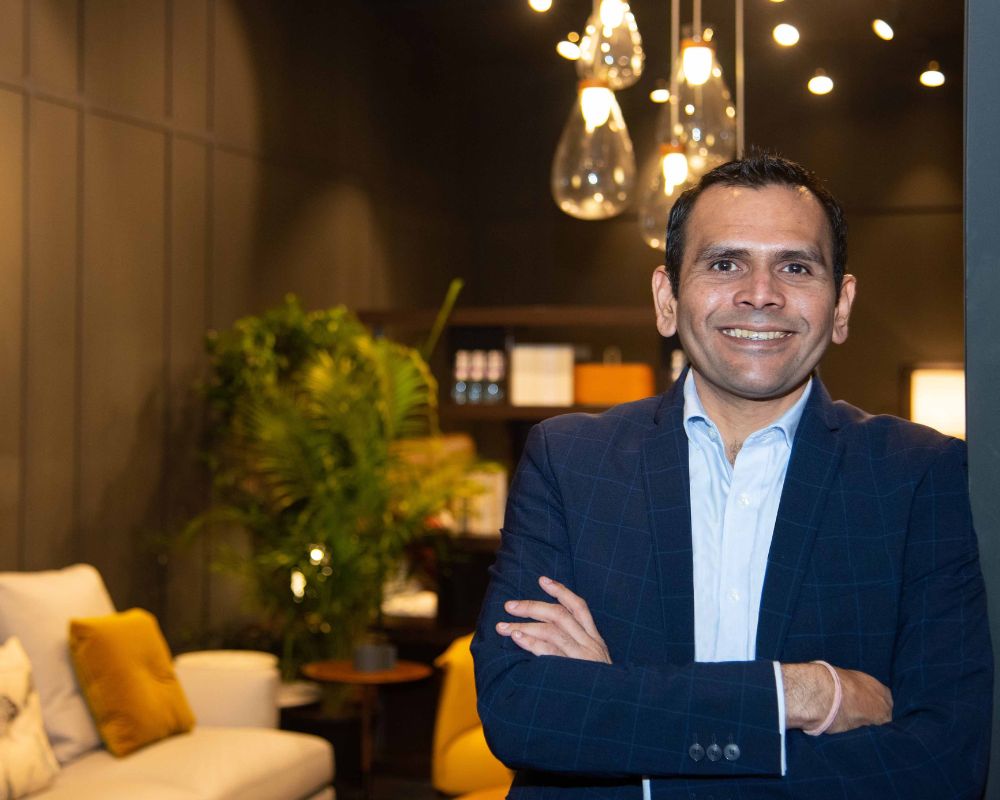
We sat down with Mr Amar Kapoor, CEO of Terra Grande, to understand what is driving India’s most discerning buyers toward the mountains, and why, once they arrive, they tend to stay.
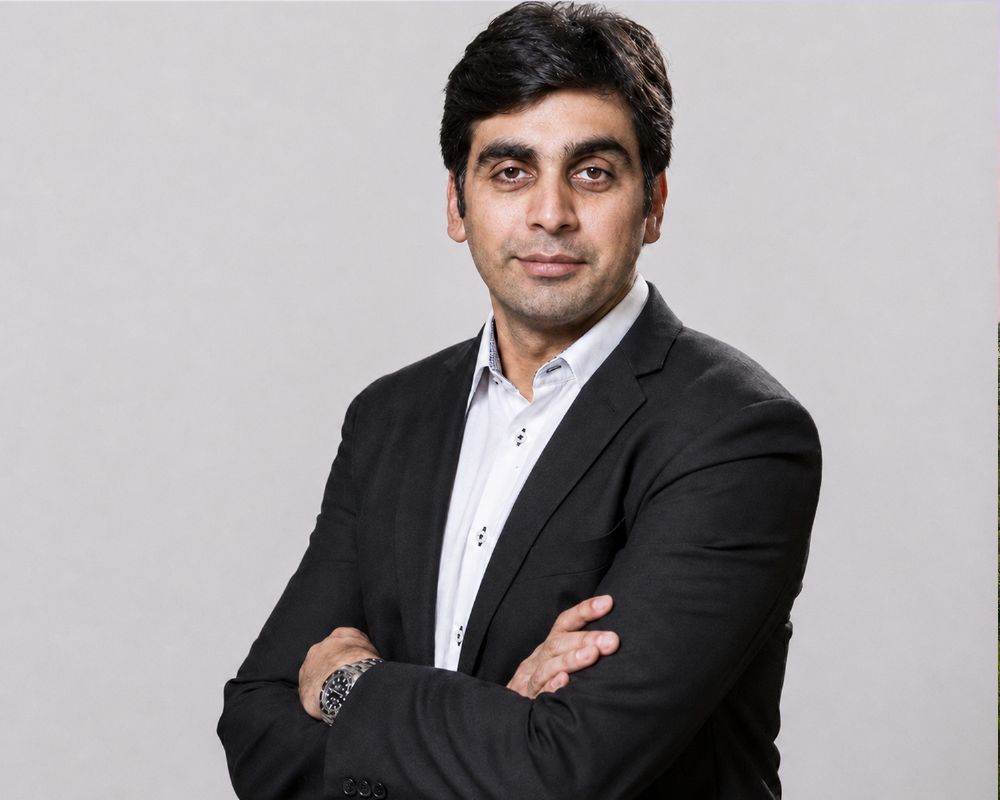
India’s wealthiest are done with city living, and it shows
Mr Amar Kapoor has watched this shift happen in real time, one buyer conversation at a time. “There is a conversation happening in boardrooms, at dinner tables, and in the back seats of cars on long drives out of Delhi that the Indian real estate industry has been slow to take seriously,” he says. “India’s wealthiest buyers, the people who built the city, who own the penthouses and the corner offices and the air miles, are quietly and deliberately choosing to root their lives somewhere else entirely. Abroad holds less appeal than it once did. A second city offers the same pressures in a different postcode. The mountains offer something categorically different.”
Mr Kapoor is direct about what is driving this. “This is a considered, values-driven decision being made by some of the most analytically sharp people in the country,” he says. “At Terra Grande, we have had a front-row seat to every conversation that led them there.”
In his view, the demand for luxury mountain homes in India reflects something far deeper than a lifestyle trend. The person choosing altitude over a city address is choosing differently, and with complete deliberation. That distinction, Mr Kapoor believes, matters enormously.
The new luxury is time
To understand why the appetite for luxury mountain homes in India has grown so decisively, Mr Kapoor is honest about what the city stopped being able to offer specifically for the people with the most options.
“A 55-year-old entrepreneur from Delhi NCR typically has everything the city is supposed to represent,” he explains. “The address, the access, the infrastructure, the social capital. And yet when I sit across from that person at Terra Grande, the conversation almost always arrives at the same place. They are time-poor in a way that wealth cannot fix. They are present everywhere professionally and almost nowhere personally. They come home late, sleep, and begin again. The city, for all its convenience, has quietly extracted the one thing no amount of money can buy back easily: unhurried time with the people they love.”
That is the real reason luxury mountain homes in India are selling before possession, Mr Kapoor says. The views across Terra Grande’s sites in Sirmaur, Solan, Kasauli, and Narendra Nagar near Rishikesh are extraordinary, and the design at each location feels genuinely considered rather than imported. “But the deeper reason,” he says, “is that buyers have done the arithmetic on their own lives and found the city wanting. The mountains are simply where the answer lives.”
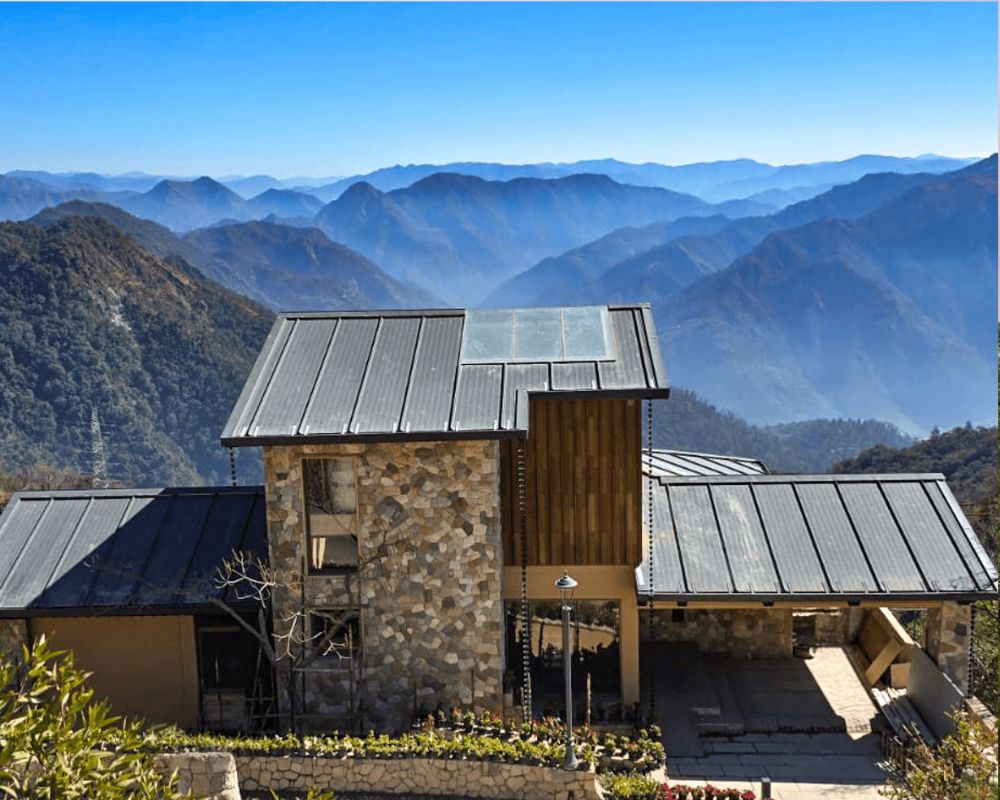
Luxury begins with accessibility
Mr Kapoor says the Indian real estate conversation rarely addresses what actually separates a good luxury mountain home in India from a great one. “A mountain home that is four hours from an airport is a destination,” he says. “A mountain home that is ninety minutes from a domestic airport with multiple daily flights to Mumbai and Delhi is a life. That single distinction determines whether a buyer uses the home twelve times a year or twice. And it is the reason every Terra Grande site was chosen against the same uncompromising filter.”
Terra Grande’s Sirmaur and Solan projects in Himachal Pradesh sit within comfortable reach of Chandigarh Airport. The developments near Narendra Nagar above Rishikesh are twenty minutes from Jolly Grant Airport in Dehradun, already connecting the major metros and on course to become an international airport. The recently opened Dehradun Expressway has made the road journey from Delhi a genuinely different proposition. Narendra Nagar itself holds its altitude at 4,000 feet, which keeps summer temperatures in the early thirties while Rishikesh bakes below. Sirmaur and Kasauli sit higher still, at 6,000 feet, with the kind of air and morning light that reminds you what a day is supposed to feel like before the notifications begin.
Ananda in the Himalayas is five kilometres from the Narendra Nagar gates, and Mr Kapoor is deliberate about that proximity. “Ananda is the kind of property where certain people visit every year,” he says. “That return clientele is there, and those are immediately the most natural buyers for what we do. Several of our buyers have been returning to that setting annually for years. The decision to own rather than visit was, for many of them, simply the logical conclusion of a relationship with a place they had been falling in love with for a decade.”
The sell-out that every luxury developer will study
Phase one at Sirmaur was thirty-nine villas, priced between eight and ten crores, and sold out completely before a single key was handed over.
“We have consistently sold these homes on the basis of experience, quality and scarcity, and we will continue to do so,” he says. “There are no assured returns in our conversations with buyers and no projected yields. What we offer is something the traditional real estate industry is genuinely uncomfortable quantifying: the value of owning something that simply cannot be replicated.”
The supply of luxury mountain homes in India at this specification, within ninety minutes of a major domestic airport, at ultra-low density, is finite and deliberately controlled. “The demand, as the number of Indians filing income tax returns of over a hundred crores continues to grow, is moving in only one direction,” Mr Kapoor says. “What Sirmaur proved, more than anything else, is that the buyer for luxury mountain homes in India existed and had been waiting. They were waiting for a product that treated their intelligence with the same seriousness they bring to every other major decision in their lives.”
The address where your life finally catches up with your ambitions
There is one thing Mr Kapoor will not let pass without a correction. Call it a second home and he will gently but firmly push back. “We don’t like being addressed as a second home developer,” he says. “We are in the business of selling homes where memories are made.” The distinction matters to him more than it might seem. A second home, by definition, is supplementary.
Something you visit when your real life gives you permission. What Mr Kapoor is building, he insists, is the home where the real life actually happens. “A person living in the city is generally spending very little time with his loved ones,” he says. “So when is the chance to really spend time with your loved ones, even in your primary home?” For Terra Grande’s buyers, the address is the point, not the afterthought.
Beyond status: What today’s luxury buyer really wants
The demographic data is specific, and Mr Amar Kapoor is worth quoting precisely on this.
“The core Terra Grande buyer is between forty and sixty years old and motivated by something that goes well beyond a standard buyer profile,” he says. “Status is a natural by-product at this level of product, but it is far from the primary driver. They are buying for a quality of life that the city has made structurally difficult to access. They are buying, as one of our buyers put it to me recently, for the version of themselves that exists before the first meeting of the day.”
Mr Kapoor sometimes describes his buyer as someone who loves to drive rather than simply to be seen driving. “The person who buys at Terra Grande is making a decision for themselves, a deeply personal and considered one,” he says. “Luxury mountain homes in India, when done right, attract the kind of buyer who believes in rewarding themselves, experiencing the slow part of life. Luxury, for this cohort, is a reward they have decided, finally, to actually claim.”
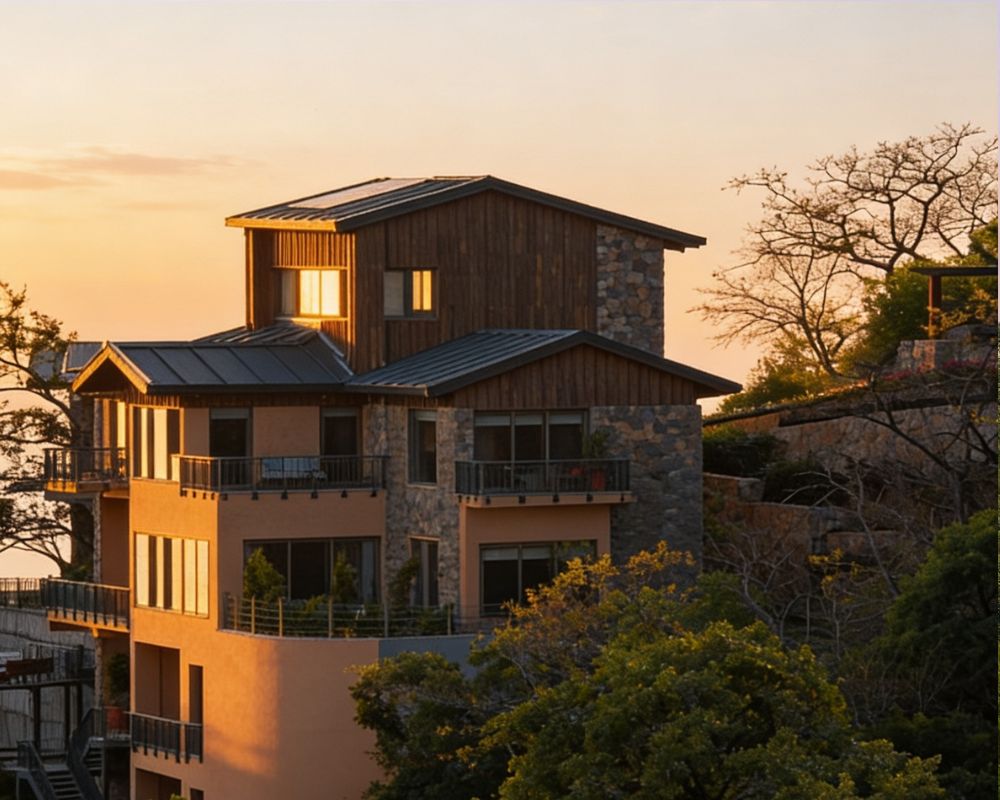
Why buyers who looked at Dubai chose the mountains instead
Mr Kapoor has had direct conversations, more than once, with buyers who came to him while seriously considering a penthouse in Dubai. He raises this to illustrate a broader point. “The reasoning those buyers gave me when they chose the mountains instead is the clearest articulation I have heard of what this moment in Indian real estate actually means,” he says.
“Delhi is severely polluted for roughly three months of the year,” Mr Kapoor explains. “A property in Dubai, however beautiful, requires uprooting your entire life to use it for three months at a stretch. A villa in Sirmaur or Narendra Nagar is a flight and a short drive away. Your family can stay while you return to Delhi for a Monday morning meeting. You can be back by Tuesday evening. Loved ones are two hours away, in a home that is yours, in air that is clean, with a view that requires no passport. That is a structurally better life for an affluent Indian family with real roots in this country.”
For a long time, the benchmark for Indian luxury real estate was external. The buyer considering luxury mountain homes in India would inevitably measure the option against something in London, Singapore, or Dubai. That era is ending, and Mr Kapoor sees it clearly. “India’s ultra-wealthy are building their own reference points,” he says. “And luxury mountain homes in India are at the centre of that new, unapologetically Indian identity.”
The making of a limited-edition legacy
Mr Amar Kapoor is expanding Terra Grande across multiple projects spanning Himachal Pradesh and Uttarakhand, cementing its position as the most considered portfolio of luxury mountain homes in India. Together they will house residences across Sirmaur, Solan, and locations near Rishikesh, each one held to the same density principle of three villas per acre and the same material language of Himalayan stone, reclaimed wood, and spaces that move between inside and outside without announcement.
The question he is asked most often is how he plans to scale a brand that is explicitly built on scarcity. “A hundred exceptional homes delivered with complete integrity, to buyers who will live in them and recommend them to people they care about, is a serious and sustainable business. I want a hundred homes that every owner would hold onto indefinitely, rather than ten thousand that generate only transactions,” he says.
Eldeco Group has a decades-long track record of delivery across the country, and Mr Kapoor sees that legacy as the only foundation worth building on. “The thing that has remained constant since the first villa at Sirmaur is this: our journey with the buyer begins at handover,” he says. “Most developers consider handing over the keys the finish line. For us, it is the starting gun.
We walk with our buyers through the complete management of their home because a buyer who genuinely loves what they own is the most powerful thing a real estate brand can have. At this level of the market, a twenty-crore home sells through trust, through lived experience, and through one person telling another that this changed the way they live.”
The mountains named something the city never could
There is a phrase Mr Kapoor keeps returning to when he thinks about what luxury mountain homes in India are really offering the people who choose them. It has nothing to do with views or square footage or investment returns. It is something far more personal than that.
“It’s like rewinding yourself to the past,” he says. “Living the life how it was meant to be. Before the world of mobile phones and laptops.” He is not describing nostalgia but a very deliberate choice that some of India’s most successful people are making about what the second half of a well-earned life actually looks like.
Mr Kapoor is candid about the fact that this was not a category he set out to define. “It’s all about being discovery for us as well,” he says. “We didn’t know how it would kind of lead.” What he found, one buyer conversation at a time, was that the demand had always been there. India’s wealthiest had simply been waiting for a product serious enough to deserve it.
“I think there’s a fundamental shift in people’s thinking,” Mr Kapoor says. And from where he is sitting, across a pipeline of homes set into some of the most extraordinary mountain landscape in the country, it is hard to argue otherwise.
Mr Amar Kapoor is the CEO of Terra Grande by Eldeco. A Regent’s Business School London graduate and Harvard Business School executive programme alumnus, he has spent years working across project development and luxury real estate in India. Terra Grande is currently expanding across five projects in Himachal Pradesh and Uttarakhand, with residences priced from eight crores to twenty-five crores.
Also worth reading on The Pillar Edit: Why Six Senses is the only hotel group proving its eco metrics and what it tells us about the future of wellness destinations that Terra Grande’s buyers are already living.