




Amit Pai, Managing Director of Poltrona Frau India, is one of the clearest voices articulating what that philosophy looks like in practice. His perspective, shaped by over a century of Italian craft tradition and an acute understanding of how the world’s most discerning interiors clients are now thinking about their homes, frames a conversation about Poltrona Frau luxury furniture that goes considerably deeper than design.
There is a room in most homes that has gone through the most significant transformation of any domestic space in the last decade. The kitchen has been redesigned and reimagined so many times it has become its own industry. The bedroom has absorbed the wellness movement and emerged as a sanctuary of considered ritual. And yet the most interesting transformation of all has happened somewhere else entirely. It has happened in the dining room, and what has taken place there is more compelling than almost anything else in luxury interiors right now.
For generations, the dining room was a performance space. The good cutlery came out for guests. The table was set in a particular way for particular occasions. The room existed for occasions, not for life. Between those occasions, it sat largely unused, a beautiful monument to formality that most families actually inhabited for perhaps a dozen evenings a year.
That relationship has ended and the luxury furniture industry, which has always understood that a room’s social function shapes what should be placed inside it, is responding with something considerably more interesting than a new collection. It is responding with a philosophy.
Poltrona Frau luxury furniture: Inside its human-first approach
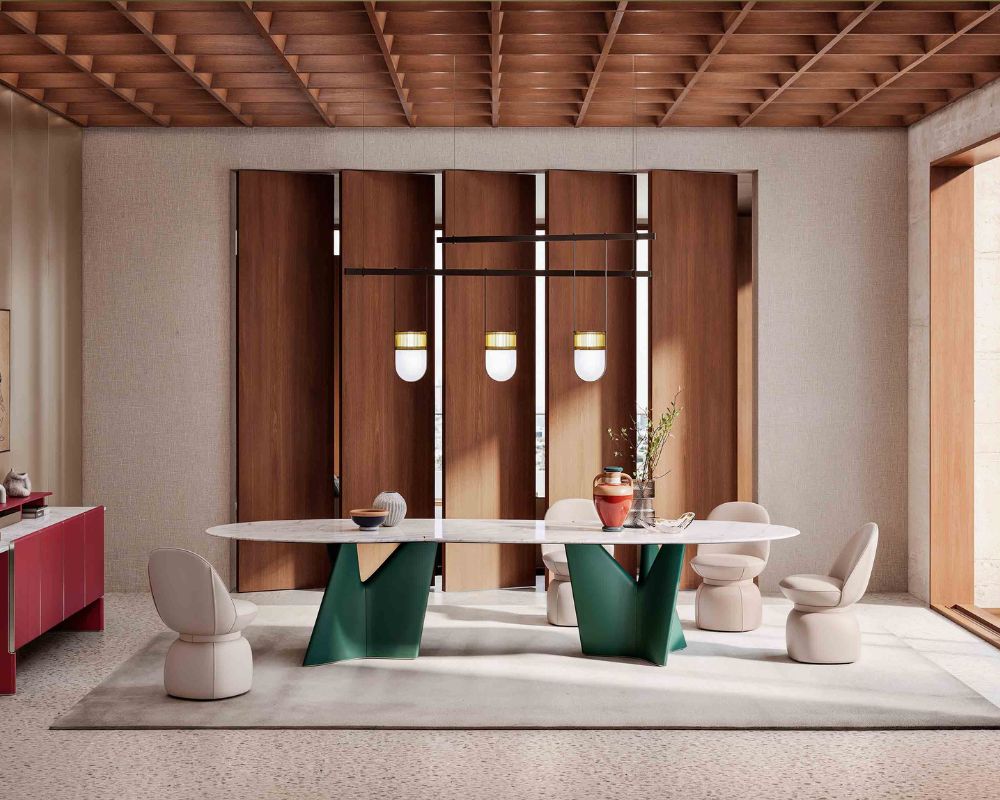
The dining room, as Amit Pai describes it, has transcended its traditional association with formal occasions and evolved into a versatile space conducive to everyday conversations, shared meals and meaningful interactions. That shift, from performance space to living space, is the fundamental brief that every piece of Poltrona Frau luxury furniture in the dining category now responds to.
The practical expression of this philosophy is visible in Infinitamente 2.0, unveiled at Milan Design Week 2026. A contemporary interpretation of Roberto Lazzeroni’s Infinito table, first introduced in 2021 as a numbered limited edition, the piece is crafted using the exclusive Rosso Lepanto marble and represents what Pai describes as the brand’s commitment to creating furniture that transcends time and remains relevant across generations.
What is interesting about this commitment is that it is primarily functional rather than aesthetic. A dining table that transcends time is one that works as well for a Tuesday morning with coffee and a laptop as it does for a dinner for ten on a Saturday evening. The proportions, the ergonomics, the material behaviour under daily use rather than occasional display, all of these are design considerations that carried little weight when the dining room was a performance space and now carry enormous weight in every design decision Poltrona Frau makes.
The 2026 True Over Time collection extends this logic across the full dining offering. The Archibald Slim Dining Chair by Jean-Marie Massaud introduces refined proportions and Pelle Frau leather accents that transform the dining room into what the brand describes as a warm social hub within the home. The Abigail dining table, also by Roberto Lazzeroni, brings sculptural beauty and tactile materials into a piece designed for daily use rather than occasional ceremony. Together they represent a coherent answer to a specific question: what does a dining room look like when it is being lived in rather than curated for an audience?
How Poltrona Frau luxury furniture interprets quiet luxury
Italian design has consistently prioritised the harmonious integration of aesthetics, functionality and craftsmanship. Amit Pai articulates this with precision: the brand’s identity, sculpted over more than a century, rests on artisanal expertise, exceptional materials and close collaborations with some of the world’s foremost designers and architects.
But the more interesting observation is about what this legacy means in the current moment. Quiet luxury, as a descriptor for a broader cultural shift away from conspicuous branding toward considered quality, is often applied to fashion. Its expression in interiors is arguably more complete and more durable. A piece of Poltrona Frau luxury furniture carries its quality in the weight of its materials, the precision of its stitching, the specific resistance of Pelle Frau leather under touch rather than in any visible branding on its exterior. For someone who knows, the signal is immediate. For someone encountering the brand for the first time, the piece simply looks and feels extraordinary without requiring any decoding.
Pai frames this directly: luxury transcends ostentation. It resides in the quality of the materials, the precision of every detail and the enduring confidence of design that remains as captivating decades from now as it is in the present. That framing functions as a manufacturing philosophy rather than a marketing position. Every aspect of the Pelle Frau leather selection, the proportions of each piece, the precision of the craftsmanship, embodies a commitment to quality that resists any attempt to expedite or replicate it on a faster production timeline.
This is a meaningful distinction in a market where the aesthetics of quiet luxury have been adopted widely but the underlying commitment to craft has lagged behind. The surface language of restraint and natural material can be achieved relatively easily. The depth of quality that makes a piece genuinely worth owning for thirty years takes decades to develop and demands an entirely different kind of manufacturing discipline.
What natural materials do that nothing else can in Poltrona Frau luxury furniture
Natural materials hold an esteemed position in fine interiors, Pai observes, not solely due to their inherent luxury but because they possess qualities that are inherently unmanufacturable. This characteristic imbues interiors with a sense of lived-in authenticity that distinguishes them from spaces that are merely decorated.
The Rosso Lepanto marble in Infinitamente 2.0 is the clearest expression of this principle. Each slab of Rosso Lepanto is unique, carrying within its veining the specific geological history of the quarry from which it came. No two tables are identical. That irreducibility, the fact that a machine cannot produce what a specific piece of stone produces, is the quality that separates natural material from its alternatives in ways that photograph differently, feel differently and age differently over decades of use.
Pelle Frau leather carries the same logic. Over three decades of research produced Pelle Frau ColorSphere Impact Less, a leather developed specifically to reduce the environmental impact of processing while preserving the quality, softness and durability that define the material. The development of this innovation reflects a recognition that material selection and material innovation are equally crucial aspects of contemporary interior design. Preserving the inherent qualities of natural materials while advancing the methods of sourcing and processing them is, Pai argues, both a responsibility and a design opportunity.
For clients investing in Poltrona Frau luxury furniture, this dimension of the material story carries a significance it lacked a decade ago. The question of where a piece of leather came from, how it was processed and what its long-term environmental footprint looks like is now a central part of the conversation that design-literate clients are having with their interior designers and brand advisors. The brands that answer that question with specificity rather than generality are the ones that earn the trust of the most discerning buyers.
Why heirloom furniture is being redefined for a new generation of collectors
In today’s luxury consumer landscape, there is a discernible shift towards more deliberate purchasing decisions. Amit Pai identifies this as a natural alignment with the philosophy of heirloom furniture, but with a crucial distinction. Heirloom pieces are evolving from being inherited possessions to intentionally acquired ones.
Today’s collectors, Pai observes, seek pieces that embody enduring craftsmanship, timeless design and a narrative that can be built upon over time. The acquisition of a piece of Poltrona Frau luxury furniture is increasingly understood as a long-term decision rather than a seasonal one, shaped by the question of what will still be in this room in thirty years and still feel right there rather than by what happens to be trending in the showroom this spring.
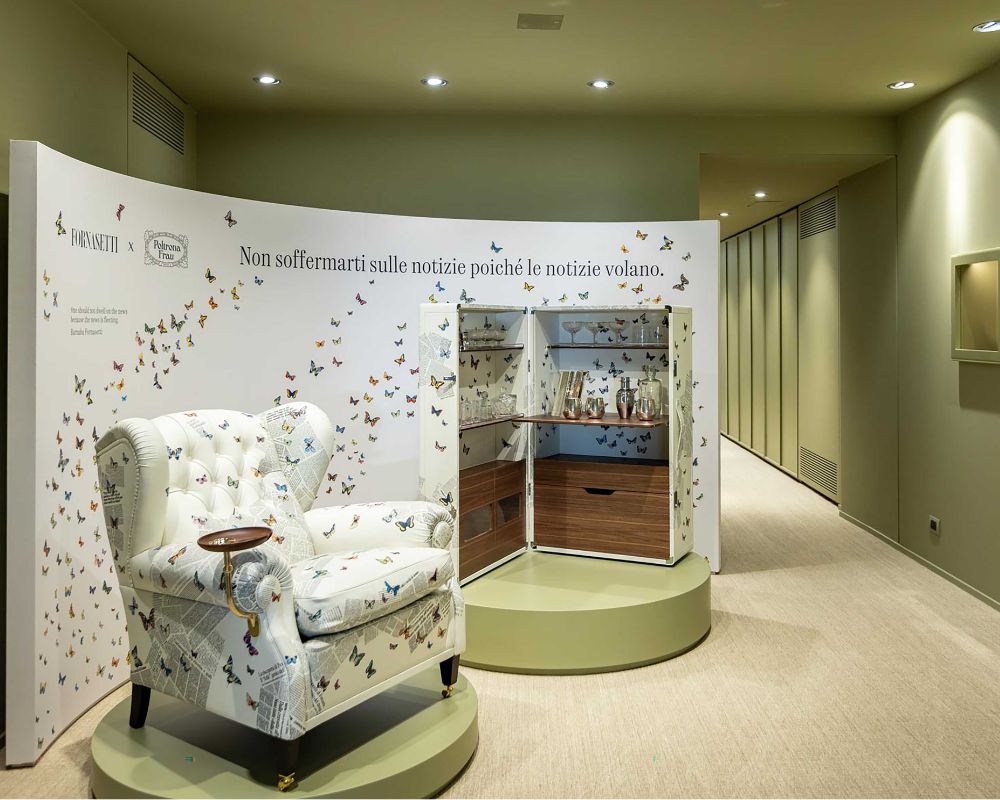
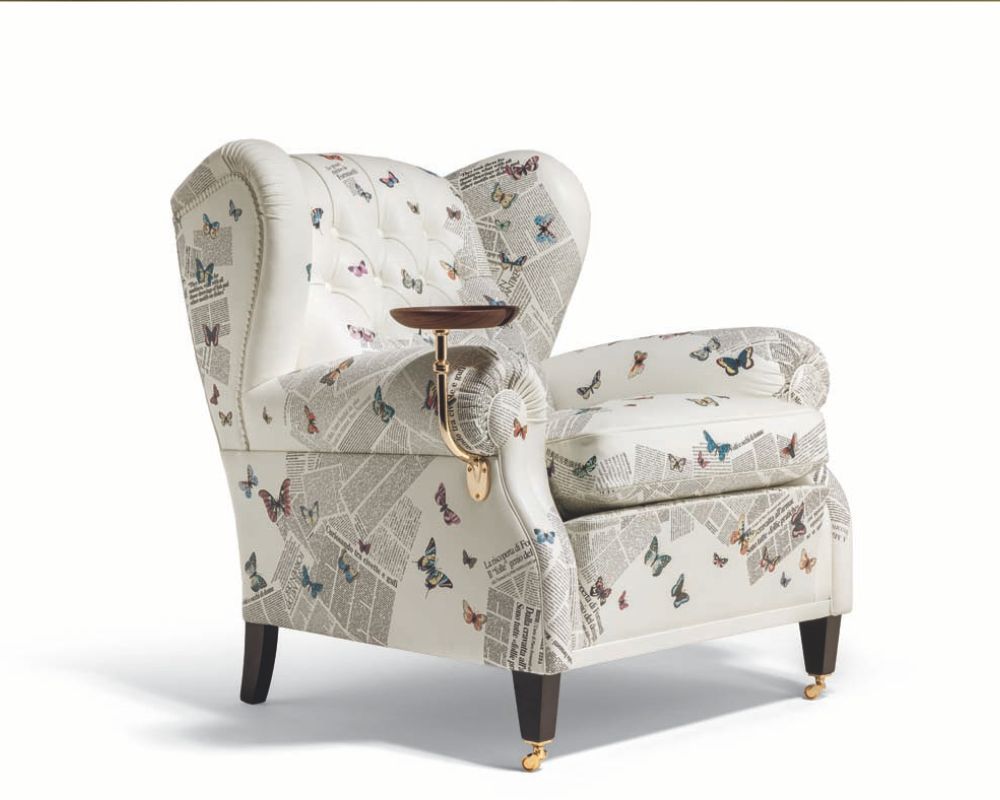
The 1919 armchair exemplifies this evolution. Conceived over a century ago, it remains one of Poltrona Frau’s most enduring icons, demonstrating how exceptional craftsmanship and timeless design transcend generations. It is a piece that honours heritage while continuing to find relevance in contemporary homes. The 1919 Ultime Notizie edition, created in collaboration with Fornasetti, demonstrates how that essence can be reinterpreted without being compromised. The craftsmanship, comfort and unmistakable character remain constant. The artistic interpretation evolves.
The ability of an iconic design or heritage product to evolve without compromising its identity is what confers upon it enduring relevance. This is the test that separates genuine heirloom furniture from pieces that are described as heirlooms for marketing purposes. A piece that can absorb new materials, finishes and artistic interpretations while remaining recognisably itself has something built into its design from the very beginning, a quality that belongs to the original creative act and resists any attempt to introduce it retrospectively.
What the next era of luxury interiors means for Poltrona Frau
For many years, luxury interiors were characterised by novelty. The next chapter, Amit Pai argues, is likely to be defined by enduring qualities. Today’s consumers are more informed and discerning than ever before. They are shifting away from acquiring furniture as a status symbol and instead selecting pieces that align with their values, lifestyle and a long-term appreciation for craftsmanship.
This shift, Pai suggests, reflects a response to a world that has become increasingly fast-paced and disposable. The home has emerged as a sanctuary of permanence, where individuals seek authenticity, comfort and objects that acquire meaning through years of use rather than lose relevance with time. In this context, the dining room is changing its function while simultaneously becoming the room that most clearly expresses what a home is actually for.
For Poltrona Frau, this reinforces principles that have guided the brand for over a century. Every new material, technology and collaboration is assessed against a singular question: will it remain relevant, aesthetically pleasing and purposeful decades from now? That question functions as a manufacturing filter, shaping every decision about what gets produced and what gets set aside.
The True Over Time collection, with its Beautilities concept of everyday objects made special through craftsmanship and design, extends this philosophy beyond the showroom piece into the fabric of daily life. A beautiful leather tray. A precisely weighted bookend. Objects that are handled every day and that improve through that handling rather than degrade. The dining room is the room where all of this comes together most completely, because it is the room where the objects that surround a meal, the table, the chairs, the lighting, the details, contribute collectively to an experience that either deepens with repetition or fades with familiarity.
Poltrona Frau luxury furniture is designed for the former. That is the philosophy, the manufacturing standard and, increasingly, the commercial proposition that the most discerning interiors clients in the world are choosing to invest in.
The dining room is where luxury furniture proves itself over decades. The broader story of how Italian craft houses are navigating the new consumer is one worth following closely.
Read next: Brunello Cucinelli and Humanistic Capitalism: The Business Philosophy That Changed Luxury
(Image credit: Poltrona Frau)