
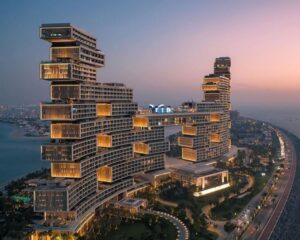


There is a moment in every market cycle where a single city concentrates so much hospitality investment, so many brand debuts and so much architectural ambition that it stops being a destination story and becomes an industry story. Dubai has reached that moment.
Between 2026 and 2029, Aman, Janu, Baccarat, Rosewood, MGM, Kempinski, InterContinental, Kimpton, Bulgari and a collection of independent luxury operators are all either opening or under construction in the emirate. The volume of luxury hotel openings in Dubai is unlike anything the city has seen before. According to Cavendish Maxwell’s Dubai Hospitality Sector 2025 Market Performance Report, Dubai’s hotel inventory has already reached 158,700 rooms across 770 establishments, with almost 70 percent in the high-end category, and by 2027, luxury hotels are projected to account for 68.4 percent of the city’s upcoming supply pipeline. Hotel occupancy in Dubai averaged 81 percent in 2025, and average daily rates rose to AED 746, up 8.7 percent year on year.
For hospitality professionals, investors and brand strategists in Europe and the United States, the luxury hotel openings in Dubai is a case study in how a city builds a hospitality ecosystem at speed, and what the brands choosing to enter that market are betting on. Here is what the pipeline reveals, and what it means for the global industry.
The market argument: why Dubai’s fundamentals are compelling right now
Before examining what the individual luxury hotel openings in Dubai reveal, the business case for the pipeline deserves scrutiny. Several factors are converging simultaneously.
According to a 2026 Middle East luxury hotel market analysis, average daily rates in Dubai’s luxury segment sit at $485, with 78 percent occupancy in that segment, a rate that outperforms most comparable European markets. On the residential side, Khaleej Times reported in May 2026 that average prices for branded and hotel-linked residences in Dubai reached approximately AED 3,800 per square foot in 2025, with transaction values rising sharply even as sales volumes grew at a slower pace, signalling a shift toward larger, higher-value units.
The branded residences component is the structural story that European and American hospitality investors often underestimate. The same Khaleej Times report found that hospitality-operated developments account for around 38 percent of all branded schemes in Dubai, reflecting strong demand for five-star services, rental management and lifestyle integration. For luxury hotel groups entering Dubai, the residential revenue stream often finances the hotel construction entirely, meaning the brand earns fees from residences, management income from the hotel and long-term positioning in one of the world’s highest-traffic luxury markets without carrying the development risk themselves.
The connectivity argument remains one of the most powerful in Dubai’s favour. A city reachable from London in seven hours, from New York in fourteen and from most of Asia in five is, for global luxury hospitality, almost uniquely positioned. Dubai welcomed 19.6 million visitors in 2025, with Western Europe the largest source market at 21 percent, according to Cavendish Maxwell.
What each luxury hotel opening in Dubai tells us about where hospitality is heading
Aman Dubai, 2027: the world’s most private hotel brand chooses its most public city
Aman has spent decades building its brand on remoteness – Phuket, Bhutan, Patagonia. The Aman philosophy is essentially that luxury is best experienced as far from urban density as possible. The decision to open in Dubai, one of the world’s most connected and commercially active cities, is therefore the most significant strategic signal the brand has sent in years.
According to Forbes and The Opening List, Aman Dubai will open in 2027 on a 350-metre private beach in Jumeirah 2, featuring approximately 80 to 100 suites alongside 82 Aman branded residences and a private Aman Club. Room rates are projected to exceed $3,000 per night, positioning it as the most expensive hotel per key in the UAE. The Aman CEO has publicly described it as the most expensive hotel in Dubai. Construction was underway as of April 2026, confirmed by Hotelier Middle East.
What this opening signals to the industry is that ultra-low-density, ultra-high-rate urban luxury is a viable and increasingly attractive model. Aman is bringing that principle to a new context and betting that the right buyer exists there at those rates.
The B2B lesson: The Aman Dubai model proves that brand integrity and urban deployment can coexist. The real constraint is density, rather than location. Dubai’s luxury hotel openings are showing that properties with a strong point of view can enter gateway cities while preserving what they stand for, as long as they resist the pressure to scale.
Janu Dubai, 2027: a social alternative shaping a new kind of luxury
As confirmed by Time Out Dubai and FACT Dubai, Janu Dubai is scheduled to open in DIFC in 2027, designed by Pritzker Prize-winning firm Herzog and de Meuron, with approximately 150 rooms, branded residences and a members club. Janu translates to soul in Sanskrit and is Aman Group’s second brand, designed to capture a more social, energetic guest than Aman’s contemplative traveller.
The strategic significance lies in what the move represents. Aman Group is launching two hotels in the same city within the same year, yet at opposite ends of the experiential spectrum. One is a beachfront sanctuary designed for guests who want to disappear; the other is a DIFC tower created for those who want to connect. Same parent company, same city, two distinctly different ideas of what luxury in Dubai can mean.
Janu Tokyo, which opened in March 2024, set a new benchmark by combining the service and design standards of Aman with a distinctive energy encouraging guests to interact, explore and connect, establishing the playbook that the Dubai property will follow.
The B2B lesson: Market segmentation within a single city is becoming increasingly sophisticated. The luxury hotel openings in Dubai prove that a market can be large enough, and diverse enough in its visitor demographics, that two ultra-luxury hotels targeting fundamentally different guest psychologies can coexist and thrive within the same hospitality group.
Baccarat Hotel and Residences Dubai, 2027: when a luxury goods house becomes a hospitality brand
As reported by What’s On Dubai and PrivataList, Baccarat Hotel and Residences Dubai will open in Downtown Dubai in 2027, designed by Studio Libeskind in twin tapering towers, featuring 145 rooms and suites, 91 branded residences and four restaurants and bars, with Baccarat crystal interiors throughout. This is Baccarat’s Middle East debut and only its second hotel globally after New York.
The Baccarat hotel model is the purest expression of the branded residences trend that is reshaping global luxury hospitality economics. Baccarat the crystal house, founded in 1764, has a brand equity that almost no hotel group can manufacture from scratch. By converting that equity into a hospitality experience, Baccarat earns hotel management fees, residential sales premiums and brand extension without manufacturing a single additional piece of crystal.
For European luxury houses watching this model from Paris or Milan, the luxury hotel openings in Dubai are a working demonstration of how heritage brands convert cultural capital into hospitality revenue. The same logic has driven Bulgari Hotels and Armani Hotels. What makes Baccarat interesting is that it is doing this in only its second market, choosing Dubai before London, Paris or any of the obvious European candidates.
The B2B lesson: Heritage luxury goods brands entering hospitality are going where the high-net-worth demand is densest and the branded residences economics are strongest. Dubai, not Paris, is currently that market.
Rosewood Dubai, 2029: the long bet and what patience tells you
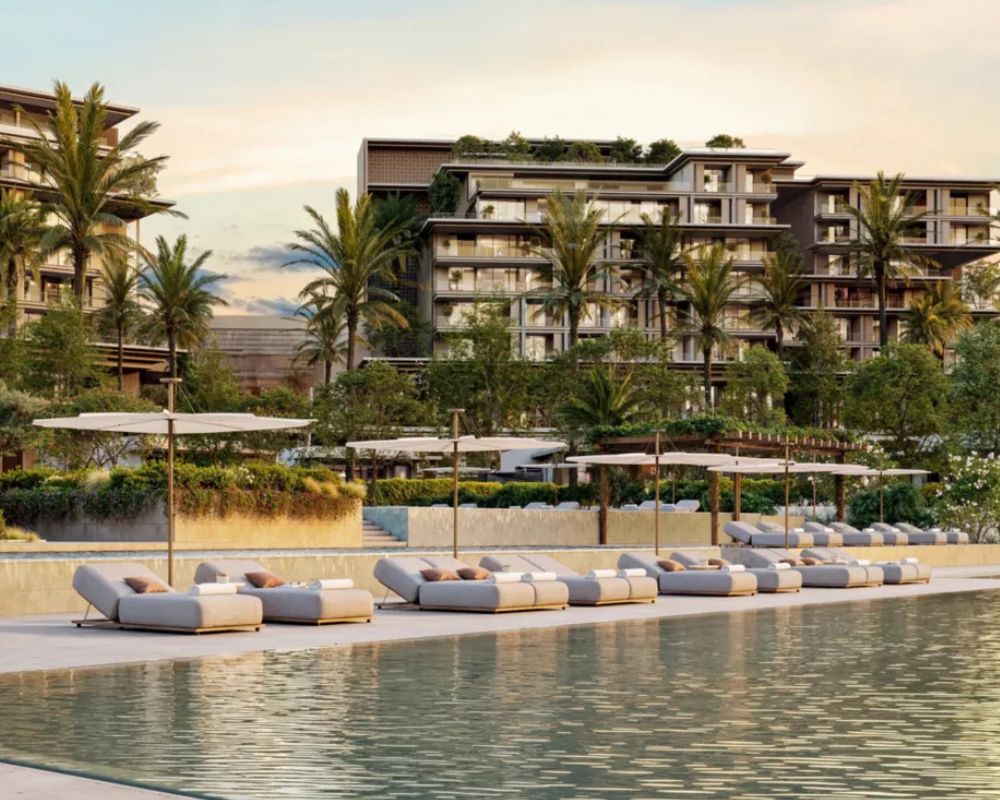
As confirmed by Forbes and EdgeProp, Rosewood Dubai will anchor Dubai Peninsula alongside Aman, featuring 195 keys, eight garden villas, 63 branded residences, five beachfront villas, four dining venues and a wellness centre, scheduled for completion in 2029. The development is by H&H, the same developer behind Aman Dubai.
Rosewood Dubai is the most commercially instructive opening in the pipeline precisely because of its timeline. A 2029 opening means Rosewood is signing today for a market position three years ahead. The brand is positioning itself for the Dubai luxury landscape it expects to see when the hotel opens. With simultaneous commitments to properties in Riyadh, Diriyah and other Middle Eastern markets, this reflects a considered regional thesis rather than a single opportunistic bet.
The B2B lesson: The most sophisticated hospitality operators are making long-cycle commitments based on structural confidence in what luxury hotel openings in Dubai can deliver, rather than short-cycle reactions to current RevPAR. European and American hotel groups evaluating Dubai on a two-year horizon are operating on a different strategic timescale from the brands already establishing a presence on the ground.
The Kempinski Floating Palace: when innovation is the product
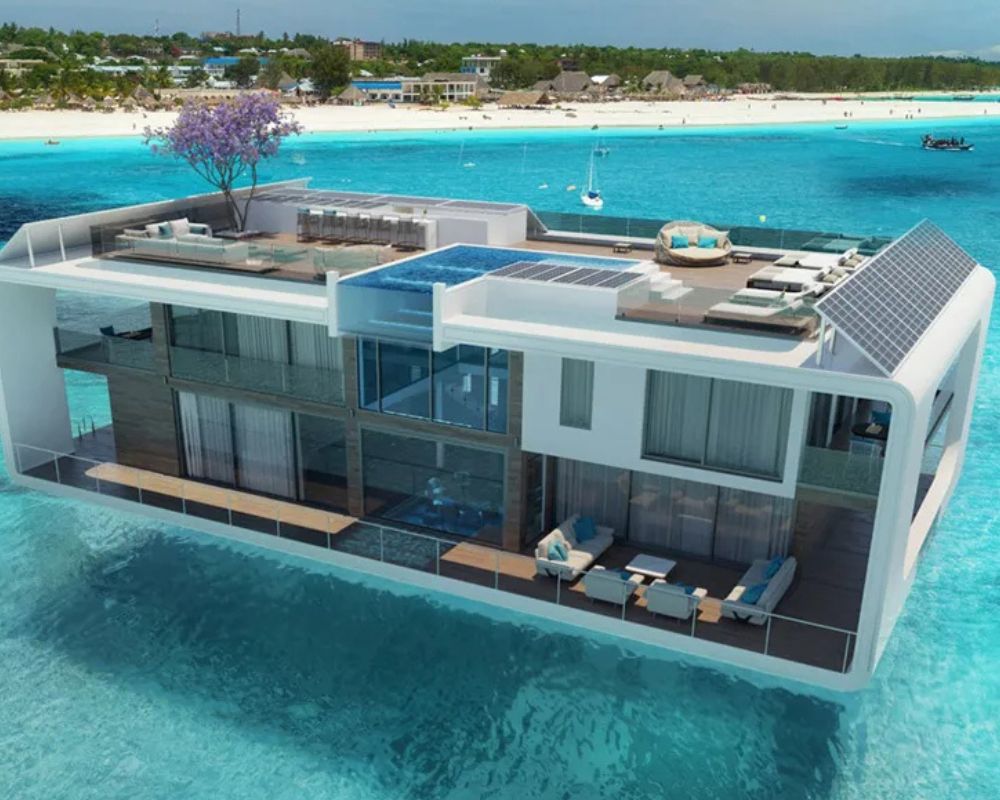
As reported by Bayut and Villa88, Kempinski Floating Palace introduces Neptune, the Middle East’s first floating and mobile villa, anchored at Dubai Palm Marina, with eco-conscious residences powered by electric-ready engines that support desalination and waste recycling, featuring two to four-bedroom layouts and full hotel services.
This is the opening that tells us something about where hospitality product innovation is heading. The floating villa is a concept that could not exist in Paris or New York or London. It requires a geography, a regulatory environment and a guest base that is sufficiently experimental to try something genuinely new. Dubai provides all three.
For the global hospitality industry, the Kempinski Floating Palace is a proof of concept in a market designed for experimentation. If the model succeeds, as pre-opening interest suggests it could, the format becomes highly exportable to markets such as Monaco, the Maldives and the Adriatic. Floating hospitality could find a natural fit across these destinations, giving the brand that pioneered the concept in Dubai a valuable first-mover advantage.
The B2B lesson: Among all luxury hotel openings in Dubai, the Kempinski Floating Palace is the clearest proof that the city functions as a testing ground rather than just a revenue market. The regulatory flexibility, the concentration of high-net-worth early adopters and the media attention the city commands make it an ideal environment to pilot formats that would face far higher barriers to entry in more established markets.
What the pipeline of the ultra luxury hotel openings in Dubai means for the global hospitality industry
Three structural conclusions emerge from the luxury hotel openings in Dubai that have implications well beyond the emirate itself.
The branded residences model is now the default financing structure for ultra-luxury hotels globally. Dubai has accelerated this trend faster than any other market. Khaleej Times reports that hospitality-operated developments account for 38 percent of all branded schemes in Dubai. For European developers and hotel groups still treating residences as an add-on rather than a core revenue stream, the Dubai pipeline is a working demonstration of what happens when residences are treated as the primary financial engine.
The definition of a gateway city is expanding. For decades, European and American hotel brands defined their prestige by their presence in London, Paris, New York and Tokyo. The luxury hotel openings in Dubai have placed the emirate firmly in that conversation. Cavendish Maxwell’s 2025 report confirms Dubai welcomed 19.6 million visitors in 2025 and the connectivity infrastructure to deliver them is already in place.
Ultra-luxury supply is growing faster than mid-market supply in Dubai, and that ratio is intentional. Cavendish Maxwell projects that by 2027, luxury hotels will account for 68.4 percent of Dubai’s new supply pipeline. This is a deliberate positioning strategy at the emirate level. Dubai is choosing to compete on quality and yield rather than volume and occupancy. For markets like London or Miami that are wrestling with the right balance between luxury and accessible hospitality supply, Dubai’s pipeline is a useful reference point for what a coherent strategy looks like when executed at scale.
The takeaway for hospitality professionals in Europe and the United States
The luxury hotel openings in Dubai show what happens when a market commits to ultra-luxury as a positioning strategy and builds the supply, connectivity and regulatory environment to support it. They also demonstrate how heritage luxury brands beyond traditional hospitality, from crystal houses and fashion labels to gaming companies, can convert brand equity into hotel revenue while preserving their core identity. And they show how the branded residences model, when integrated into the development from the outset, can fundamentally reshape the economics of luxury hotel development.
The luxury hotel openings in Dubai represent more than a pipeline story. They offer a glimpse into what the luxury hospitality industry could look like over the next decade, and that vision is becoming increasingly difficult to overlook.
Also worth reading: Why Six Senses is the only hotel group proving its eco metrics — and what genuinely responsible luxury hospitality looks like when sustainability is built into the product from the ground up.
(Image credit: aman.com)