

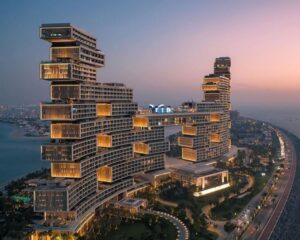


There is a particular kind of invisibility that the very best luxury hotel interior design studios have mastered over decades, and it is entirely intentional. You walk into a room at the Four Seasons George V in Paris and something happens to you.
The scale of the space, the quality of the light, the relationship between the furniture and the walls and the ceiling, the way the materials speak to each other across the room. You feel it before you name it. And then you put your bags down, order from room service and move on with your life. The studio that spent three years designing that room will receive precisely no credit in the photographs you take or the review you write.
This piece is about those studios. These are the luxury hotel interior design studios that shape the most memorable rooms in the world’s finest hotels, working on projects for luxury hotel interior design studios that can take five years, cost tens of millions of dollars and require a depth of craft knowledge that goes well beyond what most interior design practice involves. Their names rarely appear on hotel websites, their work is experienced by millions of guests every year and the hospitality industry they have built, is the most instructive example in luxury of what genuine creative authority looks like when luxury hotel interior design studios choose to operate entirely without a public profile.
The luxury hotel interior design studios shaping the world’s finest suites
1. Pierre-Yves Rochon has been shaping the finest hotel rooms since 1979
Pierre-Yves Rochon founded his Paris studio in 1979 as one of the first dedicated luxury hotel interior design studios with a philosophy that has remained consistent across five decades and hundreds of projects: that luxury hotel interior design should celebrate the character of each property rather than impose a signature style upon it, and that the highest compliment a guest can pay a room is to feel that it could only have been created for that specific building in that specific place.
The portfolio that has accumulated around that philosophy is extraordinary in its breadth and its consistency. The Four Seasons Hotel George V in Paris is perhaps the most celebrated single relationship in luxury hotel interior design, a collaboration between the studio and the hotel that has spanned more than 25 years and whose most recent chapter, completed in early 2026, involved a three-year renovation of all 243 rooms and suites carried out while the hotel remained fully operational.
The ambition was precise and ambitious simultaneously: to shift the experience from hotel accommodation to Parisian residence. Rooms were conceived as apartments, vestibules replaced corridors, dressing rooms borrowed from couture ateliers, and the entire project was guided by a philosophy that Rochon himself articulated clearly. “Today, luxury lies in the quiet quality of volumes, light, and materials,” he said. The George V renovation is the fullest expression of that belief.
The studio’s wider portfolio encompasses the Savoy and the Dorchester in London, the Hotel Sacher in Vienna, the Peninsula Shanghai, the Waldorf Astoria New York, the Four Seasons Florence, the Waldorf Astoria Beverly Hills, the Shangri-La Paris and dozens of other landmark addresses. For the Waldorf Astoria New York reopening, Rochon preserved the landmarked 1930s Art Deco grandeur of the public areas while reducing the guest count from 1,400 to 375 rooms, each measuring a minimum of 600 square feet. The reduction in room count is itself a design statement: in luxury hotel interior design, space is the most expensive material.
Pierre-Yves Rochon was inducted into the Interior Design Hall of Fame in 2025, recognising five decades of contribution to the field. The studio, now affiliated with Perkins and Will, operates from Paris and Chicago and its work extends beyond hospitality into retail design, including the Boucheron and Chopard boutiques in Place Vendôme, and into prestigious private residences, demonstrating a creative range that sits comfortably within the broader luxury ecosystem.
What sets PYR apart: The long-term stewardship model. Rochon has been returning to the George V for over 25 years. His relationship with the Ritz Paris and the Hotel de Crillon follows a similar pattern of return, revision and accumulated knowledge. That continuity produces a depth of understanding of each property that a one-time engagement is structurally unable to replicate.
2. Yabu Pushelberg has spent 45 years asking how design makes people feel
George Yabu and Glenn Pushelberg founded one of the world’s most celebrated luxury hotel interior design studios in Toronto in 1980 with a focus on interior design and have spent 45 years expanding it into a multidisciplinary practice operating from a team of 100. Their philosophy is framed around a question that sounds simple and proves endlessly demanding in practice: how do you make people feel? That question has produced some of the most distinctive luxury hotel interior design of the past four decades.
The studio’s hotel portfolio spans Park Hyatt, Four Seasons, Aman, Edition and beyond. Their first major commission in 1984 was for Club Monaco in Toronto, which established their retail credentials before the hospitality work that would define their international reputation. Their work for the Four Seasons New York Downtown, set within Robert A.M. Stern’s 30 Park Place tower, embraced asymmetry as a deliberate design decision, using dark wood panel walls softened by lighter upholstery and travertine stone flooring to create a warm residential quality within a dramatically scaled building.
Their work for Aman Residences in Tokyo, the Park Hyatt Shenzhen and the Four Seasons Private Residences in Mumbai reflects a practice that moves confidently between cultures and building typologies while maintaining a consistent commitment to what Pushelberg describes as creating spaces that unfold naturally and deliver genuine surprise.
The Four Seasons Hotel Taipei, designed in collaboration with Rogers Stirk Harbour and Partners, is currently under construction and expected to complete in 2026, adding a 180-metre, 31-floor tower to Taipei’s Xinyi Planning District. The project represents the studio’s continued engagement with the most ambitious commissions in global luxury hospitality.
Beyond hotels, Yabu Pushelberg has built a significant retail design practice for brands including Bergdorf Goodman, Lane Crawford and Printemps, and a residential practice that includes La Samaritaine in Paris. This breadth reflects a studio that understands luxury as a category rather than a building type, and brings that understanding to every hotel commission it accepts.
What sets Yabu Pushelberg apart: The cross-category intelligence. A studio that designs for Bergdorf Goodman and Park Hyatt simultaneously understands how luxury desire works across the full spectrum of how wealthy people spend their time. That cross-pollination of perspective shows up in hotel work as a particular sensitivity to how guests behave, move and feel across a stay rather than simply how a room photographs.
3. HBA Hirsch Bedner Associates invented the category leading it since 1965
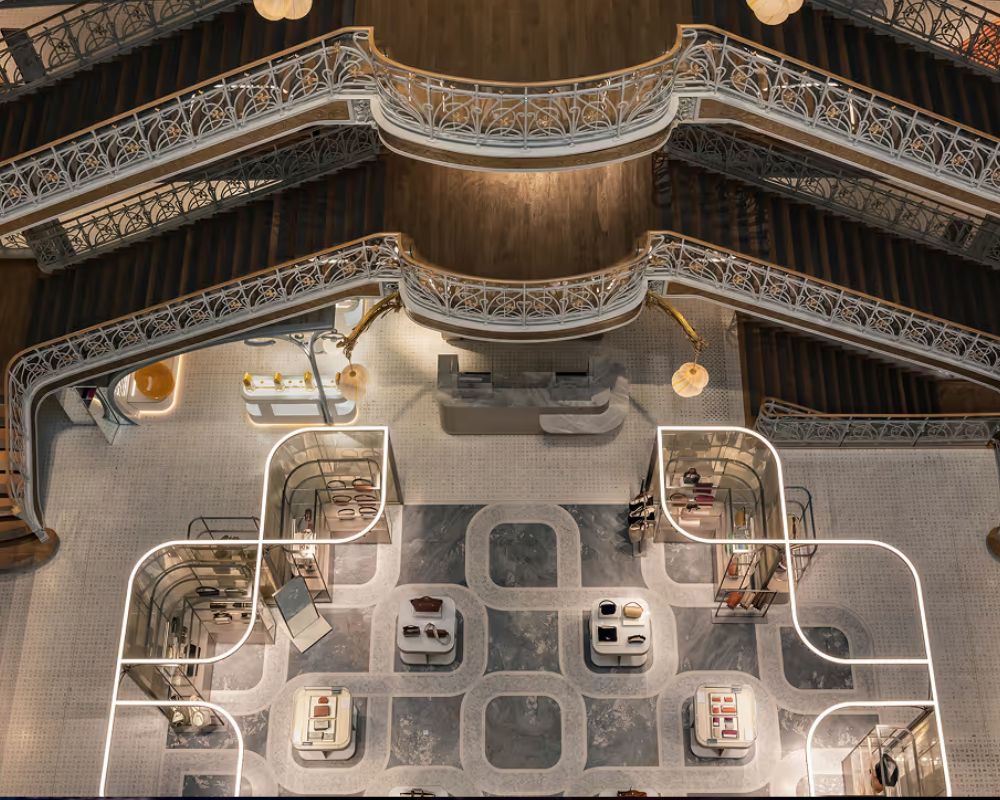
Hirsch Bedner Associates occupies a singular position among luxury hotel interior design studios globally because it was there before the landscape existed in its current form. Founded in 1965, HBA is widely credited as the originator of hospitality design as a professional discipline. Over six decades, it has grown into a firm with approximately 1,500 designers across 22 offices on six continents and an annual revenue of $750 million, making it the largest dedicated hospitality design firm in the world by most measures.
The breadth of HBA’s portfolio is genuinely difficult to overstate. The firm has received 32 Gold Key Awards, 40 Hospitality Design Awards and 60 Condé Nast Traveller Hot List inclusions. In 2026, it was included in Forbes’ inaugural America’s Top Hospitality Architects and Designers list. Its projects span Waldorf Astoria, St. Regis, Mandarin Oriental, Fairmont, Conrad, InterContinental and hundreds of other luxury hotel brands across every major market on earth.
HBA’s most recent landmark recognition came for the Mandarin Oriental Costa Navarino in Greece, which won the Landscape Design award, Architectural Design of the Year and a Luxury Resort category award at the LIV Hospitality Design Awards 2025. The project represents the firm’s continued engagement with the most ambitious luxury hospitality commissions in Europe’s fastest-growing luxury market.
The firm has also built a series of specialist practices around the core hotel design business, including Studio HBA for mid-tier projects, HBA Architecture for architectural design services, Light Directions for lighting design consultancy and Canvas for art budgeting and procurement. This integrated model, in which a single firm can handle interior design, architecture, lighting and art acquisition for a single project, is a significant operational advantage in the delivery of complex luxury hotel interior design projects.
What sets HBA apart: Scale and integration. A firm with 22 offices and 1,500 designers can staff a project anywhere in the world with local knowledge and global standards simultaneously. The integrated practice model removes the coordination friction between design disciplines that plagues projects run across multiple specialist firms.
4. Champalimaud Design builds the most carefully considered luxury environments
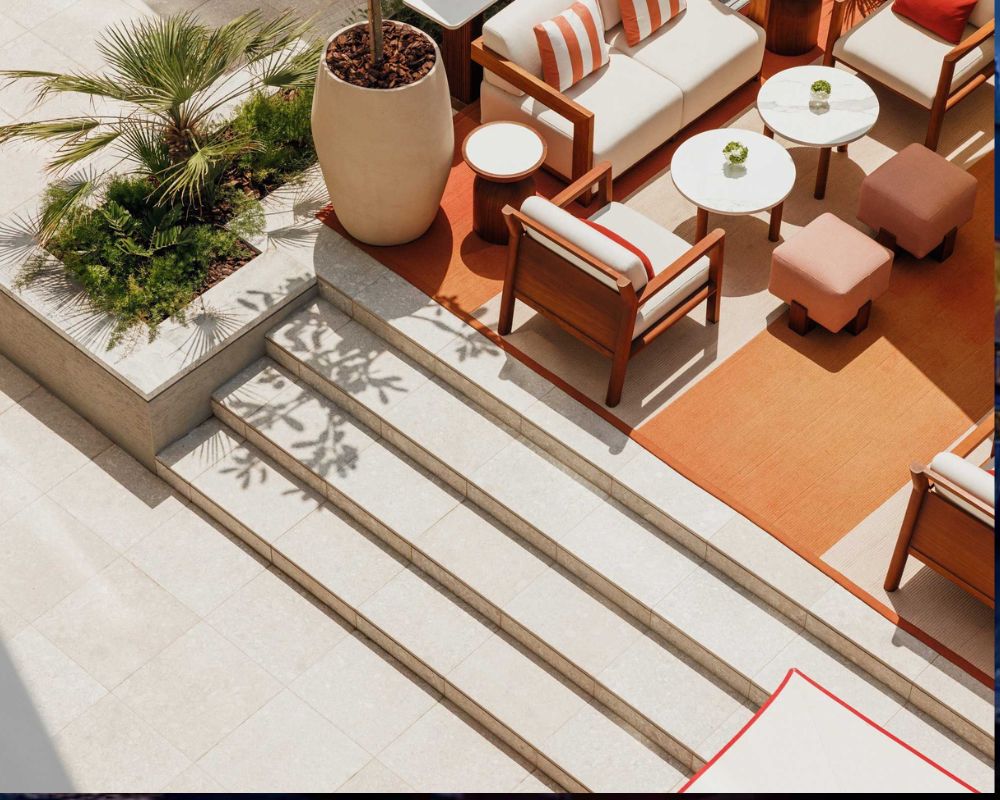
Champalimaud Design was founded in New York by Alexandra Champalimaud and stands among the luxury hotel interior design studios with the most distinctive creative philosophy in the category: one in which every detail, from the weight of the door handles to the temperature of the lighting to the texture of the floor beneath the bed, has been considered with the kind of attention that most studios reserve for the headline design gestures.
The firm’s most celebrated project is the renovation of The Carlyle in New York, a landmark commission that required Champalimaud to balance the preservation of a culturally significant address with the introduction of a contemporary luxury sensibility that would attract a new generation of discerning guests without alienating the hotel’s deeply loyal existing clientele. The result is widely regarded as one of the finest examples of luxury hotel renovation of the past two decades.
Champalimaud Design operates as a deliberately small studio, accepting a limited number of commissions each year in order to maintain the intensity of engagement that its design approach requires. This model positions it at the very top of the luxury hotel interior design market, alongside Pierre-Yves Rochon and Yabu Pushelberg, as a studio whose projects are as much about the process of design as about the finished room.
What sets Champalimaud apart: The depth of the brief. Champalimaud is known for spending more time in the pre-design research phase, understanding the specific history, clientele and cultural context of each hotel, than most firms spend on the design process itself. That investment shows up in interiors that feel genuinely rooted in their context.
5. Richmond International is behind the most enduring luxury hotel experiences
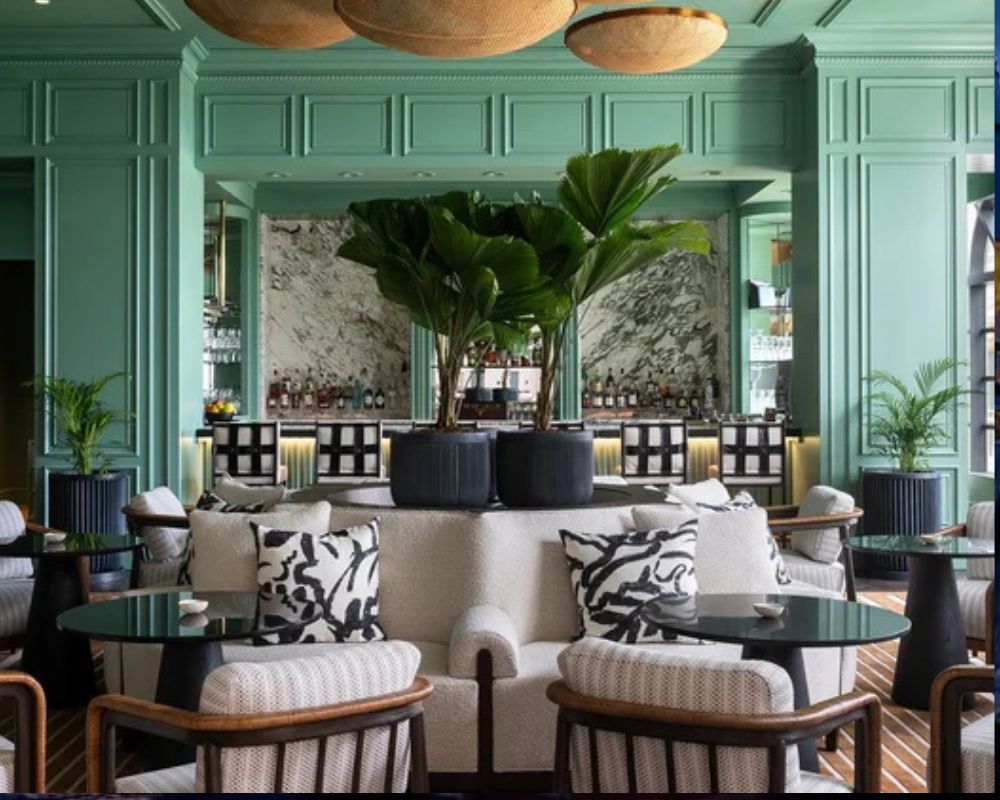
Richmond International was founded in London and built its portfolio as one of the luxury hotel interior design studios most deeply rooted in the European craft tradition in Europe, the Middle East and Asia over four decades. The firm’s work is characterised by a particularly British understanding of restraint and craft, an approach to luxury hotel interior design that prioritises the quality and provenance of materials over the scale of gestures, and a belief that the most enduring hotel interiors are those that improve with familiarity rather than announcing themselves on arrival.
The firm’s portfolio includes work for the Ritz London, the Hotel du Cap-Eden-Roc in Antibes, the Gleneagles Hotel in Scotland and a range of landmark addresses in the Middle East and Asia. Each project reflects Richmond International’s commitment to a design philosophy that connects the interior to the specific landscape, culture and history of its setting, and that treats the relationship between a hotel and its guests as one that should develop over many visits rather than be fully resolved in a single encounter.
What sets Richmond International apart: The material intelligence. Richmond International is known within the industry for a particularly rigorous approach to the specification of materials, with a focus on provenance, craftsmanship and long-term quality that reflects its British design heritage and its understanding of how luxury materials age and improve over time.
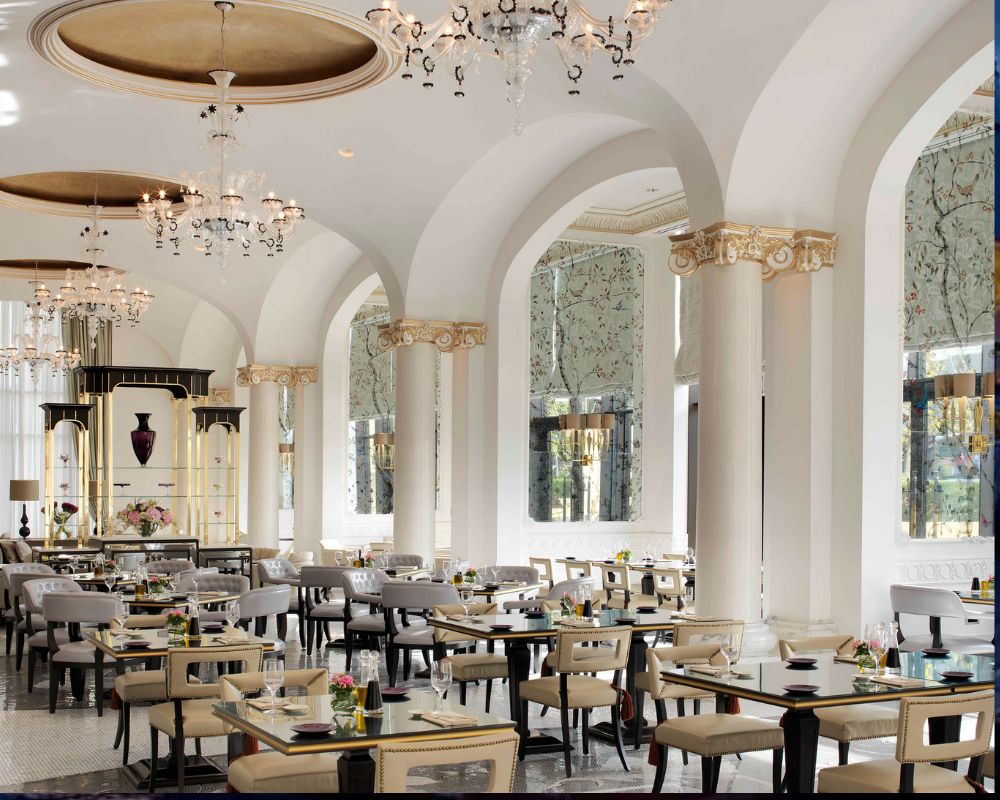
6. Rockwell Group turns theatrical storytelling into a luxury design language
David Rockwell founded Rockwell Group in New York in 1984 with a conviction that great design begins with a great story. Today the firm is a 250-person interdisciplinary architecture and design practice with offices in New York, Los Angeles and Madrid, and one of the most distinctive creative voices in American luxury hospitality.
Rockwell Group’s approach to luxury hotel interior design is built around narrative. Every project begins with the development of a specific conceptual story, drawn from the history, geography and cultural character of the location, that informs every decision from the scale of the lobby to the texture of the room’s upholstery. This is what produced the sinuous conversation-pit seating and 35-foot concrete curtains of the W Hollywood, described by Interior Design magazine as “frankly sexy” following its 2026 renovation. It is also what produced the Fairmont New Orleans, where Rockwell Group and Rozas Ward Architects transformed the former Bank of New Orleans building into a 250-room luxury hotel, one of the most architecturally significant hospitality conversions of 2026.
The studio’s most celebrated ongoing relationship is with The Cosmopolitan in Las Vegas, a project that established Rockwell Group’s reputation for creating luxury hotel interiors that function simultaneously as theatrical experiences and genuinely comfortable spaces. That combination, spectacle and ease in the same room, is harder to achieve than it sounds and is the foundation of the studio’s creative reputation.
What sets Rockwell Group apart: The narrative-first process. Where most luxury hotel interior design studios begin with aesthetic direction, Rockwell Group begins with story. The result is interiors that feel authored rather than decorated, and that tend to become as culturally identified with their location as the buildings they inhabit.
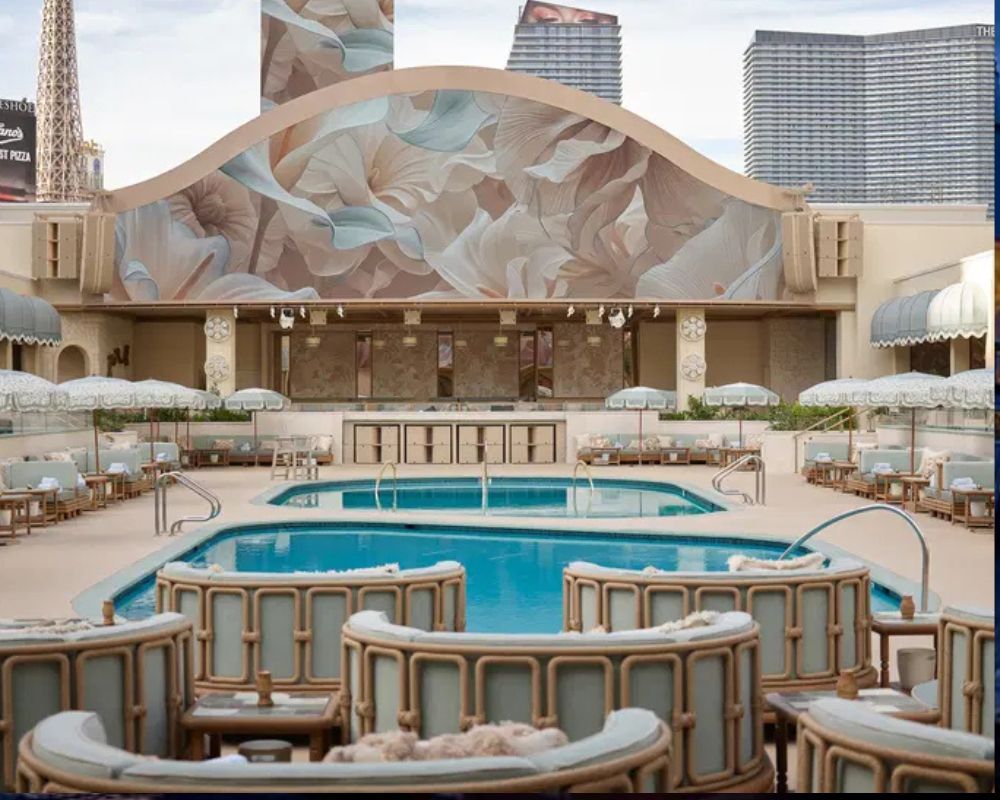
7. Tara Bernerd and Partners redefines what approachable luxury looks like
Tara Bernerd founded her London-based studio in 2002 and has spent more than two decades developing a design language that the industry has come to describe as approachable luxury with an industrial edge. The practice, which operates with a team of over 60 people from its base in Belgravia, has been named to the Architectural Digest AD100 list for both 2025 and 2026, placing it among the most celebrated design practices in the world by the publication that most defines international design prestige.
The Tara Bernerd and Partners portfolio spans Belmond, Rosewood, Four Seasons, Thompson Hotels, SIXTY Hotels and Starwood Capital, with projects across Europe, Asia and North America. The studio’s most current major commission is Six Senses Milan, confirmed for 2026 and described by Bernerd as one of the projects she is most personally invested in. Alongside it, the studio has completed interiors for The Perigon, an oceanfront residential tower in Miami with architecture by OMA, and continues its ongoing work with Four Seasons Fort Lauderdale in collaboration with Fort Capital.
Bernerd’s design philosophy is rooted in a belief that a luxury hotel should feel like a home from home in its specific location rather than a globally consistent brand template. “Every project begins by delving into the layers of history, culture and geography that define a place,” the studio’s own description reads. “Each location has its own pulse, its own story.” That philosophy produces interiors with a pronounced sense of belonging, a quality that is genuinely difficult to manufacture and that repeat guests tend to recognise across multiple Bernerd-designed properties.
What sets Tara Bernerd and Partners apart: The sense of place. In a category where brand consistency often works against location authenticity, Bernerd consistently prioritises the specific character of each setting over the requirements of a global hotel brand’s design standards. The result is hotels that feel unmistakably themselves rather than interchangeable expressions of a luxury hotel formula.
Read next: Aman refused cities for thirty years. Then Dubai happened. , and what the most ambitious luxury hotel pipeline in the world tells us about where the finest rooms of the next decade will be built.
(Feature image credit: richint.com)