


In 1976, a man fell in love with a hotel on a Venetian island and bought it.
That hotel was Hotel Cipriani and the man was James Sherwood, whose single glorious act of passion became, over the next fifty years, one of the most extraordinary brand stories in the history of luxury hospitality.
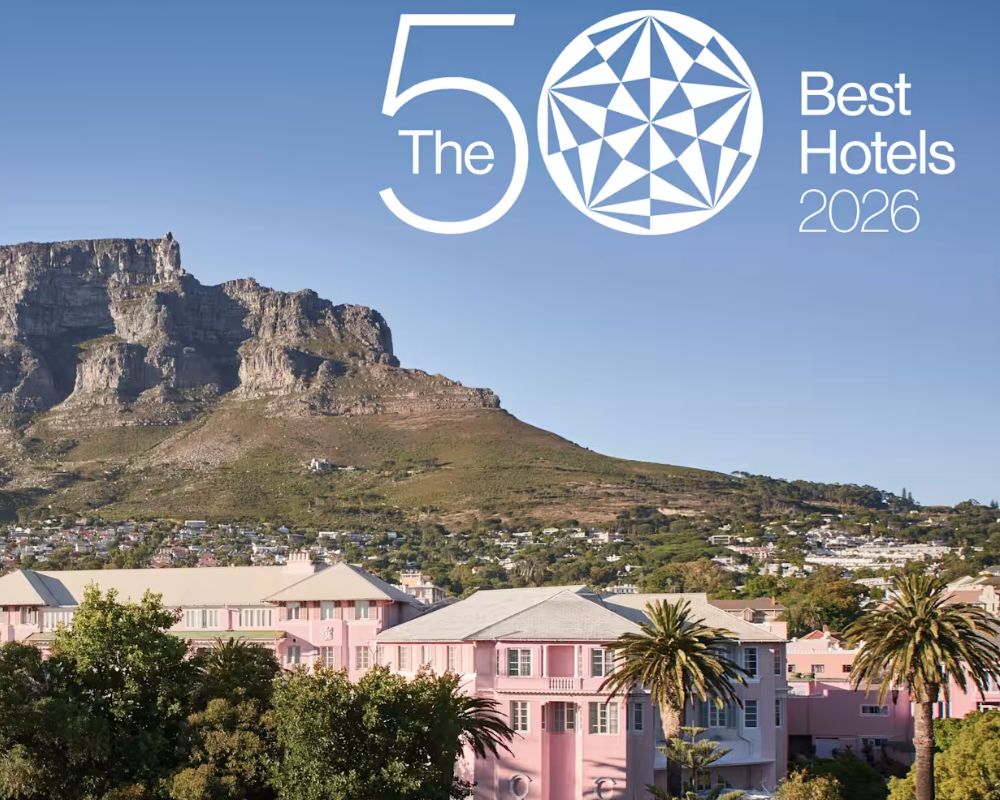
Fifty years later, in September 2026, the Belmond hotel is having its best year in a decade, with Europe’s Leading Luxury Hotel Brand title, three properties on The World’s 50 Best Hotels list, Venice’s first Dior Spa and a creative programme that just gave its most prestigious photography award to an Indian artist documenting her country’s disappearing magic traditions.
This is what fifty years of the Belmond hotel stubbornly, brilliantly refusing to chase scale looks like.
Why 2026 has been a defining year for Belmond hotel group
The recognition for Belmond arrived in September in two waves, both from sources that carry serious weight.
First, the World Travel Awards named Belmond Europe’s Leading Luxury Hotel Brand for 2026, its fifth consecutive win. Then, on September 1, three Belmond properties appeared on The World’s 50 Best Hotels extended 51–100 list: Palacio Nazarenas in Cusco at No. 54, Splendido in Portofino and a third property from the collection. The Academy behind the ranking comprises more than 800 independent hospitality leaders from around the world. Three properties from one brand is a result worth examining.
But the awards are only the most visible part of what has been an extraordinary year for the Belmond hotel group operationally.
The strategy hiding behind Belmond’s awards
Awards recognise what has already happened. The more interesting question is what sits behind them: where Belmond invested, how much it invested and which properties it believed could command a higher level of luxury.
Across the Belmond hotel portfolio, pricing rose 15% to 25% between 2019 and 2026, compared with an estimated 10% to 15% increase across the wider luxury hospitality segment. The difference matters. It suggests that the price increase was supported by investment in the physical product and guest experience, rather than simply brand inflation. The properties receiving the most significant investment are now among those attracting the strongest recognition.
Take Villa San Michele, the storied former Franciscan monastery in the Florentine hills that Belmond has been custodian of for decades. Eighteen months of renovation were completed in April 2026, marking the most ambitious single-property investment the brand has made in this cycle. The result is a property positioned firmly at the upper end of the European luxury market, precisely where Belmond’s Italian portfolio needs to compete.
Then there is Hotel Cipriani, where the Belmond story began, which this year unveiled Venice’s first Dior Spa. Two of LVMH’s most recognisable luxury names, Belmond and Dior, now converge at one of the group’s most iconic addresses. It is a particularly telling example of how LVMH can create value by connecting its brands rather than treating them as separate businesses.
The Villeggiatura by Train series adds another layer to the strategy. Launched this year, it pairs the Venice Simplon-Orient-Express with stays at Belmond’s leading Italian hotels, including a new Paris-to-Pompeii itinerary featuring a private tour of the UNESCO site and two nights at Hotel Caruso in Ravello. The route sold out, reinforcing a principle Belmond has understood for years: in luxury travel, the journey can be as valuable as the destination.
The power of being irreplaceable
Sit with that Belmond hotel group number for a moment: 43 properties across 50 years, while some luxury hotel groups, hungry for scale and management fees, open more than that in a single breathless quarter.
Belmond opened 43 properties in 50 years, and every single one of them is irreplaceable.
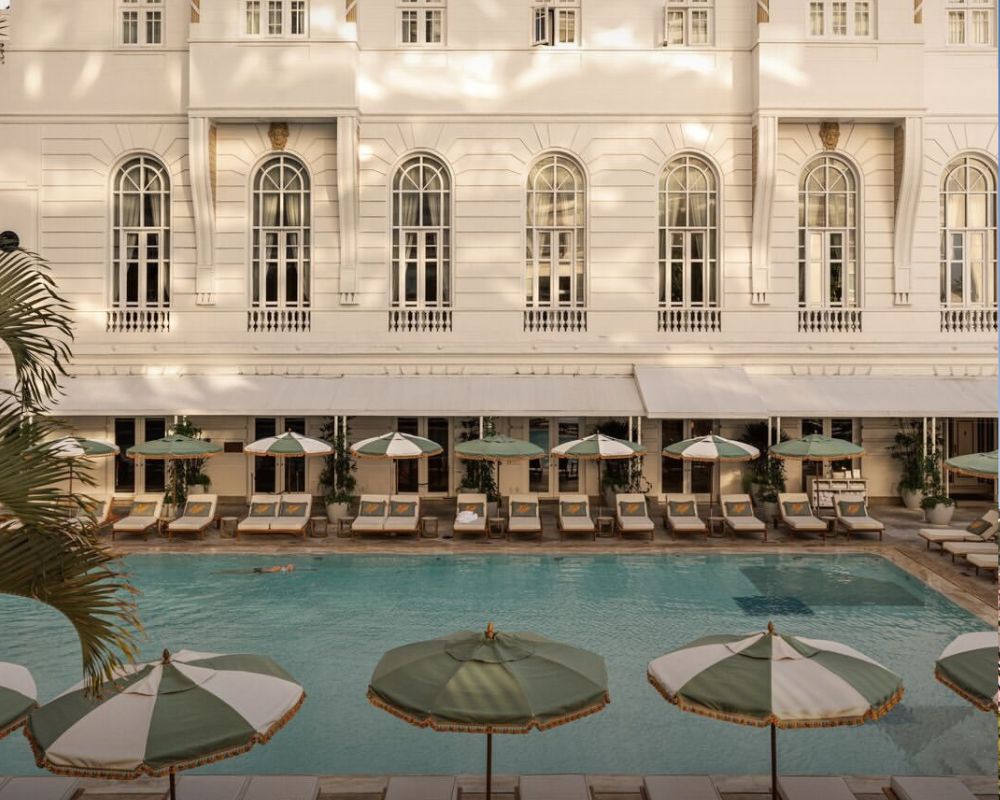
Hotel Cipriani sits on the island of Giudecca in a position that is physically unique in Venice. Copacabana Palace faces Brazil’s most famous beach from the most storied address on it. The Venice Simplon-Orient-Express runs original 1920s carriages that exist nowhere else on earth. Hotel das Cataratas stands at the edge of Iguassu Falls. The Royal Scotsman moves through Highland landscapes so timeless they feel unchanged since long before the train first ran them.
Building what Belmond has built takes decades of patience and conviction. Capital alone, however vast, is insufficient. The Belmond hotel commercial model rests on the one thing that luxury’s most aggressive expanders consistently struggle to create: a property that the world would genuinely mourn if it disappeared.
That irreplaceability is why the brand can sustain premium pricing without eroding its proposition, why guests return season after season and why the recognition that arrives every September keeps arriving.
The LVMH move that made Belmond more valuable
When LVMH acquired the Belmond hotel group in 2019, the question the industry asked was the obvious one: would the world’s largest luxury conglomerate change what made Belmond worth acquiring in the first place?
Seven years on, the answer is clear, and it is more nuanced than either the optimists or the sceptics predicted.
What LVMH brought is visible in two places. The Dior Spa at Hotel Cipriani is the most precise and most beautiful expression of what happens when two iconic brands share the same owner and the same ambition. The Belmond Photographic Residency, which in 2026 went to Indian photographer Tara L.C. Sood for her deeply moving documentary series on India’s disappearing magic tradition, reflects the best of LVMH’s long commitment to arts as genuine brand building rather than a marketing expense.
What LVMH left alone is more interesting: the pace, the identity and the deep, unhurried insistence on depth over scale that makes the Belmond hotel unlike almost anything else in global luxury hospitality. That distinctiveness is the most valuable thing LVMH owns in this category. Protecting it was the most commercially intelligent decision the Belmond hotel’s new owners made.
The unpopular luxury strategy Belmond is proving right
Here is the rather unfashionable argument Belmond hotel is making in 2026: restraint works.
It is a philosophy that rarely creates an immediate splash, yet becomes increasingly valuable with time. Fewer properties, carefully chosen markets and deeper investment in places with the potential to become genuinely legendary can create more enduring value than relentless expansion.
That philosophy feels almost quaint in a luxury hospitality industry increasingly fascinated by pipelines, openings and the reassuring mathematics of scale. Belmond, however, has spent 50 years making a compelling case for another model of growth, with 43 properties, three on The World’s 50 Best Hotels extended list and a fifth consecutive win as Europe’s Leading Luxury Hotel Brand at the World Travel Awards.
The real value emerges when a property develops a character of its own. Location, architecture, history and service accumulate over decades, creating something increasingly difficult to replicate and even harder to replace.
Belmond hotel understood this long before “slow luxury” became a phrase in strategy decks. Build fewer properties, give each one extraordinary attention and allow enough time for history, mythology and a profound sense of place to take hold.
While much of the industry races towards its next opening, Belmond has spent decades deepening the value of the places it already owns. By September 2026, the awards had simply made that strategy impossible to overlook. The commercial case for restraint was sitting in plain sight, beautifully dressed and remarkably persuasive.
Read next on The Pillar Edit: Villa San Michele Belmond: the most significant luxury hotel reopening in Florence this year.
(Image credit: belmond/Instagram)