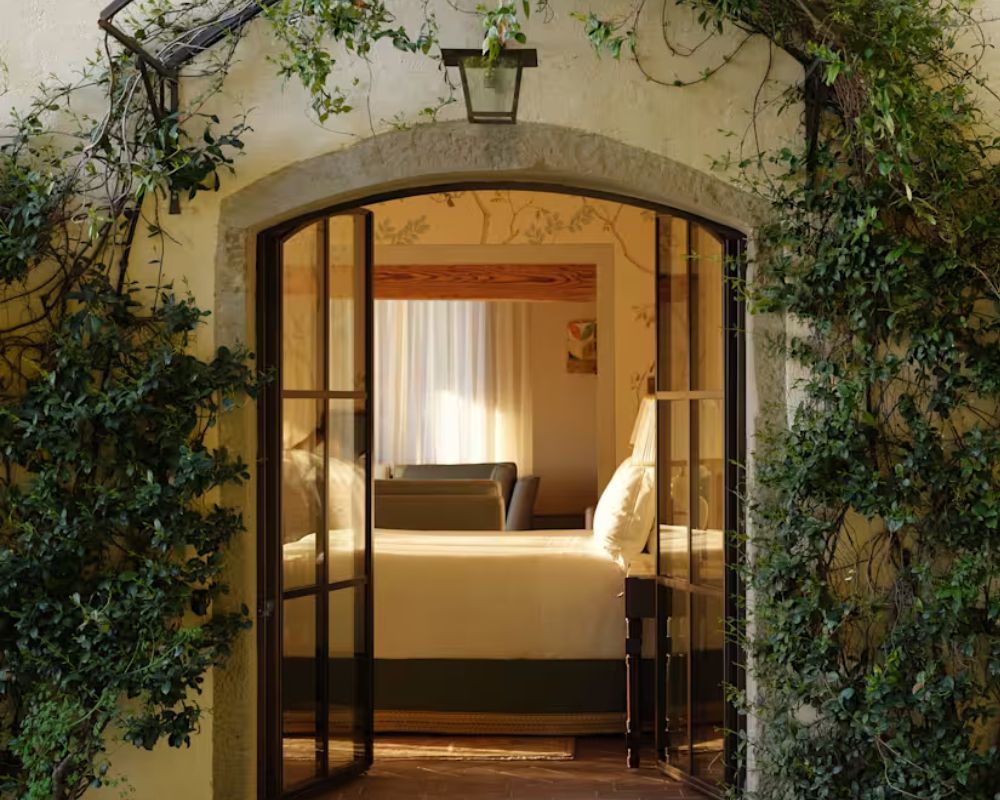



Seven kilometres north of Florence, perched on the wooded hills of Fiesole with a view of the city that Florentines themselves come up to admire, there is a former Franciscan monastery whose facade is traditionally attributed to Michelangelo. It has been welcoming guests since the late 19th century and closed for renovation in late 2024. In April 2026, after 18 months of careful, considered restoration by Florentine interior architecture firm Luigi Fragola Architects in collaboration with Belmond’s design team, it reopened as something that the luxury hotel industry has been circling around for years without quite landing on.
Belmond called it slow luxury. And in the context of what has been built at Villa San Michele, A Belmond Hotel, Florence, that phrase carries genuine meaning rather than the aspirational vagueness that tends to accompany wellness-adjacent hospitality positioning.
The Villa San Michele Belmond Florence slow luxury reopening is the hospitality story of 2026 that deserves more attention, because it represents a specific and deliberate argument about what luxury means when a brand decides that depth is more valuable than scale, and that stillness is more powerful than spectacle.
What Belmond inherited and what it chose to do with it
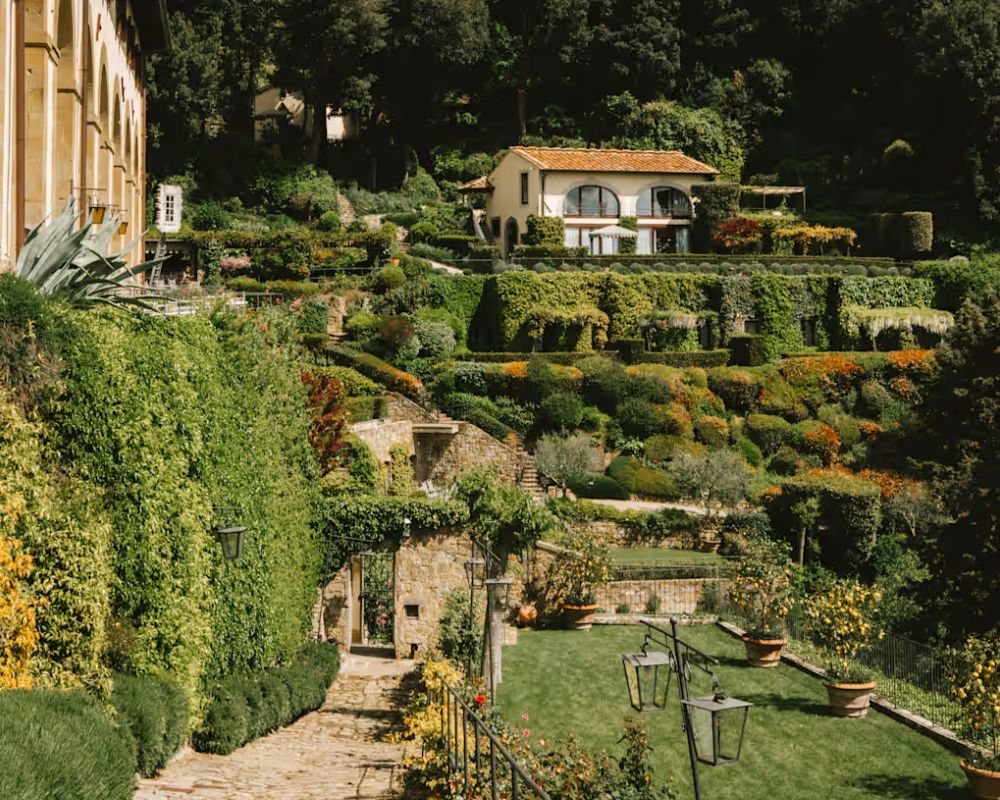
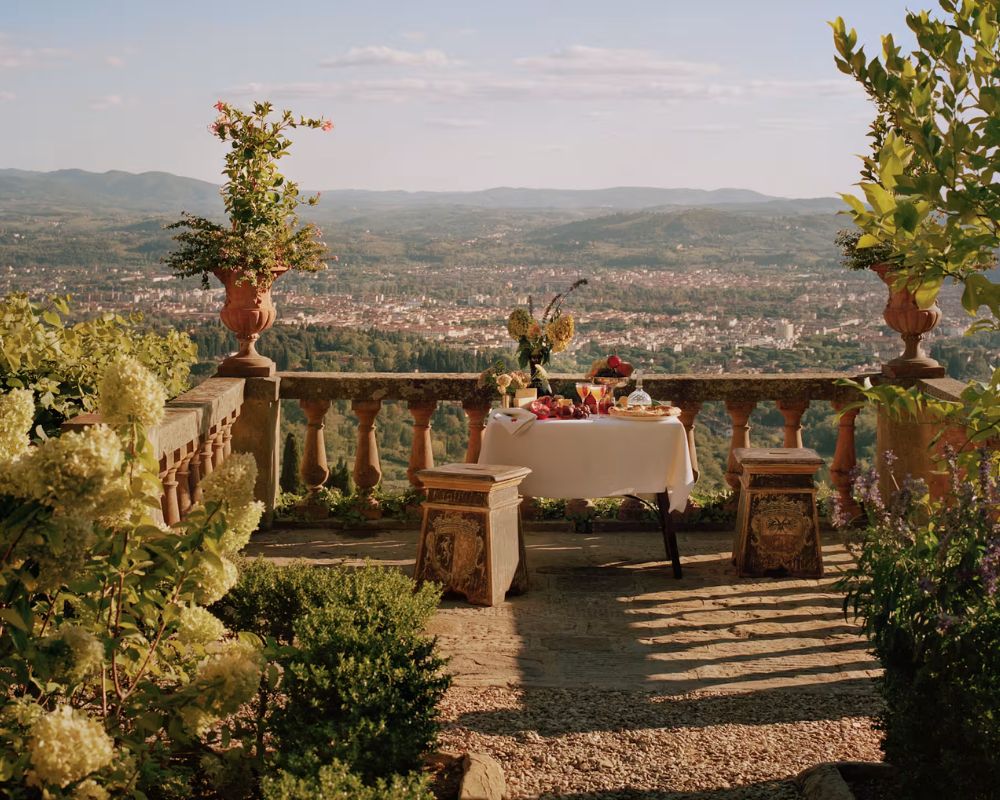
Villa San Michele has been a hotel in various forms since the late 19th century, but its origins are considerably older. The monastery was founded in the 15th century by Franciscan friars, and the facade of the main building is traditionally attributed to Michelangelo, placing it in an architectural lineage that essentially no amount of money can manufacture from scratch. Frescoes that have survived centuries of Florentine history. Stone walls that remember the footsteps of friars. A garden terrace from which, on a clear morning, you can see the entire city laid out below. Belmond, acquired by LVMH in 2019, operates with a portfolio philosophy that treats each property as a singular destination rather than a standardised brand expression. The Villa San Michele renovation, which took 18 months and involved a team of skilled Florentine artisans, reflects that philosophy at its most demanding. The room count was reduced from 42 to 38 to allow larger, more considered spaces. The interiors were redesigned with hand-selected antiques, scagliola furniture by Bianco Bianchi, tapestries by artist Elena Carozzi and restored stone fireplaces that echo the original friars’ cells. The gardens, spanning more than 10,000 square metres, were redesigned by Luca Ghezzi Garden Design, with new citrus plantings and Mediterranean borders of lavender, rosemary, agapanthus, hydrangea, pomegranate and iris. Every decision in the Villa San Michele Belmond Florence slow luxury renovation was made in the service of an experience that reveals itself gradually rather than announcing itself immediately.
The Guerlain spa and what it adds to the proposition
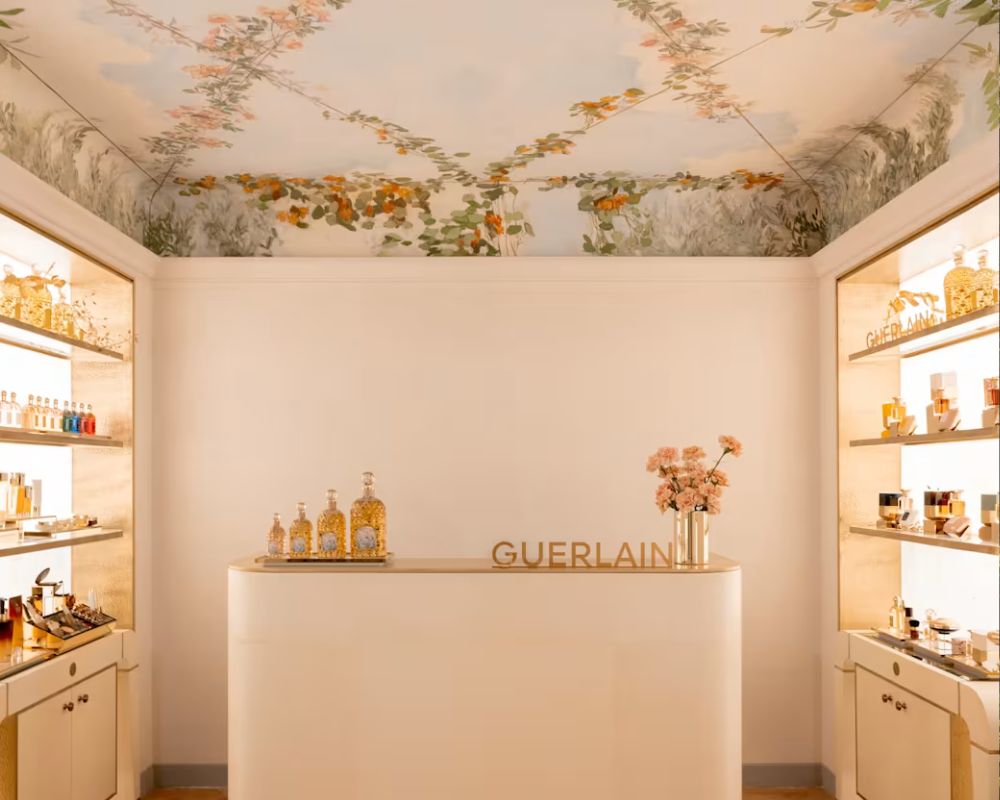
One of the most significant additions to the Villa San Michele Belmond Florence slow luxury proposition is the new Spa by Guerlain, a partnership announced in 2025 and realised in the 2026 reopening. The spa features three treatment rooms, including a double suite, with a signature entrance called the Secret Garden, adorned with hand-painted frescoes by artist Elena Carozzi. Signature treatments include Floral Delight in Tuscany and The Art of Renaissance, alongside the Iris di Grazia anti-aging facial, a direct reference to Florence’s emblematic bloom. The choice of Guerlain as the spa partner is itself a statement. Guerlain is the oldest French beauty house in continuous operation, founded in 1828 and now also part of the LVMH group. The combination of a 15th-century Florentine monastery and a 19th-century French parfumeur, both carrying the weight of their respective histories, produces a spa experience rooted in genuine provenance rather than wellness trend. It is the kind of combination that rewards the guest who arrives knowing what they are experiencing and equally rewards the guest who discovers it in the course of the stay. The Villa San Michele Belmond Florence slow luxury spa is the only Guerlain spa in Fiesole and one of a small number in Italy, making it a destination within a destination.
La DoubleJ and the energy raising programme
The partnership with La DoubleJ, the Milanese fashion and lifestyle brand created by American designer J.J. Martin, is the most unexpected element of the Villa San Michele Belmond Florence slow luxury offering and the one that most directly articulates what slow luxury actually means in practice. La DoubleJ designed three immersive spaces within the Villa’s woodlands dedicated to a programme of energetic reawakening and contemplative practice. The Energy Chapel invites deep stillness and inner connection. The Sungazing Lounge encourages sunset gazing rituals over the Florentine hills. The open-air Yoga Deck welcomes guests to take part in guided practice or exercise solo in the surrounded by olive trees and the sounds of the Tuscan countryside. This is the philosophical centre of the Villa San Michele Belmond Florence slow luxury proposition. A fashion brand and a heritage hotel have collaborated to create spaces in an ancient woodland that invite guests to stop, to look, to breathe and to pay attention. In the context of what most luxury hospitality offers, which is more, faster, bigger and louder, this is a genuinely radical position.
What slow luxury actually means and why it matters now
The phrase slow luxury has been circulating in hospitality conversations for several years. The Villa San Michele Belmond Florence slow luxury reopening is the clearest and most fully realised expression of what it actually looks like when a hotel commits to it entirely. Slow luxury is rooted in the idea that the most valuable thing a hotel can offer in 2026 is something that the city, the office, the feed and the schedule are structurally unable to provide: time that belongs entirely to the person experiencing it. A suite with views over Florence at dawn. A garden designed for walking rather than photographing. A spa treatment that references the cultural history of its location. A woodland programme that asks guests to be present rather than productive. The reduction in room count from 42 to 38 is the clearest operational expression of this philosophy. Belmond could have added rooms. Instead it removed them, creating larger spaces and a quieter, more considered environment. The suite starting from approximately €5,500 per night reflects the value of that decision. For the luxury hospitality industry, the Villa San Michele Belmond Florence slow luxury reopening carries a specific and important lesson. The brands that are building the most remarkable properties in 2026 are those that have identified a specific experience they want their guests to have and made every decision in service of that experience, regardless of whether it optimises room count, RevPAR or brand familiarity. Villa San Michele has a Michelangelo facade and a Guerlain spa and a La DoubleJ woodland programme and 39 rooms. It is one of the most specific hospitality propositions in Europe.Belmond, LVMH and the long game in luxury hospitality
The Villa San Michele Belmond Florence slow luxury story is also a story about what LVMH is choosing to do with Belmond six years after acquiring the group for $3.2 billion in 2019. Belmond operates a portfolio that includes the Venice Simplon-Orient-Express, Le Manoir aux Quat’Saisons in England, Copacabana Palace in Rio de Janeiro, the Cipriani in Venice and a collection of hotel, train and river cruise experiences across 24 countries. The acquisition brought Belmond’s singular approach to heritage, experience and place-making into the LVMH ecosystem alongside Louis Vuitton’s hotel ventures, Cheval Blanc and the broader luxury travel conversation that LVMH is increasingly participating in across its portfolio. The Villa San Michele renovation, which involved Florentine artisans working with historical materials under the direction of a Florentine architecture firm, reflects a specific LVMH philosophy about what luxury craftsmanship looks like when it is applied to hospitality rather than fashion or jewellery. The same commitment to savoir-faire, to the quality of materials, to the knowledge of the artisan who works with them, that defines Louis Vuitton or Dior or Chaumet, is present in the restored stone fireplaces and the hand-painted frescoes of the Secret Garden spa entrance at Villa San Michele. This is what happens when the world’s largest luxury group decides that its most heritage-rich hospitality asset should reopen as something more fully itself than it has ever been.Read next: How an Italian rehab became the secret wallpaper supplier for Chanel, Cucinelli and more, another story about what Italy does with craftsmanship, heritage and the kind of beauty that takes decades to build. (Image credits: belmoond.com)