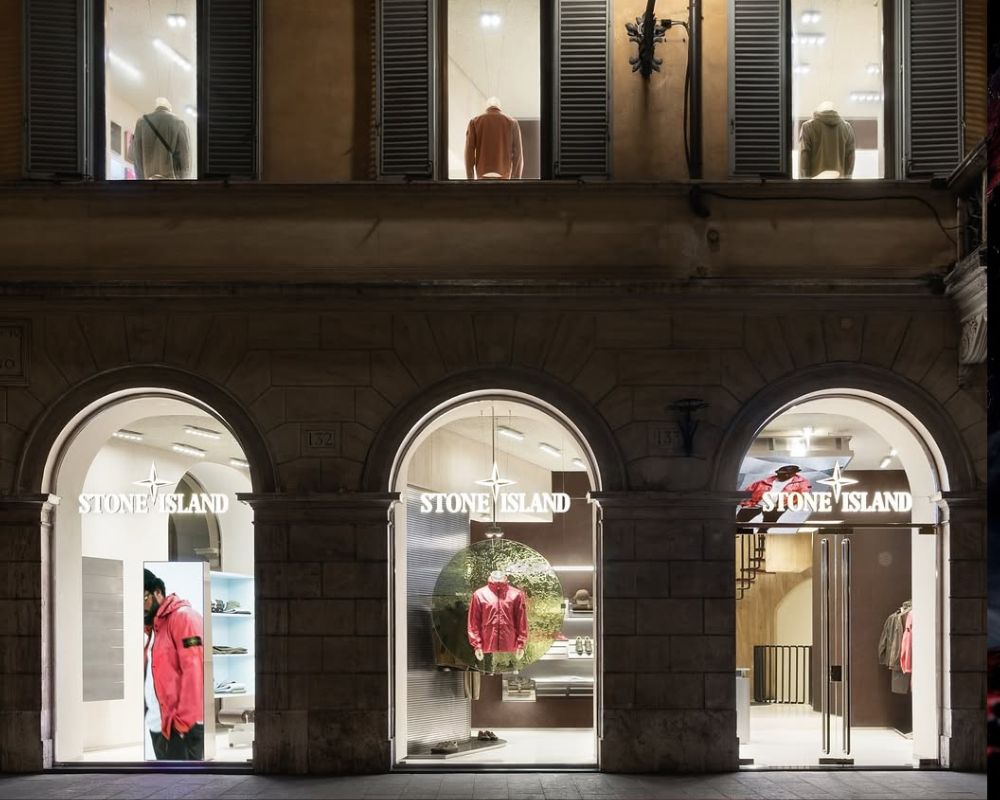
When Moncler Group completed its acquisition of Stone Island in December 2021, paying approximately €1.15 billion for an 87.9 percent stake in the Italian streetwear brand, the deal was broadly framed as a smart piece of portfolio building. Moncler was acquiring a brand with strong cult credentials, a devoted global following and a very different aesthetic from its own, giving the group a second growth engine that could operate independently while benefiting from Moncler’s operational infrastructure and financial resources.
Five years later, the H1 2026 results published by Moncler Group on July 22 2026 have confirmed something that the quarterly numbers have been suggesting for several reporting periods: the Moncler Stone Island brand strategy has produced an outcome that the acquisition’s architects almost certainly welcomed and perhaps underestimated. Stone Island is outgrowing Moncler. Consistently, measurably and on almost every metric that matters.
In H1 2026, Stone Island revenues grew 11 percent at constant currency to €200.3 million. The Moncler brand grew 9 percent at constant currency to €1,089.6 million. Stone Island’s direct-to-consumer channel jumped 16 percent to €109.2 million. Moncler’s DTC grew 10 percent. Stone Island in the Americas grew 35 percent in the second quarter alone. Stone Island in Asia grew 25 percent for the half. The pattern is clear and consistent: the acquired brand is growing faster than the acquirer across every geography and every channel.
Why Stone Island is growing so fast
To understand why the Moncler Stone Island brand strategy dynamic is significant, it helps to understand what Stone Island actually is and why its growth rate is producing the numbers it is producing in 2026.
Stone Island, the brand at the heart of the Moncler Stone Island brand strategy, was founded in 1982 by Massimo Osti in Ravarino, near Modena in northern Italy. Osti created it as a laboratory for material experimentation, a brand whose entire creative identity was built around the development of technically advanced fabrics and the application of unusual dyeing and treatment processes to outerwear. The compass rose badge on the left sleeve of every Stone Island garment was from the beginning a signal to insiders: the people who understood what they were looking at and why it was different.
Over four decades, that insider status grew into something considerably more complex and more culturally powerful than a conventional luxury fashion brand. Stone Island became a significant cultural reference in British football terrace culture in the 1980s, then spread through European youth subcultures, then crossed into a global collector community that included figures from music, art and contemporary culture who were drawn to the brand’s combination of technical credibility and deliberate understated visibility. By the time Moncler acquired it in 2021, Stone Island had a following of extraordinary loyalty and depth, concentrated among people who had built genuine expertise in what the brand did and why it mattered.
The Moncler Stone Island brand strategy challenge since the acquisition has been to grow that following globally, particularly in Asia and the Americas, without diluting the insider cultural currency that gives Stone Island its value. The H1 2026 results suggest the strategy is succeeding. Stone Island in Asia grew 25 percent in H1 2026 and 25 percent in Q1 2026. Stone Island in the Americas surged 35 percent in Q2 2026 alone. These are markets where Stone Island’s cultural penetration is less established than in Europe, which means the growth is coming from new audience development rather than from an existing base cycling through repurchase.
The management transition and what it means for the Moncler Stone Island brand strategy
The H1 2026 results are also the first half-year under Moncler Group’s new management structure, which adds an additional layer of significance to the Stone Island performance numbers.
Bartolomeo “Leo” Rongone joined as Group Chief Executive Officer on April 1 2026, following his formal confirmation by shareholders. Remo Ruffini, who led Moncler for over two decades and was the architect of both its transformation from a dormant heritage brand into a global luxury group and the Stone Island acquisition, shifted into the role of Executive Chairman, retaining oversight of the group’s creative direction. Roberto Eggs, previously Chief Business and Global Market Officer, stepped down from that executive post in March 2026 but remains on the board as a non-executive director.
The transition from Ruffini as CEO to Rongone as CEO while Ruffini retains the creative chairmanship is a model that several luxury groups have used to manage the passage from founder-led leadership to professional management without losing the creative vision that built the brand. The H1 2026 results, delivered in Rongone’s first full quarter as CEO, provide his initial public evidence of the group’s trajectory under new executive leadership. The Stone Island outperformance gives him a strong platform.
What the numbers reveal about where Moncler and Stone Island are heading
The H1 2026 numbers reveal two specific and strategically important dynamics in the Moncler Stone Island brand strategy that go beyond the headline growth figures.
The first is the geographic divergence. Moncler’s EMEA revenues fell 4 percent at constant currency in H1 2026 to €349.7 million, a decline the group attributed to weaker tourist flows, particularly from Asian visitors, and soft online sales. Stone Island in the same region grew 3 percent. The contrast is meaningful: in Moncler’s most established and historically strongest market, the parent brand is facing pressure while the acquired brand is holding its own. In the markets where both brands are still building, Asia and the Americas, Stone Island is growing faster than Moncler.
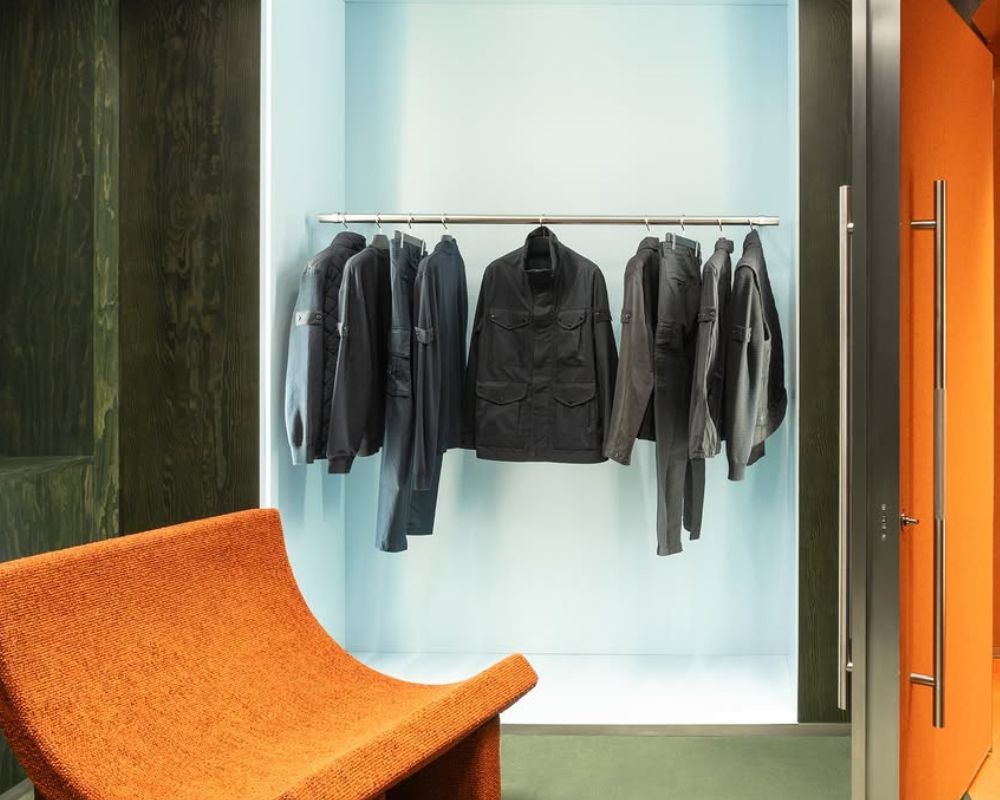
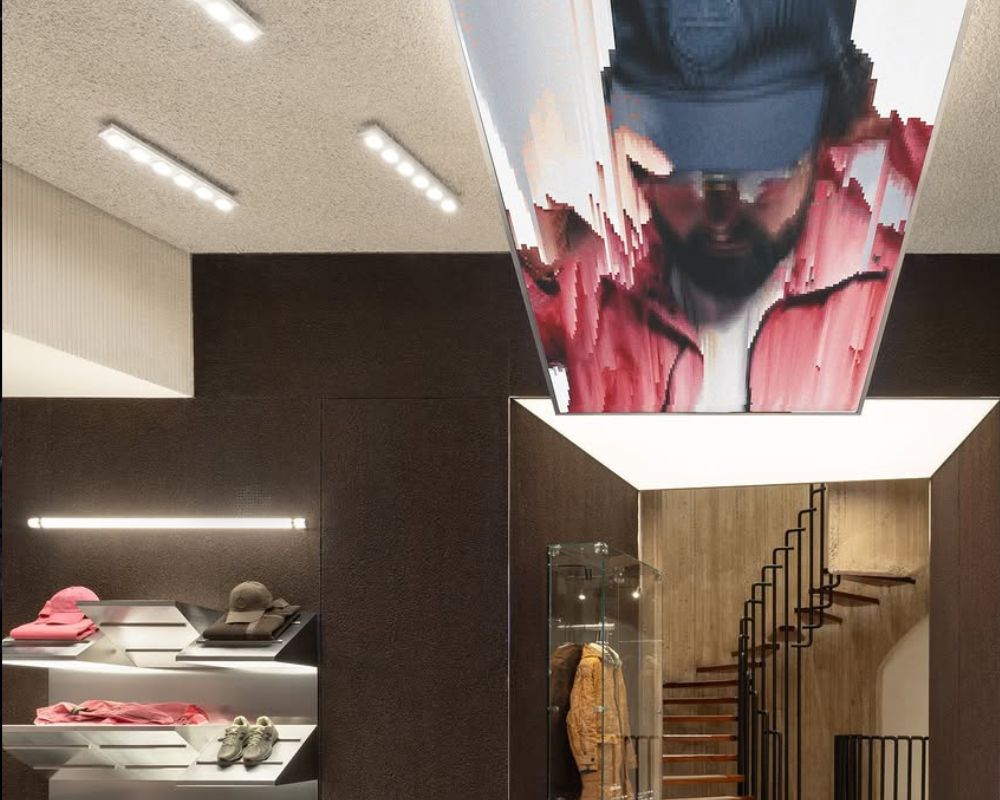
The second is the direct-to-consumer trajectory. Stone Island’s direct channel grew 16 percent in H1 2026 to €109.2 million, against Moncler’s DTC growth of 10 percent. Stone Island’s wholesale also grew 5 percent. The DTC acceleration is significant because it reflects the Moncler Stone Island brand strategy of building owned retail infrastructure around Stone Island globally, reducing dependence on third-party distribution and capturing more of the margin that a wholesale relationship surrenders. Stone Island opened in Sydney in Australia during the first half. The group operates 298 directly operated stores across both brands as of June 30 2026.
What this tells the luxury industry about successful acquisitions
In 2026, the Moncler Stone Island brand strategy dynamic is the most instructive available case study in what happens when a luxury acquisition works so well that it begins to complicate the strategic narrative of the acquirer.
Stone Island growing faster than Moncler is a genuinely positive outcome for the Moncler Group. The group’s net result rose 7 percent to €164.7 million in H1 2026, a 12.8 percent margin, and the gross margin improved to 77.2 percent from 76.9 percent, reflecting a richer direct-to-consumer mix at both brands. The Stone Island outperformance is contributing directly to these results.
But the dynamic also raises questions that will define the Moncler Stone Island brand strategy for the next five years. At what point does an acquired brand growing significantly faster than the parent brand begin to reshape how investors, analysts and the broader market understand the group’s identity? What happens to the brand equity of both companies if Stone Island’s global profile continues to expand relative to Moncler’s? And how does the group manage the creative and operational independence that gives Stone Island its cultural credibility while also integrating it sufficiently into the Moncler Group infrastructure to benefit from the scale and efficiency that justified the acquisition price?
These are questions that LVMH has faced with Rimowa. That Kering has faced with Bottega Veneta. That Richemont continues to navigate across its portfolio. The luxury industry has been learning, with mixed results, how to acquire cult brands without destroying what made them cult brands in the first place. Moncler’s management of Stone Island, as evidenced by the H1 2026 results, is currently one of the most successful examples of that balancing act in progress.
Leo Rongone, addressing analysts at the H1 2026 results presentation on the Moncler Stone Island brand strategy outlook, framed the group’s position in terms that reflect the challenge and the opportunity simultaneously: Rongone described the group’s resilience as rooted in two things equally: the speed of its reactions and the consistency of its identity and community relationships.
That sentence applies equally to Moncler and to Stone Island. The Moncler Stone Island brand strategy in 2026 is the story of a group trying to stay true to two very different versions of who it is, simultaneously. The H1 2026 results suggest it is, for now, succeeding.
And perhaps that is the strangest part: the acquisition is no longer simply sitting neatly inside Moncler’s story. It has developed a personality of its own, found its own momentum, and is quietly becoming the plot twist nobody expected. In luxury, that is not a bad problem to have. It is, however, a very interesting one.Read next on The Pillar Edit: How LVMH is giving underprivileged youth a future in luxury craftsmanship, and what the world’s largest luxury group is doing with its acquisitions beyond the balance sheet.
(Image credit: stoneisland/Instagram)