




At Salone del Mobile 2026 in Milan, the world’s most important design fair, a collection of five rug groupings by Jaipur Rugs did something the Indian craft industry has been trying to do for decades. It positioned Indian handmade textiles as a serious material language for global architecture. The collection is called the Jaipur Rugs FACES collection, and it was created in collaboration with the architectural sensibility of Kengo Kuma, one of Japan’s most influential contemporary architects. So the Jaipur Rugs FACES collection is a deliberate case study in how Indian craft is scaling from the small workshops of Rajasthan to the largest design conversations in Tokyo, Milan, and beyond.
So this is the deeper decoder. What the Jaipur Rugs FACES collection actually is, how each rug translates a specific piece of Kengo Kuma’s architectural vocabulary, why the collaboration matters strategically, and what this signals about the next decade of Indian craft on the global stage.
What the Jaipur Rugs FACES collection actually is
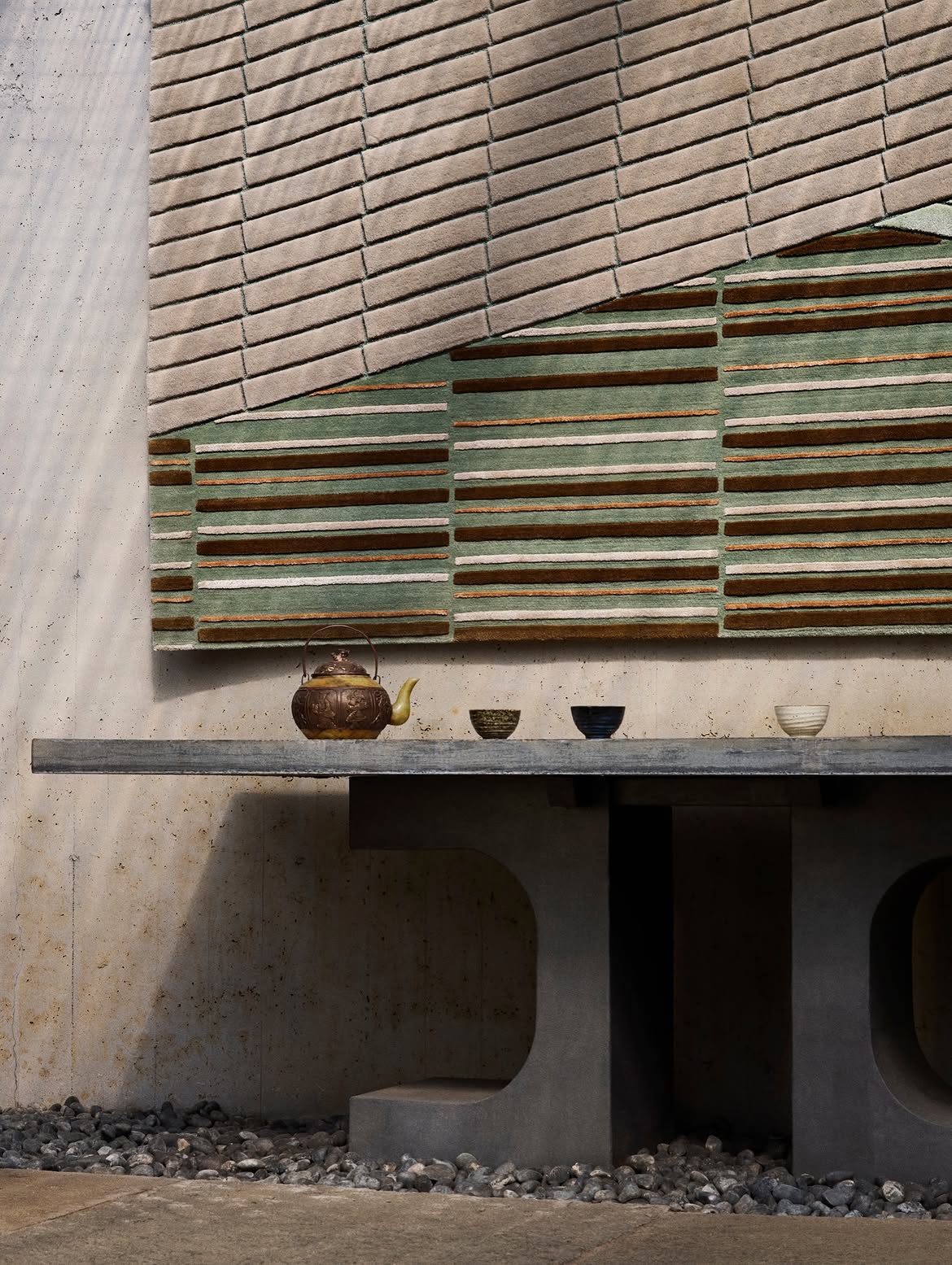
To understand the collection, we first need to understand its intent. The Jaipur Rugs FACES collection is a set of five rug groupings that thoughtfully interpret the architectural language of Kengo Kuma for the world of contemporary interiors. Rather than replicating built form, the collection explores the intangible aspects of Kuma’s work. Capturing the way light filters through a lattice, materials breathe, and spaces gradually reveal themselves, Jaipur Rugs distils these atmospheric qualities into handcrafted textiles that feel intuitive, sensorial, and deeply embedded within living environments.
Yogesh Chaudhary, Managing Director of Jaipur Rugs, described the intent behind the collection in his own words. “With FACES, we are not translating architecture into rugs, we are translating a way of seeing. Kengo Kuma’s work is deeply emotional yet restrained, and through our artisans, we’ve reinterpreted that sensitivity into something tactile, human, and lived-in.” So the Jaipur Rugs FACES collection is a is a philosophical translation, from one artistic tradition to another, made possible by the depth of craft that Jaipur Rugs has built over four decades.
The debut at Salone 2026 was chosen deliberately. Salone del Mobile is the annual event where global architecture, interior design, and luxury craftsmanship intersect at the highest level, and where new material languages are recognised or ignored. So presenting the Jaipur Rugs FACES collection at Salone was a deliberate positioning move by the Indian firm.
The five architectural principles inside the Jaipur Rugs FACES collection
Each of the five rug groupings in the Jaipur Rugs FACES collection draws from a specific architectural principle used by Kengo Kuma, and each is anchored to a specific building in his portfolio. So the collection reads as a small architectural anthology, translated into textile form.
The first is SUKIMA-6. The name references the Japanese concept of Sukima, which describes the intervals of light, air, and space that exist between forms. The rug is inspired by the Suntory Museum of Art in Tokyo, and its composition interprets Musō-gōshi, a traditional lattice where fine linear rhythms create a permeable surface. The result is a textile in which light and shadow dissolve softly, shaping atmosphere rather than form.
The second is BOKASHI-1. The name refers to the traditional Japanese technique of soft gradation, and the rug is also rooted in the layered light conditions of the Suntory Museum of Art. It captures the gentle diffusion of light across surfaces, translating that quality into a seamless interplay of colour and texture.
The third is CHIRASHI-1. The rug is inspired by the Museum of Kanayama Castle Ruin and the Kanayama Community Center, both Kengo Kuma projects. Chirashi explores the scattering of elements to create rhythm and movement, and the perceived solidity of stone is reinterpreted through Jaipur Rugs’ handcraft into a surface that feels fluid, warm, and quietly balanced.
The fourth is KIGUMI-5. The rug draws from the traditional Japanese joinery system called Kigumi, and references the GC Prostho Museum Research Center. Its Chidori wooden grid, known for its shifting depth and perspective, is translated into intricate weaving techniques, resulting in a textile that expresses structure as a dynamic, evolving experience.
The fifth is KASANE-3. The word Kasane reflects the idea of layering to create depth and nuance, and the rug is influenced by the Albert Kahn Museum, where architecture mediates between interior and nature. The rug employs subtle tonal overlays and refined patterning to evoke a sense of quiet continuity between spaces.
So each rug in the Jaipur Rugs FACES collection is a small architectural essay. Together, they form a coherent philosophical statement about how a textile can translate a way of seeing.
Why Kengo Kuma matters to the Jaipur Rugs FACES collection
To understand why the collaboration matters, we also need to understand who Kengo Kuma is. Born in 1954, Kuma established Kengo Kuma & Associates in 1990, and today the firm has projects underway in more than 50 countries. Kuma is currently a University Professor and Professor Emeritus at the University of Tokyo, and a member of the Japan Art Academy. His architectural philosophy proposes new relationships between nature, technology, and human beings, and his major publications explore ideas including Onomatopoeia Architecture, Natural Architecture, Small Architecture, and the Architecture of Defeat.
Kuma’s design language is defined by restraint. While an earlier generation of star architects sought to create buildings that dominated their surroundings, Kuma has spent his career crafting architecture that dissolves into them. Natural materials, filtered light, and permeable surfaces define a body of work that has quietly established him as one of the most influential architectural voices of the past three decades.So the choice to collaborate with Kengo Kuma is what elevates the Jaipur Rugs FACES collection from a product launch into a philosophical exercise. The collaboration signals that Indian craft is now being recognised as a legitimate material language for architects operating at Kuma’s level, which is exactly the kind of positioning shift Jaipur Rugs has been building toward for decades.
How Jaipur Rugs became the platform for scaling Indian craft globally
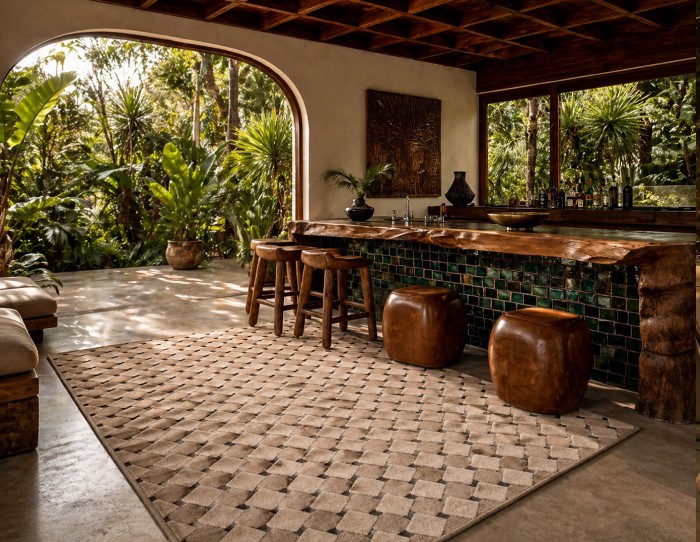
The Jaipur Rugs FACES collection would not have been possible without the operational scale that Jaipur Rugs has built over 47 years. The company was founded in 1978 by Nand Kishore Chaudhary with just two looms, and it has grown to become the largest network of artisans in India. Today it works with over 40,000 rural artisans, 95 percent of whom are women, and operates more than 7,000 looms. Its rugs are sold in over 90 countries, and the company has increasingly positioned itself as a bridge between rural craftsmanship and global design conversations.
The philosophical underpinning of the company comes from its founder’s words. “Let goodness, fairness, and, most importantly, love, prevail in business,” Nand Kishore Chaudhary has said, “and profits will inevitably follow.” So the company has built its scale on a dignity-first business model, in which the ancestral knowledge of Indian weaving is protected, artisans are treated as partners rather than labour, and the human aspect sits at the core of the business.
This is why the Jaipur Rugs FACES collection is also a business decoder. The collection demonstrates that a family business built on rural livelihoods can meaningfully participate in the world’s most sophisticated design conversations, without compromising either the craft or the artisans behind it. Yogesh Chaudhary’s own words at Salone 2026 make the strategic intent clear. “Presenting FACES at Salone 2026 is significant for us. It is not just a collection, but a statement on how Indian craftsmanship can engage with global design narratives at the highest level.”
What the Jaipur Rugs FACES collection tells us about the future of Indian design
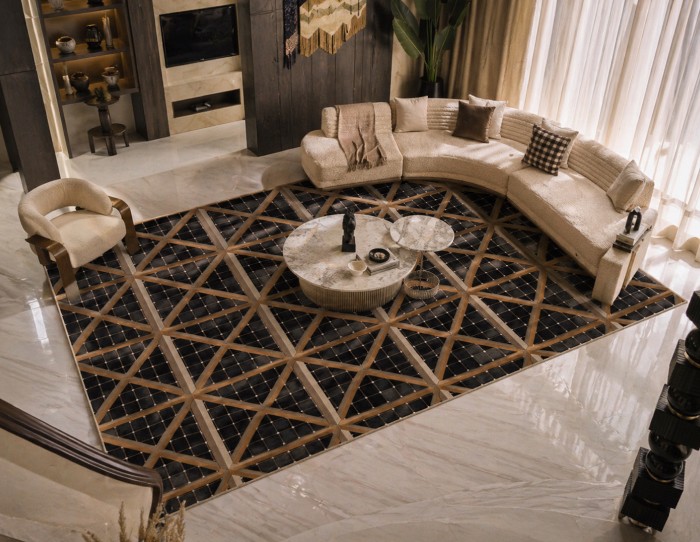
Step back, and the strategic narrative becomes clear. The FACES collection by Jaipur Rugs occupies a compelling intersection where Japanese minimalism meets Indian artisanal heritage, contemporary architecture converges with traditional weaving, and a restrained global design language is brought to life by over 40,000 artisans across Rajasthan. More than a collaboration, it serves as proof that Indian craftsmanship can stand confidently within the global design conversation, provided the partnership is thoughtful and the execution uncompromising.
This has practical implications for how the next decade of Indian design should think about global positioning. First, the collaboration model matters. Choosing a partner like Kengo Kuma, whose own aesthetic philosophy aligns with the deep human patience of Indian handmade craft, is genuinely different from a commercial licensing deal. Second, the venue matters. Salone del Mobile is where global design conversations are legitimised, and Indian brands showing at Salone are being read as global players rather than regional specialists. Third, the artisan model is the defensible moat. No competing design source in the world can replicate the network of 40,000 skilled hands that Jaipur Rugs works with. So the human infrastructure is the actual competitive advantage.
The next time you encounter an Indian craft house at a global design fair, pay close attention to how the collection is framed. The brands getting it right are demonstrating that Indian craftsmanship is more than heritage. It is, in fact, a sophisticated material language capable of shaping the world’s most discerning design conversations. The FACES collection by Jaipur Rugs stands as one of the clearest expressions of that shift in 2026.
Read next: Case Study: How LVMH Gaïa and Parfums Christian Dior Are Pioneering Water Innovation in Luxury, because the same rigour that brings scientific engineering to luxury supply chains is also what brings architectural philosophy to Indian craft on the global stage.