





Having spent years shaping food and hospitality coverage at prestigious magazine titles, I can tell you the most influential players in the restaurant business are almost never the ones getting interviewed. Behind every global chain, every scaled fast casual concept, and every hotel restaurant that somehow always feels cohesive across 40 countries, there is usually a small team of specialists who shaped the whole thing before a single guest walked through the door. These are the restaurant consulting firms. They operate quietly, they bill handsomely, and the work they do influences billions of dollars in annual food and beverage revenue.
If you are a hospitality professional trying to grow a concept, attract investment, or simply understand where the industry is heading, understanding how these firms work is one of the most valuable things you can do. So let me break it down for you.
Why the restaurant industry needs specialist consultants
Here is a number that should stop you mid-scroll: the global foodservice market hit $3.09 trillion in 2024 and is estimated to surpass $4.1 trillion by 2033. In the United States alone, restaurant and foodservice sales topped $1.5 trillion in 2023. That is not a niche sector. That is one of the largest industries on the planet, and it is growing at a pace that most operators are simply not equipped to keep up with on their own.
At the same time, survival is harder than the headlines suggest. Around 17% of restaurants close in their first year, and close to 50% do not make it past five years. Food costs routinely eat up 28 to 32% of total revenue. Labor costs keep climbing. And in 2024, food-away-from-home prices rose more than three times faster than grocery prices, which means every guest walking through your door is now doing a value calculation in their head before they order.
This is exactly the environment where restaurant consulting firms earn their fees. When the margin for error is this thin and the competitive landscape changes this fast, operators cannot afford to rely on instinct alone. They need people who have seen these problems before, across hundreds of concepts and dozens of markets, and who know precisely which levers to pull.
The restaurant consulting firms building the world’s most celebrated dining rooms
Not every restaurant consulting firm is built for the mass market. There is a separate and considerably more rarefied world of firms that work almost exclusively in the luxury segment, where the brief is not just profitability but prestige, and where a single bad season can undo years of carefully built brand equity.
This tier of restaurant consulting firms operates differently from the rest of the industry. The pace is slower, the details are finer, and the conversation rarely begins with food costs. Instead, it starts with questions like: What does this brand stand for in a room where the guest is already wealthy and already well-travelled? How do you make a dining experience feel irreplaceable when your guest has eaten at every three-Michelin-star restaurant in Europe? And how do you scale that experience to a second city, or a tenth, without losing the thing that made it extraordinary in the first place?
Firms like P&C Global have built their entire practice around exactly this challenge. They have worked with some of the most recognizable names in luxury hospitality, including Four Seasons, Mandarin Oriental, Ritz-Carlton, Aman, Rosewood, and Six Senses, helping these brands extend their dining identities across new properties and new geographies without diluting the core. On the culinary innovation side, The Culinary Edge has taken a different approach, fusing classically trained chefs with brand strategists and food anthropologists to create concepts that feel entirely original and yet are built from the start to perform commercially. The firm has worked with more than 25 percent of the top 200 food and beverage brands and has developed over 30 new business concepts across the full spectrum of dining.
In London, the luxury hospitality consultancy Maya works specifically with premium hotels, bars, and high-end restaurant concepts, delivering consultancy, branding, and experiential activations for clients where the guest experience is as important as the plate. Meanwhile, Bain and Company, one of the world’s most recognised management consulting firms, has a dedicated restaurant and foodservice practice that increasingly advises full-service and luxury dining operators on everything from customer experience reinvention to pricing strategy and digital transformation.
What sets this tier of restaurant consulting firms apart is not just who their clients are. It is how they think about the problem. In luxury, the margin for compromise is essentially zero. A concept that feels slightly off-brand, a menu that is technically excellent but tonally wrong for the room, a service model that does not match the physical environment can cost a luxury restaurant its reputation faster than almost anything else. The firms that work in this space understand that, and they charge accordingly. But for operators who are building something that genuinely belongs in that top tier, the investment tends to pay for itself before the first anniversary.
What restaurant consulting firms actually do (it goes much further than menus)
Most people hear “restaurant consultant” and picture someone tweaking recipes and rearranging the specials board. The reality is completely different, and honestly far more interesting.
The best restaurant consulting firms operate more like a hybrid between a management consultancy, a private equity advisor, and an innovation lab. Their work spans the entire lifecycle of a brand, from the very first concept sketch all the way through multi-continent expansion, franchising, acquisition, and sometimes turnaround. Here is what that actually looks like in practice.
1. Concept development and brand architecture
Before a single brick is laid, restaurant consulting firms help operators answer the questions that will determine whether a concept survives. Who is the guest? What is the brand’s position in the market? What does the physical experience feel like at 7pm on a Saturday versus 12pm on a Tuesday? How does the menu reflect the brand’s values, and can the kitchen actually execute it consistently at volume?
This is is a structured, research-backed process that draws on competitive analysis, consumer behaviour data, demographic mapping, and real operational experience. Getting this wrong at the concept stage is one of the most common and most expensive mistakes in the industry.
2. Menu strategy and supply chain optimisation
Menu development inside a serious restaurant consulting firm looks nothing like it does in a test kitchen. The best firms approach it as a financial and operational exercise first. They are asking questions like: What is the true cost per plate after waste, prep labor, and portioning? Which items drive traffic and which ones slow down the kitchen? How does the menu perform differently across dayparts? And critically, how does it hold up when ingredient prices spike?
Synergy Restaurant Consultants, one of the most established names in the industry with over 30 years of experience and work across 250 national chains, is known for exactly this kind of holistic menu and supply chain work. They have helped major operators not just develop new menu items but redesign entire back-of-house production systems to make those menus profitable at scale.
3. Expansion, franchising, and global market entry
Scaling a concept across multiple locations is where a lot of otherwise excellent restaurant brands quietly fall apart. The food is great at location one. By location ten, the quality is inconsistent. By location thirty, the brand has lost the thread of what made it special to begin with.
Restaurant consulting firms that specialise in expansion help operators build the systems, training infrastructure, franchise documentation, and supply chain architecture that make replication possible without dilution. This includes navigating the very real challenges of regional supply chains, local labour laws, cultural menu adaptation, and marketing strategies that resonate in new markets.
4. M&A advisory and private equity support
This is the part of the industry that most hospitality professionals do not see, but it drives enormous amounts of capital. Private equity firms, family offices, and institutional investors are constantly acquiring, growing, and exiting restaurant brands. They need advisors who understand not just financial modeling but the operational reality of running a food and beverage business.
Aaron Allen and Associates, arguably the most globally prominent restaurant consulting firm operating today, has built much of its reputation in this space. The firm has advised executive leadership across six continents and more than 100 countries, completing over 2,000 consulting engagements for clients collectively posting more than $300 billion in annual revenue. Their founder Aaron Allen, a third-generation restaurateur, serves as a C-suite confidant to industry leaders with tens of thousands of locations under their downstream influence. The firm works with multinational restaurant chains, private equity firms, sovereign wealth funds, and restaurant technology companies, which tells you everything about the scale at which elite restaurant consulting firms now operate.
The tier structure of restaurant consulting firms
Not all restaurant consulting firms operate at the same altitude, and understanding the difference matters a lot depending on where you are in your growth journey. At the top of the market, you have global strategy firms like Aaron Allen and Associates. These firms work primarily with multi-brand, multinational organisations. They are involved in board-level decisions, IPO preparation, portfolio value creation, and the kind of cross-border expansion that requires both deep operational knowledge and genuine cultural fluency across markets. If you are a regional chain looking to expand into the Middle East or a private equity firm acquiring a fast casual portfolio, this is the tier you are calling.
In the mid-market, firms like Synergy Restaurant Consultants and TRG Restaurant Consulting handle the operational and menu-focused work that growing chains need most. These are the people helping a 50-unit brand get ready to become a 200-unit brand, fixing food cost problems, redesigning training programs, and rebuilding supply chain infrastructure. Synergy in particular has become a go-to for chains needing both concept development and operational improvement at the same time.
At the boutique level, firms like New School Consulting, Blackwood Hopitality, and Blue Orbit Restaurant Consulting bring senior-level expertise to earlier-stage concepts and independent operators. Some of these firms are built around alumni of well-known culinary or hospitality groups and carry a level of credibility with investors and press that more generalist firms do not have.
Then there is a fourth model worth knowing about: the collective. Cabaret Design Group operates as a curated team of top-tier food and beverage specialists, handpicked for each project’s specific demands. This approach gives clients access to narrow expertise at the senior level without the overhead of a full-service firm. For complex projects involving unusual combinations of skills, it can be the most efficient model available.
What to look for when choosing restaurant consulting firms
If you are at the stage where hiring a restaurant consulting firm makes sense, here are the things that actually matter. Relevant category experience comes first. A firm that has spent 20 years working with fast food chains may not be the right choice for a fine dining hotel restaurant, and vice versa. Ask for specific examples of work in your category, your price point, and your stage of growth.
Operational credibility matters more than academic credentials. The best consultants in this industry have worked in it, not just studied it. They have stood in a kitchen during service, built a P&L from scratch, and managed the relationship between a head chef and a CFO who see the world completely differently.
Geographic range is increasingly important. The foodservice market is global, and even brands that feel local often need advice on supply chains, technology platforms, or investment structures that cross borders. Restaurant consulting firms with genuine international experience bring a different quality of perspective to these conversations.
Finally, look at how the restaurant consulting firms structure their engagement. Some firms work on project fees, some on retainers, and some on performance-based arrangements. The best firms are clear about what they will deliver and how success gets measured. If a firm cannot articulate that clearly in a first conversation, that tells you something.
The most powerful force in global dining is not a chef or a Michelin star. It is the invisible infrastructure built by the restaurant consulting firms working quietly behind every great brand.
Also, find out why the global elite keep dining at the same restaurants worldwide.
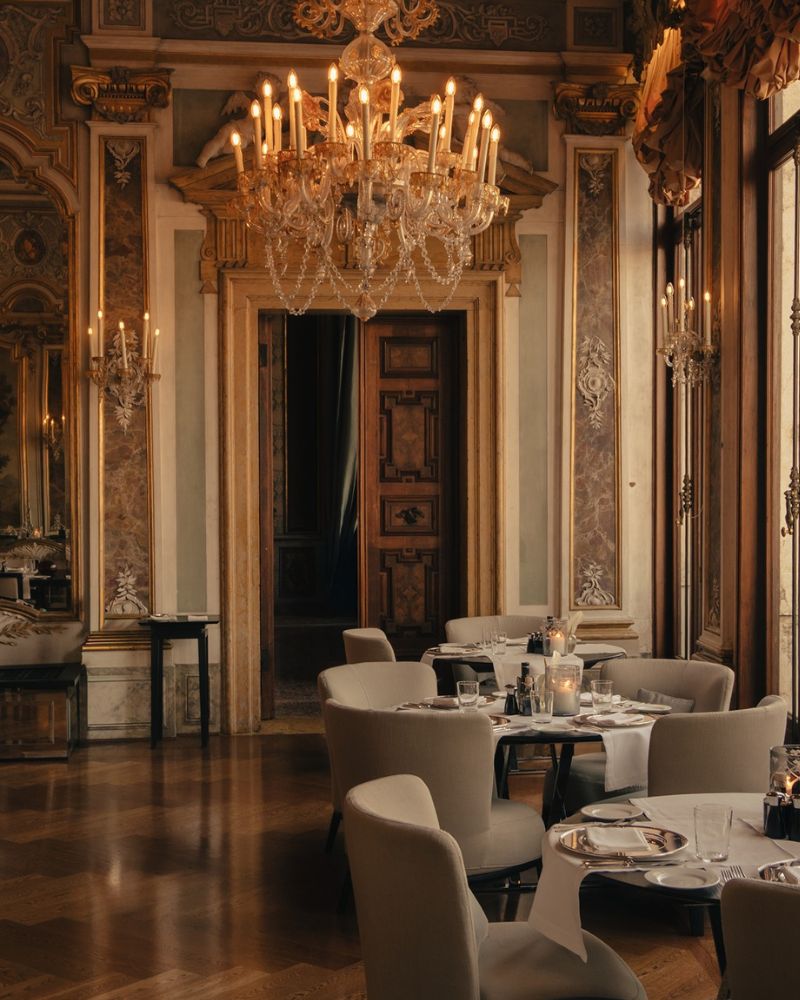
Image credit: Restaurant consulting firms
FAQ
What do restaurant consulting firms typically charge?
Fees vary significantly depending on the scope and tier of the firm. Project-based engagements for mid-market firms can range from tens of thousands to several hundred thousand dollars. Global strategy firms working on M&A or multi-market expansion operate at a higher level entirely. Many firms offer an initial engagement at a fixed fee before moving into longer-term retainer arrangements.
Do restaurant consulting firms only work with large chains?
No. While the most prominent global firms tend to focus on multi-unit and multinational operators, there is a strong mid-market and boutique tier of restaurant consulting firms that specifically works with independent operators, emerging concepts, and single-location restaurants preparing for growth.
How do restaurant consulting firms approach menu development differently from internal teams?
An individual consultant typically brings deep expertise in one or two functional areas, such as menu development or operations. A restaurant consulting firm offers a multidisciplinary team that can address the full complexity of a growing restaurant business, from finance and technology to branding and real estate, within a single engagement.