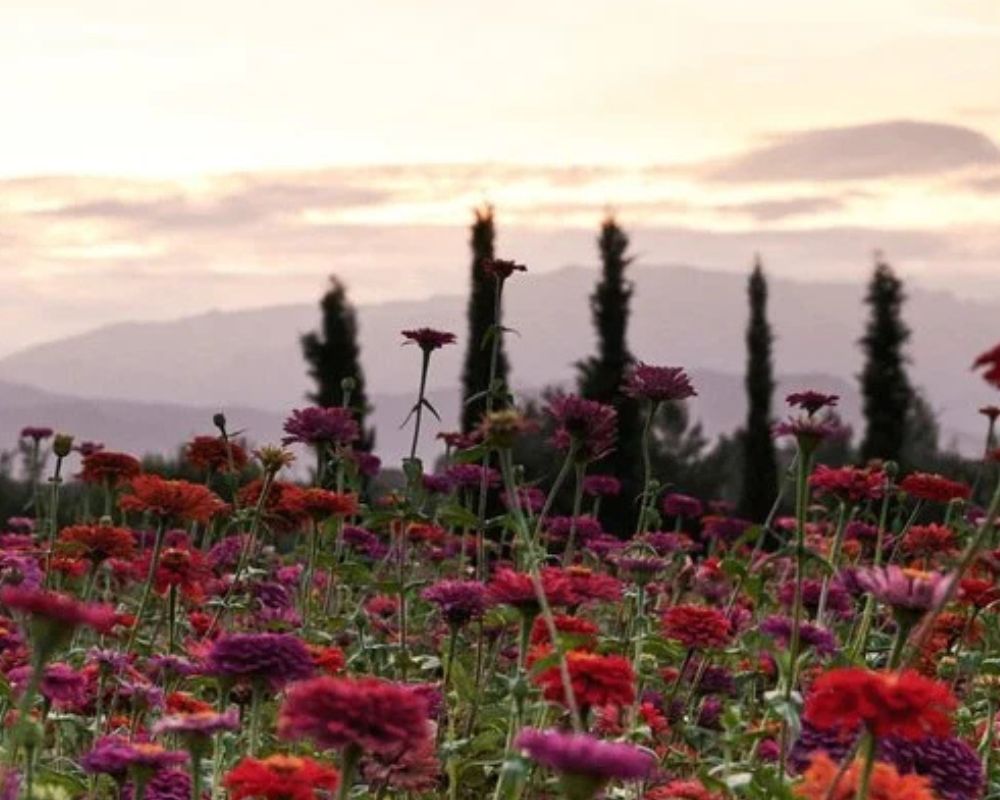





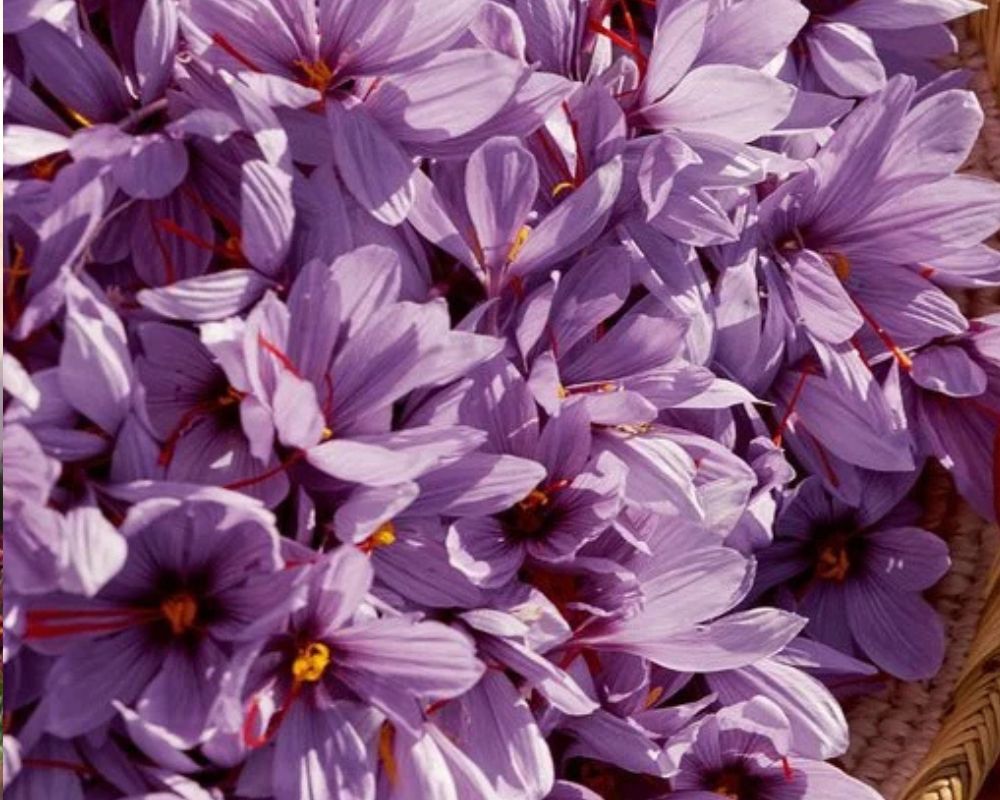
It began, as many of the best stories in luxury do, with an ingredient. In 2014, YSL Beauty discovered the exceptional quality of saffron pistils grown in the foothills of Morocco’s Atlas Mountains and began asking a question that most beauty brands had historically preferred to leave unanswered: what would happen if we grew our own?
What followed was the YSL Beauty Ourika Community Gardens, an open-air laboratory and growing programme set across 20,000 square metres of the Atlas foothills in Morocco’s Ourika Valley. Today, the gardens shelter more than 200 botanical species, supply at least one ingredient or accord to every YSL Beauty product, have expanded into the brand’s fragrance category, and support the first women’s cooperative in the region. They are also one of the most genuinely instructive sustainability stories in luxury beauty, because they demonstrate what happens when a brand decides that responsible sourcing is an operational commitment rather than a communications exercise.
The YSL Beauty Ourika Community Gardens in Morocco make for a compelling case study for a straightforward reason: they work. The science works, the supply chain works and the community programme works. And the fact that the gardens have been doing all of this since 2014, a full decade before sustainability became a standard part of every luxury brand’s messaging, is precisely what makes them worth examining at length.
From the Atlas Mountains to the beauty bottle: Why saffron matters
The choice of location for the YSL Beauty Ourika Community Gardens in Morocco was grounded in something more specific than aesthetics, although the landscape at the foot of the Atlas is extraordinary. The Atlas region offers an extreme and distinctive microclimate, with searingly hot summers and bitingly cold winters, that creates unusual stress conditions for plants growing in it.
That stress, it turns out, help plants survive and thrive in the Atlas climate. They develop particular resilience mechanisms, producing active molecules in response to environmental pressure that have significant cosmetic potential. The saffron pistils that first drew YSL Beauty to the region in 2014 were exceptional in quality precisely because of the conditions in which they were grown. The extreme climate concentrates the active compounds in the plant in ways that more temperate growing conditions are unable to produce.
“Each and every raw material is selected, grown, sustainably harvested, and carefully extracted to meet the very highest standards of efficacy,” said Daniela Blin, International Sustainability and Scientific Director at YSL Beauty. “The natural mechanisms used by plants living in the Atlas climate to adapt to their environment are being studied to harness their potential.”
This is the scientific foundation on which the YSL Beauty Ourika Community Gardens in Morocco rest. The gardens are an efficacy story as much as a sustainability story. The ingredients sourced from them are in YSL Beauty products because they are genuinely better ingredients, grown in conditions that develop their active properties to a higher standard than conventional supply chain sourcing would achieve. Sustainability and performance are, in this case, the same argument.
What the gardens actually grow and how they work
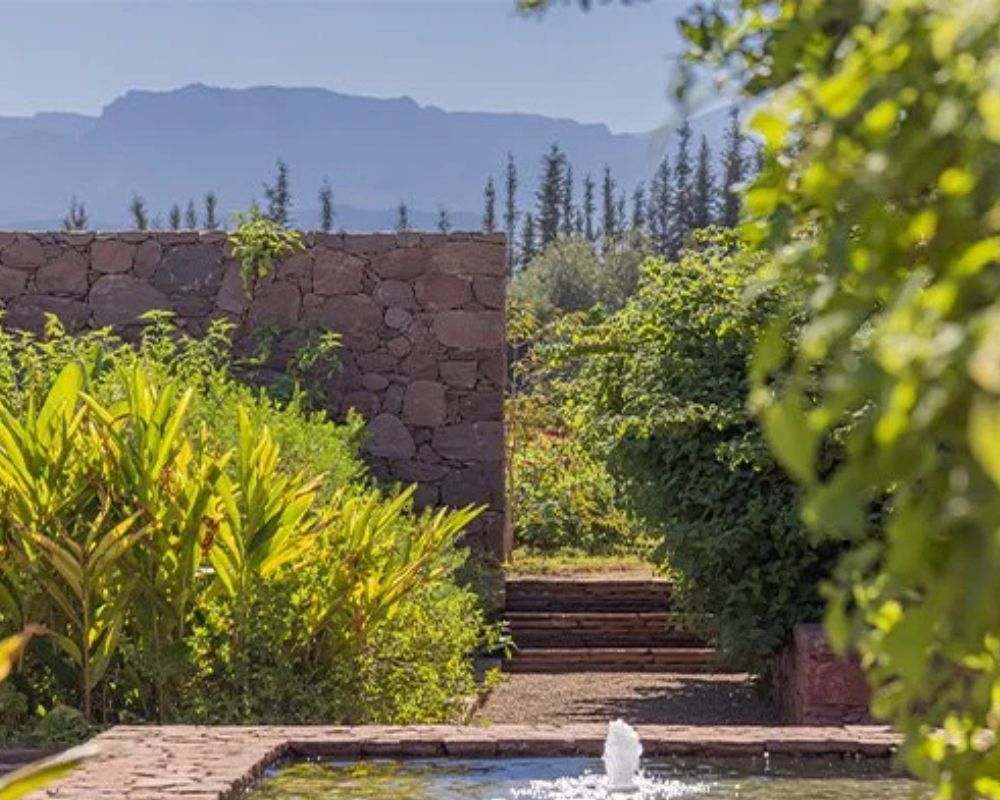
The YSL Beauty Ourika Community Gardens in Morocco are organised across three distinct spaces, each with a different purpose and a different contribution to the brand’s sourcing and research programme.
The main growing area covers over 20,000 square metres and is devoted to cultivating and harvesting the botanical species used directly in YSL Beauty products. The garden grows pomegranate, marshmallow, iris, jasmine, walnut, saffron and more than 200 other species, all selected from Moroccan botanical heritage and grown using regenerative agriculture practices that enrich the soil during harvesting rather than depleting it. Since 2024, every YSL Beauty product contains at least one ingredient or accord sourced from the Ourika Gardens, a milestone that represents the full integration of the growing programme into the brand’s product development.
The second space is a botanical collection and experimental laboratory, dedicated to research into new ingredients and active compounds. This is where YSL Beauty’s scientists identify the main ingredient benefits, develop products with more effective properties, and apply more sustainable research methods to the brand’s formulation process. The laboratory allows the brand to study the specific molecules that Atlas plants produce in response to their extreme environment and to understand how those molecules can be used in skincare, makeup and, since 2025, fragrance.
The third space is a heritage garden paying tribute to Yves Saint Laurent himself. It features the plants and flowers associated with the designer, many of which appear in the prints and colour palettes that defined his work across decades of fashion. The heritage garden is a gesture toward the cultural and creative origins of the house, a reminder that the gardens are rooted in something more than supply chain efficiency. They are also a continuation of the designer’s own relationship with Morocco, a country where he found creative renewal and which shaped his aesthetic in lasting ways.
From the Ourika Gardens, 17 exclusive ingredients are grown for YSL Beauty’s skincare and makeup products, with the programme extending into fragrance from 2025. The expansion into fragrance is significant because it extends the garden’s reach from topical beauty into the olfactory category, creating a more complete integration of the Ourika sourcing model across the brand’s full product offer.
The women’s cooperative: where the social story begins
The environmental credentials of the YSL Beauty Ourika Community Gardens in Morocco are genuine and well-documented. What makes the programme exceptional, and what elevates it from a responsible sourcing initiative to a meaningful story about what luxury can do when it decides to take its social responsibilities seriously, is the community dimension.
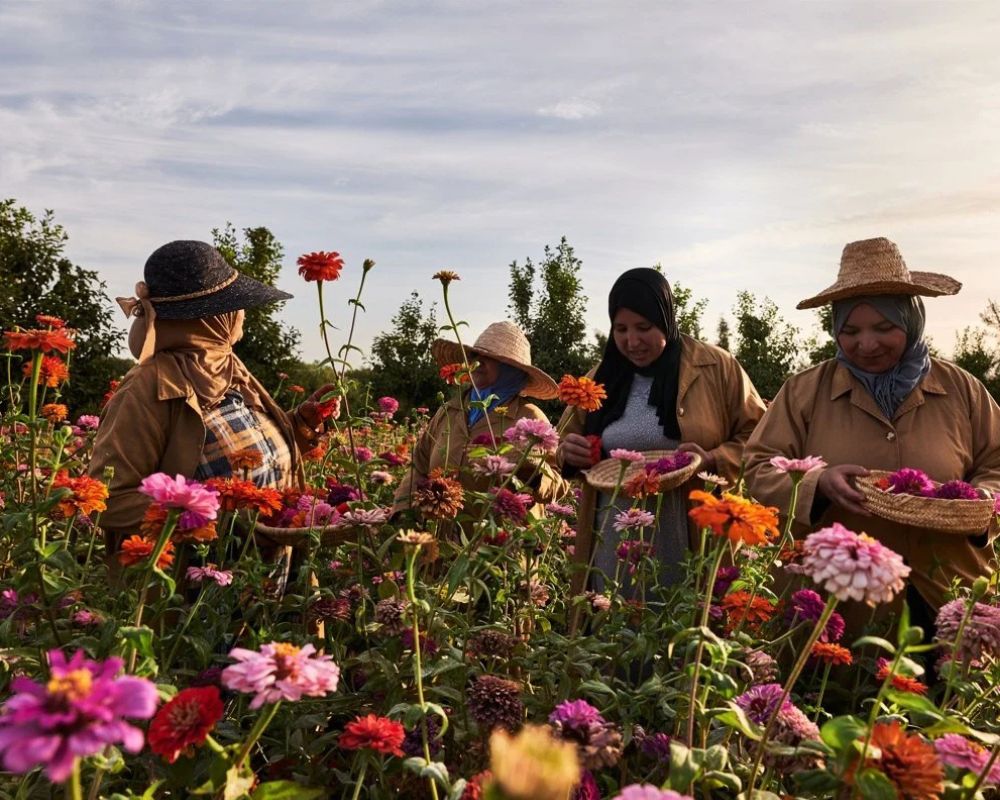
The gardens are tended primarily by local women who formed the first women’s cooperative in the Ourika region. YSL Beauty supported the creation of this cooperative as a deliberate act, and the model it established goes considerably beyond employment. The women who tend the gardens use the land during periods when it is available to grow their own produce, harvesting olives to make olive oil and selling it for their own profit. They can harvest some of the garden’s output for personal use. And the cooperative structure gives them a collective economic and social standing in the region that individual employment alone is unable to provide.
This is the detail that distinguishes the YSL Beauty Ourika Community Gardens in Morocco from the majority of luxury beauty sustainability programmes. The gardens were designed from the beginning to give back to the community around them, in a form that the community itself could sustain and build on independently. The first women’s cooperative in the region was created through YSL Beauty’s involvement, and it operates today with a degree of autonomy and economic productivity that the brand’s initial investment made possible and the community itself now sustains.
“The garden gives back to the people that work with it,” said Caroline Negre, former International Sustainability and Scientific Director at YSL Beauty. “They can harvest some of their products and they can sell them for their own profit.”
By supporting the creation of a cooperative to harvest and care for the gardens, YSL Beauty continued the uninterrupted dialogue with women that Yves Saint Laurent himself always championed across his creative work. The social programme promotes local craftsmanship while building women’s financial independence and has become a source of inspiration for change across the broader region.
The biodiversity programme: measuring what most brands overlook
One of the most operationally sophisticated aspects of the YSL Beauty Ourika Community Gardens in Morocco is the biodiversity impact assessment programme that runs alongside the growing and harvesting activities.
The gardens assess the biodiversity impact of production in the region, functioning as a workshop to develop better and more sustainable ways of sourcing natural ingredients over time. This means the programme actively measures the ecological effect of its own activity rather than simply declaring its practices sustainable and moving on. Species counts, soil health, water usage, pollinator presence, these are tracked and analysed as part of an ongoing effort to understand whether the gardens are having the ecological impact they are designed to produce.
This level of measurement discipline is uncommon in the luxury beauty industry. Most brands source from certified suppliers and consider their sustainability obligations fulfilled. YSL Beauty has built a programme that goes several steps further, growing its own ingredients, studying the science of those ingredients in their natural environment, and measuring the biodiversity effect of its own growing practices. The result is a sourcing model with a genuinely verifiable environmental record rather than a set of aspirational commitments.
What the Ourika model tells the luxury beauty industry
The YSL Beauty Ourika Community Gardens in Morocco have been running for over a decade. They supply ingredients to every product the brand makes. They support the first women’s cooperative in the region. They have expanded into fragrance. They conduct active biodiversity research. And they have done all of this without positioning the programme primarily as a marketing story, which is perhaps why the broader luxury beauty industry has been slower to examine it than the programme deserves.
As Daniela Blin, International Sustainability and Scientific Director at YSL Beauty, told Forbes in April 2026, “Sustainability should be an integral part of the creative and scientific craft that defines a brand.” She described YSL Beauty’s approach as “end-to-end,” with elevation and savoir-faire at the foundation of all its sustainability efforts. “There is a desire for clarity and confidence,” she said. “People want to understand how to make better choices without compromising on performance or experience.”
The Ourika Community Gardens are the clearest expression of that philosophy in practice. They represent a version of luxury beauty sustainability that begins at the soil level, extends through the scientific process of ingredient development, reaches the product on a consumer’s shelf, and returns to the Moroccan women who tend the land. Each step in that chain is visible, verifiable and meaningful.
For the luxury beauty industry as a whole, the Ourika model represents something genuinely worth studying. Growing your own ingredients is expensive. Running a biodiversity assessment programme requires scientific expertise and long-term commitment. Supporting a women’s cooperative means accepting that the community programme operates with a degree of independence from the brand’s direct control. These are choices that require conviction as well as resources.
YSL Beauty made those choices in 2014, before sustainability became the industry’s most frequently deployed word. The YSL Beauty Ourika Community Gardens in Morocco are what it looks like when a brand decides that doing things properly matters more than doing things quickly.
Read next on The Pillar Edit: Case Study: How LVMH is giving underprivileged youth a future in luxury craftsmanship , another story of what happens when a luxury house decides its responsibility extends well beyond the product itself.
(Image credit: yslbeautyus.com)