I am currently into the INSIDE LVMH Certificate programme, and somewhere between modules on heritage, craftsmanship, and the language of luxury, I came across something I did not expect to stay with me this deeply: a module on LVMH autism inclusion. Suddenly, the conversation shifted from products to people.
I went into the course expecting lessons on savoir-faire, brand storytelling, and the art of selling objects that exist as much in emotion as they do in material value. Instead, I found myself reading about employment opportunities for autistic individuals, workplace adaptation, and the idea that dignity, too, can be part of a luxury company’s legacy.
And perhaps that is what stayed with me the most. Not the spectacle of luxury, but the reminder that the most meaningful brands are not only defined by what they create, but by the systems of care and inclusion they choose to build behind the scenes.
What LVMH autism inclusion actually looks like on the ground
Let us cut straight to it. In 2023, LVMH signed a formal partnership with a French association called VETA. The full name is Vivre et Travailler Autrement, which translates to “Living and Working Differently.” VETA exists for one reason: to get adults with severe autism into real, paid, permanent employment. Not charity work. Not sheltered workshops. Actual jobs.
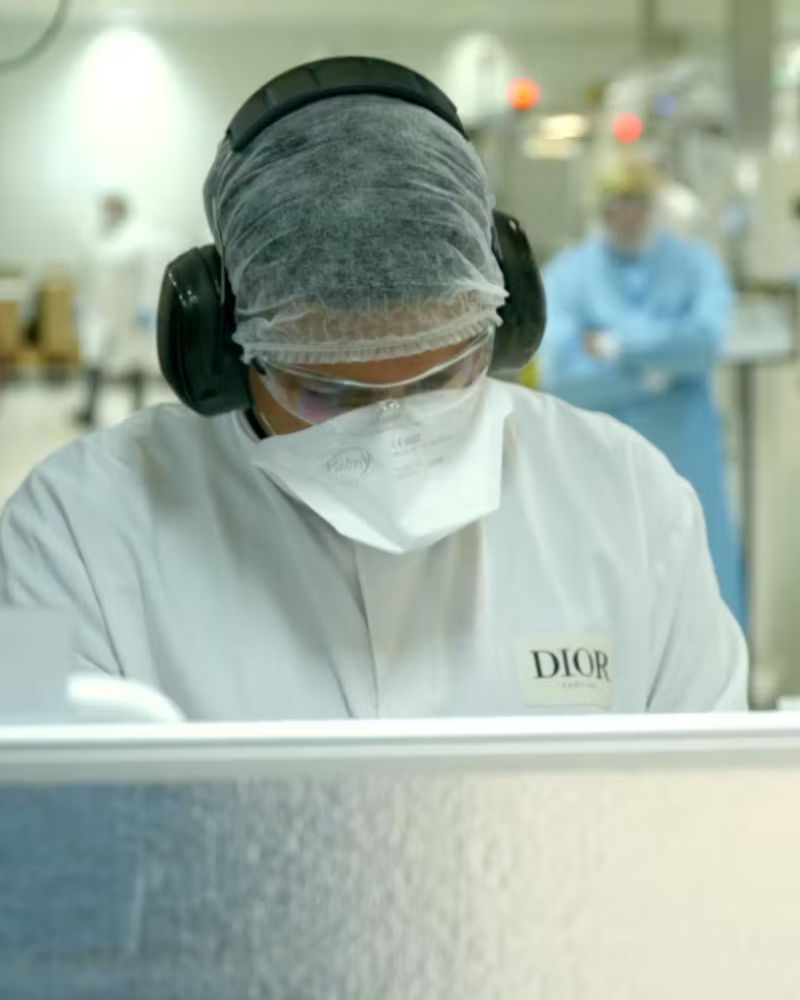
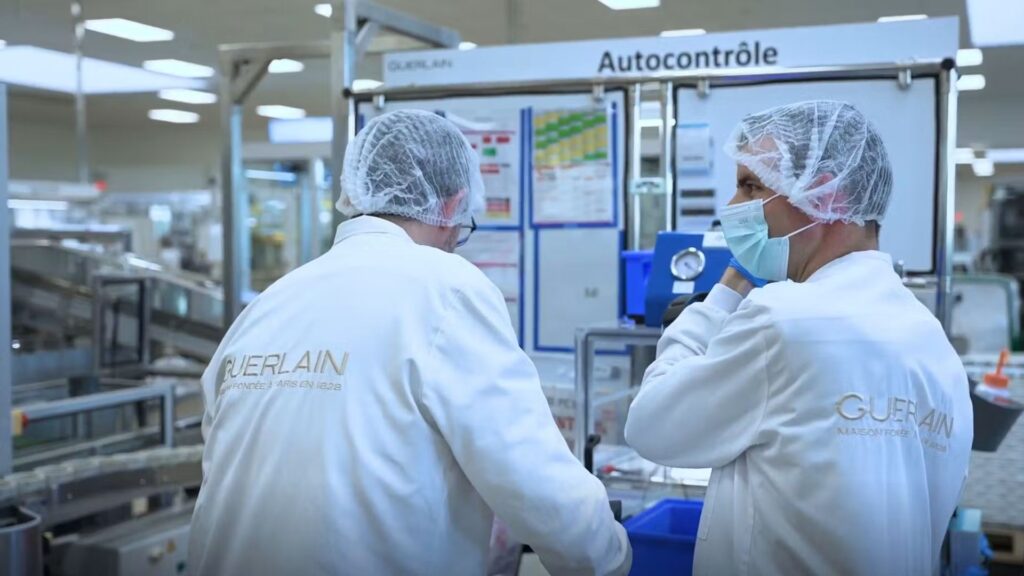
Through this LVMH autism inclusion initiative, a couple of individuals with severe autism have already been hired on permanent contracts inside the workshops of Guerlain and Parfums Christian Dior, at facilities in Chartres and Saint-Jean-de-Braye. These are people who had never previously been able to access employment at all and LVMH gave them permanent contracts.
Now Louis Vuitton has joined the VETA programme, with recruitment planned across several workshops in France. This is the first time Louis Vuitton has been part of this specific collaboration and it will not be the last.
Why craft workshops make perfect sense for autistic employees
Here is the part nobody seems to be talking about loudly enough. Most companies that hire autistic talent tend to place them in technology-focused roles like coding, data analysis, or software testing. SAP, Microsoft, and JPMorgan Chase have all built programmes around this model, but LVMH’s approach feels entirely different. Instead of limiting inclusion to tech departments, LVMH is bringing autistic employees into artisanal craft roles, into workshops, and into the very heart of what luxury actually is.
And the more I think about it, the more it makes sense. What does a luxury craft workshop demand? Precision, consistency, deep focus, and the ability to repeat a task with the same level of care and accuracy, whether it is the first time or the hundredth. These are qualities often associated with autistic individuals, which is perhaps why the connection feels so natural.
Research has pointed to this for years. A JPMorgan Chase study found that autistic employees were 48 percent faster at completing certain precision-based tasks and achieved accuracy rates of up to 92 percent compared to neurotypical peers. Now imagine applying that to luxury craftsmanship, to bottling a Guerlain fragrance, to stitching a Louis Vuitton trunk, or to quality-checking a Dior lipstick.
What makes the LVMH autism inclusion model so powerful is that it is not about creating a convenient corner for people who do not fit the standard mould. It is about recognising that some of the very qualities luxury production depends on are qualities many autistic individuals naturally possess. And perhaps, that changes the conversation entirely.
The bigger picture: LVMH’s disability inclusion architecture
Let us zoom out for a moment, because LVMH autism inclusion does not live in isolation. It is part of a disability inclusion infrastructure that this Group has been building seriously, for nearly two decades.
Since 2007, LVMH has maintained a dedicated Disability Inclusion function. It is supported by a network of 200 CSR and disability officers spread across all the Maisons, meeting regularly and accountable to real targets. In 2021, LVMH signed the International Labour Organization’s Global Business and Disability Network Charter and set a formal goal of doubling its percentage of employees with disabilities to 2 percent of its global workforce by 2025. Currently, people with disabilities make up 1.6 percent of a workforce that numbers over 200,000 people.
The ecosystem of programmes within this broader LVMH autism inclusion and disability framework is genuinely impressive. A work-linked training programme in France has enrolled over 102 people with disabilities since 2014. Loro Piana runs a project where young people with severe cognitive disabilities work on recycling disused garments. Louis Vuitton China has an Angels Program that hires and trains hearing-impaired employees for in-store roles. And then there is the partnership with Café Joyeux, a network of cafe-restaurants that exclusively employs people with intellectual and cognitive disabilities. LVMH even opened a Café Inside at its own Paris headquarters.
Neurodiversity is widening beyond autism at LVMH
For a very long time, when luxury fashion spoke about disability inclusion, the conversation largely centred around physical disabilities. It meant wheelchair accessibility, adaptive spaces, and, occasionally, visual impairment initiatives. However, neurodiversity, which includes autism, ADHD, dyslexia, and the many different ways in which the brain processes the world, was rarely part of the mainstream conversation.
And that absence is important to acknowledge. The luxury industry has always celebrated individuality in theory, yet when it came to hiring practices and workplace inclusion, there was often a very narrow idea of what professionalism, communication, and productivity were supposed to look like. As a result, many neurodivergent individuals remained invisible within the system. This is precisely why initiatives like LVMH’s stand out. They signal a broader shift, not only in how luxury defines talent, but also in how it understands human potential.
The DARE Accessibility initiative: where employee ideas meet disability inclusion
Now here is where it gets really interesting. LVMH has an internal HR intrapreneurship programme called DARE. DARE was originally the engine that powered the Group’s Inclusion Index, which was created in 2018. The idea is simple and quite brilliant: invite the people inside the company to solve the problems the company needs to fix.
Following the Paris 2024 Paralympic Games, which generated the kind of public conversation about disability that the world had never quite seen before, LVMH launched a special edition of this programme called “DARE Accessibility.” Employees from across all LVMH Maisons and every region of the world were invited to submit bold, practical ideas that would make LVMH more accessible and more inclusive.
More than 250 ideas came in that covered physical accessibility in stores, workshops and offices; products and services designed for customers with disabilities; internal workplace accommodations; and communication and culture. From those 250 ideas, 16 Maisons selected 40 to develop and implement over eight months.
The questions worth asking
If you are reading this because you work in fashion and are trying to understand where it is going, or because you are neurodivergent yourself and wondering whether the world of luxury has space for you, here is what I want to say.
LVMH autism inclusion is not a finished story, and it is barely even a first chapter yet. But what makes it worth paying close attention to is precisely the meeting it represents, because the most exclusive industry in the world is making room for the people it spent decades overlooking, and doing so not with internships or photo opportunities but with full-time contracts.
This does not feel like a polished CSR talking point designed for a press release and forgotten by Monday, and if LVMH genuinely commits to seeing it through, it could become the beginning of something far more radical, which is a real redefinition of who gets to participate in the making of excellence.
For centuries, the luxury industry built itself on the idea that not everyone belongs, but what if the people historically left outside that door were precisely the ones best equipped to uphold its standards of precision, focus, and craft? That is the question LVMH autism inclusion is starting to answer, and it is about time someone asked it.
For more stories that matter, and conversations that deserve far more recognition, explore our Deep Dive section.
(Image credit: lvmh.com)