



On August 25 2026, the Gucci Primavera campaign landed with ten faces, one film directed by the man behind HBO’s Chernobyl, a $9,900 jacket that sold out in hours and Kate Moss lip-syncing to Wicked Game in a room full of strangers falling in love.
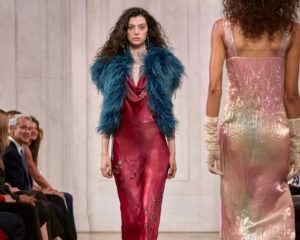
This is Demna’s first campaign for his debut collection, shown in Milan on February 27, and it announces one thing very clearly: Gucci is done being quiet about its comeback.
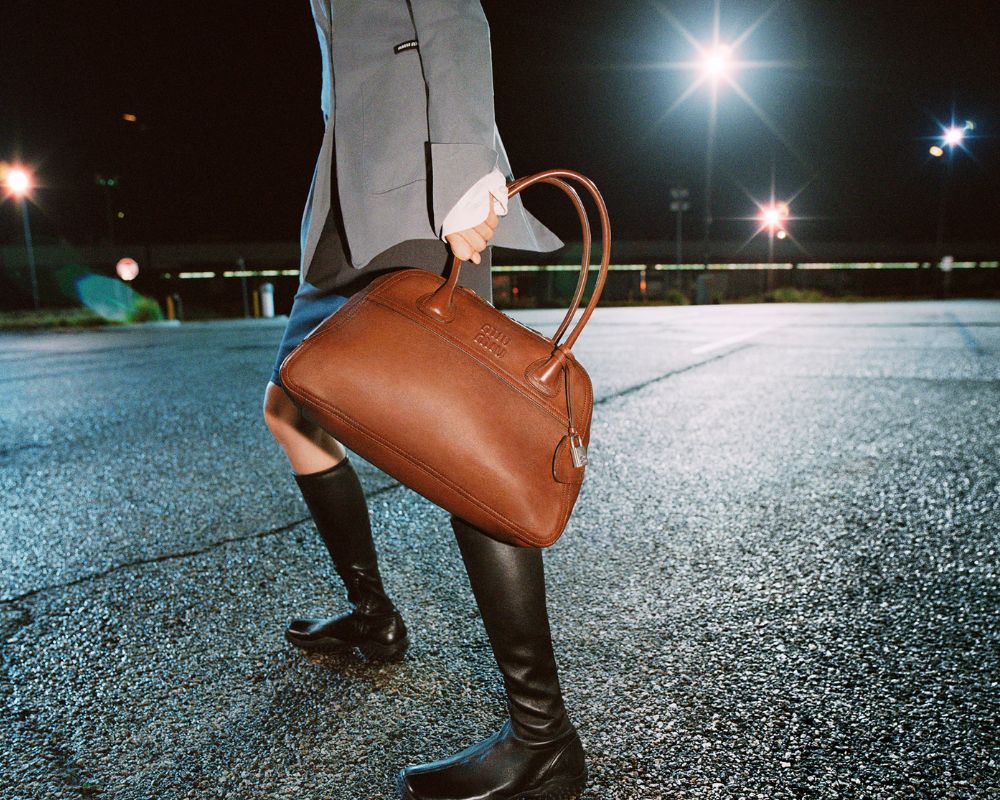
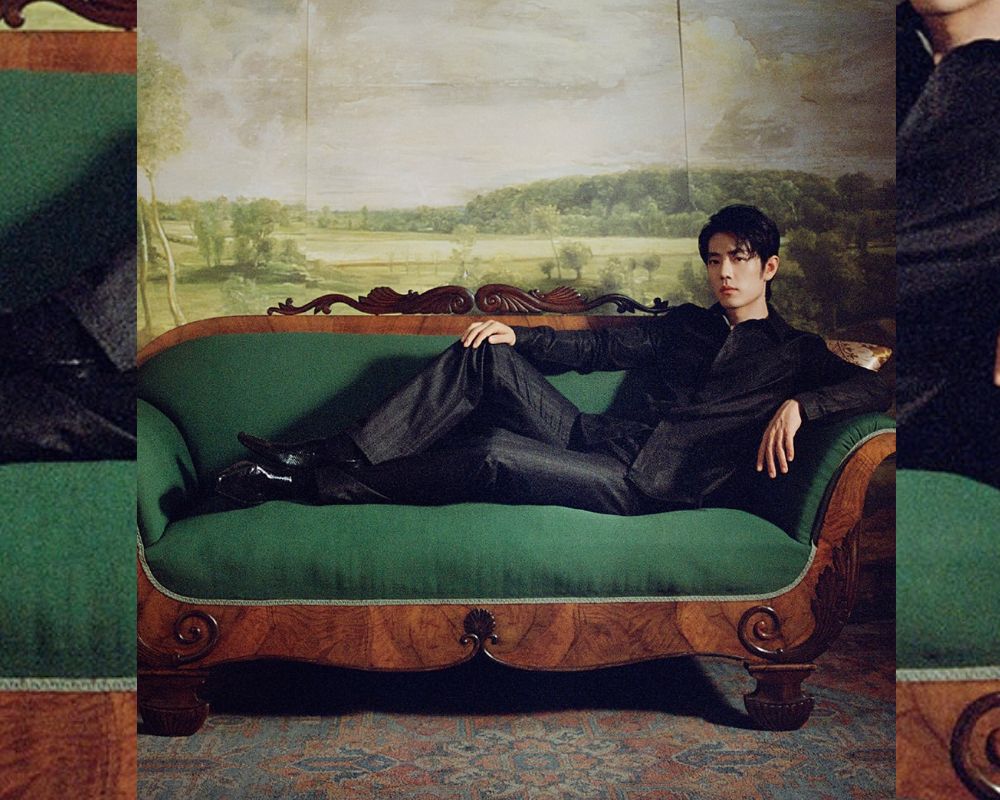
The campaign was photographed by Michal Chelbin against rustic Italian interiors, a deliberate departure from the clinical backdrops of earlier Gucci image-making. It is a visual signal of the return to Florentine roots that Demna has been building since his appointment.
The cast is wide. Jin and Xiao Zhan anchor it as global brand ambassadors. Ningning of aespa joined them in April 2026. Tom Brady, Shawn Mendes, Kate Moss, Alex Consani, Rico Nasty, EsDeeKid and Tarzzan fill out a roster that is deliberately, almost aggressively, diverse in its cultural reach.
Then there is the film.
Directed by Johan Renck, the Swede behind HBO’s Chernobyl, it features Kate Moss lip-syncing to Chris Isaak’s Wicked Game as strangers wake, pair off and fall in love on a dance floor. Demna told WWD he wanted it conceived like a music video, built around emotional awakening and the choice to feel love again, with Gucci as the force reminding people that beauty is worth the risk.
After two years of declining revenue and a very public reckoning with what over-distribution did to its cultural authority, Gucci under Demna is making a bold argument: desire is back.
The house wants Gucci to be the brand that makes people feel something again. And the Gucci Primavera campaign is its most ambitious proof yet.
How the Gucci Primavera campaign is structured as a network of cultural entry points
The most commercially instructive thing about this campaign is the casting logic, which reads as a precise map of the markets Gucci most urgently needs to re-enter and the cultural figures with the most direct access to each one.
Start with Asia, because that is where the Gucci Primavera campaign carries its most immediate commercial weight. Xiao Zhan moves product across mainland China within hours of any Gucci announcement, while Jin reaches a global BTS fanbase in numbers that no media buy can replicate, and Ningning extends that reach further still into aespa’s separate and distinct audience.
Three separate fanbases, three distinct market entry points, all reached through a single campaign, and the commercial efficiency of that decision is remarkable. Each of Jin, Xiao Zhan and Ningning brings an audience that is distinct, that is emotionally invested in what they wear and that responds to their appearances within minutes across digital platforms.
The Gucci Primavera campaign is structured so that each fanbase sees their own star first and discovers the full cast second, which means the campaign has effectively launched ten times across ten different communities rather than once across a generalised audience.
America gets sport rather than film. Tom Brady’s casting targets a demographic luxury houses have historically struggled to reach: older, wealthier, largely male and almost entirely outside fashion media. Brady is 49 years old and the most decorated American footballer in history.
His presence in the Gucci Primavera campaign is a direct commercial play for the American UHNW male consumer who has historically been outside Gucci’s primary audience and who represents one of the most significant untapped opportunities in luxury fashion. Shawn Mendes brings mainstream global pop, while Alex Consani carries the Gen Z fashion credibility that makes the campaign legible within the industry itself.
The result is a campaign that is simultaneously speaking to the BTS ARMY in Korea, the aespa fandom in Japan and Southeast Asia, the Xiao Zhan community in mainland China, the NFL audience in America, the mainstream pop listener globally and the fashion industry professional in Milan and Paris. Primavera is structured less like a conventional celebrity campaign than a network of cultural entry points. That is the most accurate commercial description of what Demna has built.
The Jin jacket and what a $9,900 sellout tells us about Gucci Primavera
The single most commercially specific data point to emerge from the Gucci Primavera campaign is the one that happened within hours of its release.
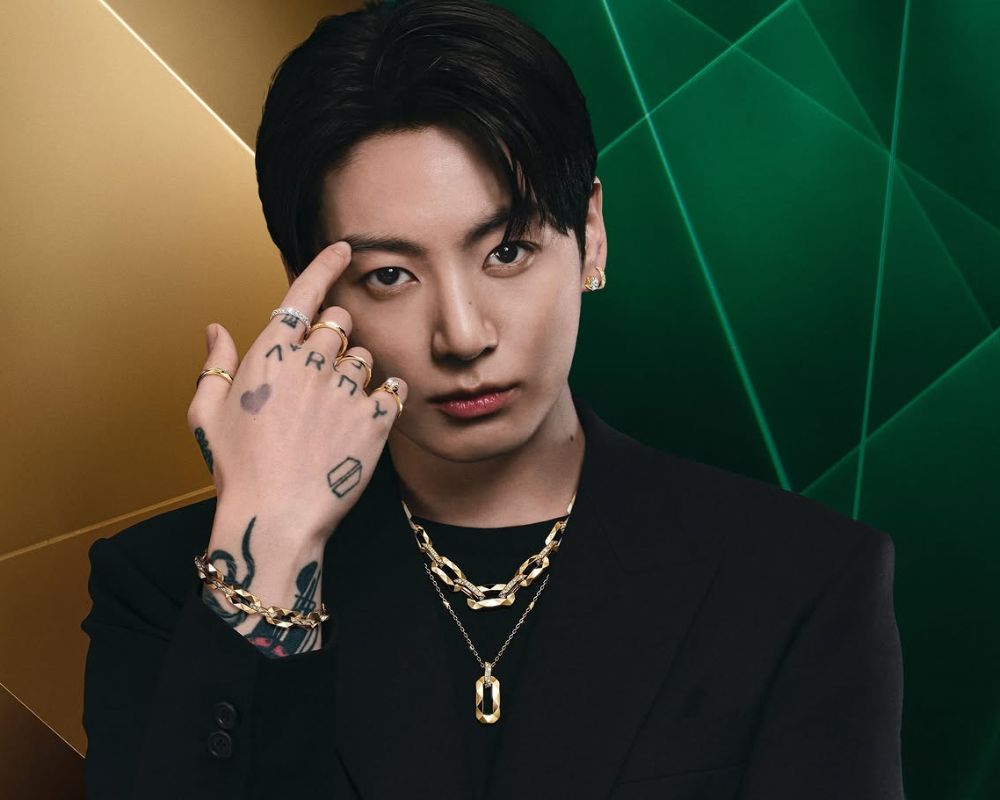
Jin appears in the Gucci Primavera campaign wearing a commanding black leather silhouette against ancient rustic surroundings, and the jacket he wore, retailing at $9,900, sold out within hours of the campaign’s release on August 25. In a single product sellout, the campaign illustrated the house’s ability to generate desire around runway pieces and confirmed that Jin’s commercial influence over purchase decisions at genuine luxury price points is both real and immediate.
Since becoming Gucci’s global ambassador in 2024, Jin has maintained an increasingly visible relationship with the Italian house. The Primavera campaign marks a new milestone: here he embodies the first collection to emerge from Demna’s runway show for Gucci, giving him a central role in the communication surrounding this creative turning point.
The sellout is commercially significant beyond the immediate revenue it represents. The sellout signals three things at once: that Jin’s influence is commercially verifiable at genuine luxury price points, that Demna’s debut collection has successfully generated desire in a way the house’s recent output had struggled to do, and that the Gucci Primavera campaign is reaching an audience prepared to spend rather than simply to admire.
Gucci has been rebuilding volume after two years of decline. The Primavera sellout is the first hard commercial evidence that the rebuild is producing something the market actually wants.
Kate Moss, Wicked Game and what Demna is saying about Gucci’s cultural identity
The film is where the Gucci Primavera campaign story gets genuinely interesting, and it is the most culturally layered element of the entire production, the one that reveals most clearly what Demna is actually trying to say about Gucci’s identity.
Kate Moss lip-syncing to Chris Isaak’s Wicked Game in a room of strangers falling in love is a deliberate series of references. Moss is the defining supermodel of the 1990s, the era that produced the original Gucci cultural golden age under Tom Ford. Chris Isaak’s Wicked Game is a song about the danger of desire and the choice to risk it anyway. The Johan Renck direction, rustic and intimate and emotionally charged, is a world away from the glossy spectacle that defined Gucci’s image at the height of its commercial expansion.
Demna told WWD he wanted the film to be about emotional awakening and choosing to feel love again, with Gucci positioned as the force that reminds people beauty is worth the risk. That is the language of emotional positioning, a brand speaking to feeling rather than product. It is the language of a brand trying to rebuild an emotional relationship with a consumer who had grown indifferent.
The Moss casting makes that argument specific. She is the visual shorthand for a particular moment in fashion history when Gucci was genuinely culturally irresistible, and her presence in the Gucci Primavera campaign is Demna saying, without quite saying it, that this house has been here before and knows how to find its way back. The choice of Wicked Game as the soundtrack reinforces that message: desire is dangerous, and Gucci is asking its audience to risk it again.
Gucci Primavera’s cultural reset is a masterclass for luxury
Three lessons emerge from this campaign and each one is specific enough to be immediately useful.
The first is that a cultural reset requires genuine scale. Demna could have launched his first Gucci campaign with two or three carefully chosen faces. Instead he chose ten, each one carrying a specific market and a specific cultural community. The scale of the Gucci Primavera campaign cast is itself a commercial statement: Gucci is rebuilding everywhere simultaneously rather than sequentially, because sequential rebuilds in a market moving at this speed are too slow to be effective.
The second is that emotional resonance and commercial specificity are more complementary than most brands allow themselves to believe. The Gucci Primavera campaign is simultaneously the most emotionally ambitious piece of brand communication Gucci has produced in years and the most commercially precise, with each casting decision mapped to a specific market and a specific commercial outcome. The Jin jacket sellout and the Moss film are the same strategy expressed in two different registers.
And the third is that cultural heritage is most powerful when it is invoked rather than simply replicated. Demna is using Kate Moss and Wicked Game to invoke a specific moment in Gucci’s history without being nostalgic about it. He is saying that the emotional register of that moment, the danger and the desire and the beauty worth risking, is available to Gucci again. That is a fundamentally different proposition from a heritage brand simply referencing its own archive, and it is a much more commercially sophisticated one.
Gucci’s decline was driven by over-distribution, price normalisation and a loss of cultural specificity. This campaign is the brand’s most concentrated attempt yet to reverse all three at once.
Whether it works will show in Q3 and Q4. But the sellout of Jin’s jacket within hours of the campaign launch is already the most encouraging commercial signal Gucci has produced since Demna’s appointment. And he has only just begun.
Read next on The Pillar Edit: From Jung Kook to the French Riviera: how Graff is winning every corner of the luxury jewellery market in 2026.
(Image credit: gucci/Instagram)
FAQ
Who are the ten faces in the Gucci Primavera campaign?
The Gucci Primavera campaign features ten talents: Jin of BTS, Gucci global brand ambassador since 2024; Xiao Zhan, Gucci global brand ambassador; Ningning of aespa, named Gucci global brand ambassador in April 2026; Tom Brady, American football legend; Shawn Mendes, Canadian musician; Kate Moss, supermodel; Alex Consani, Gen Z model; Rico Nasty, American rapper; EsDeeKid, rapper; and Tarzzan, South Korean model, rapper and dancer. The casting spans music, sport, film and fashion across multiple markets and cultural communities.
I never boxed before can i do it?
*Initial one-to-one consultation, Health & Fitness Assasments Bespoke training program planing, Custom Nutrition plan & recipes. Weekly Progress Reviews
What does the Kate Moss film in the Gucci Primavera campaign mean?
The short film featuring Kate Moss lip-syncing to Chris Isaak’s Wicked Game, directed by Johan Renck, is a deliberate invocation of the 1990s Gucci cultural moment under Tom Ford when the house was at its most culturally irresistible. Moss represents that era. Wicked Game is a song about the danger of desire. Demna told WWD the film was conceived as a music video about emotional awakening and choosing to feel love again, with Gucci positioned as the force reminding people that beauty is worth the risk. The film is Demna’s most explicit statement about what he believes Gucci can be again: a brand that makes people feel something, built around desire rather than status.