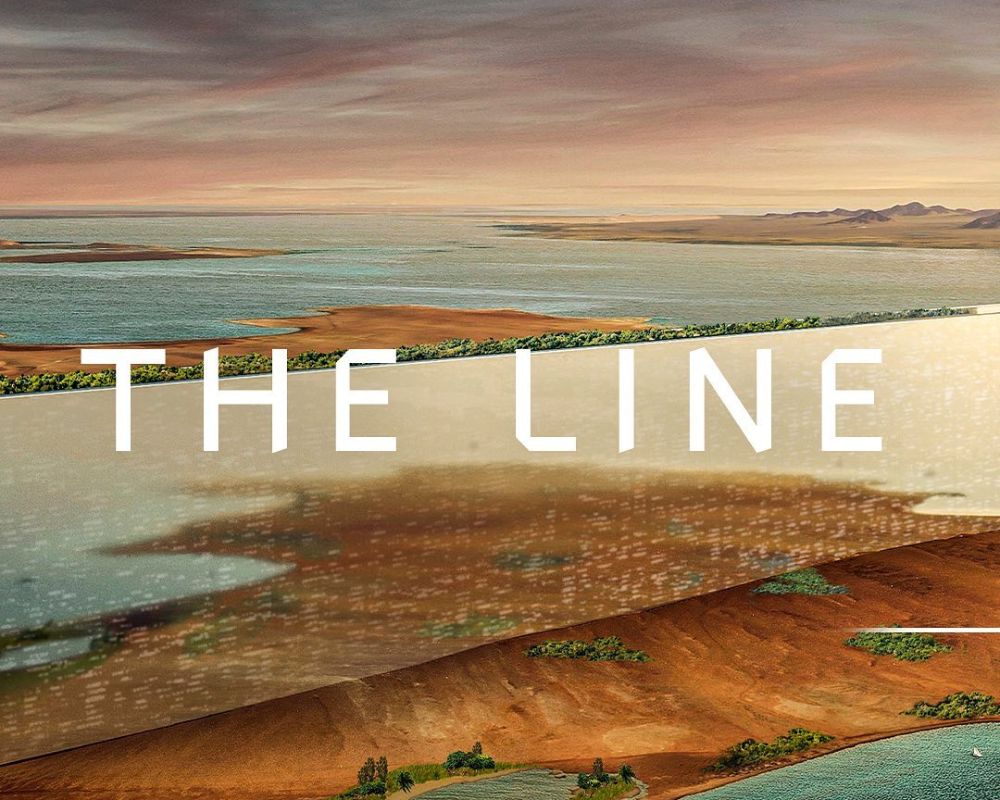

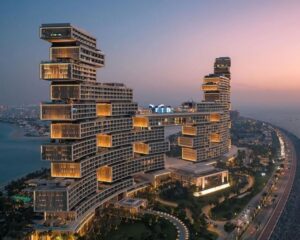
In 2017, Saudi Arabia put an audacious proposition on the table: what if an entirely new future could be built from scratch? Crown Prince Mohammed bin Salman unveiled NEOM, a $500 billion vision for the kingdom’s northwest, with ambitions that stretched far beyond conventional urban development. At its heart was NEOM The Line, a 170-kilometre mirrored city designed to cut through desert and mountain towards the Red Sea.
The vision also encompassed Trojena, a mountain destination promising snow and skiing in a landscape where summer temperatures soar beyond 40°C, and Oxagon, an industrial city conceived around a floating octagonal structure. Together, these projects formed the centrepiece of Saudi Arabia’s ambition to diversify its economy and establish itself as a global destination for innovation, tourism and investment.
The Line’s mirrored towers reflected the desert sky in renders that circulated endlessly and became the most shared architectural image of the decade. The world’s most celebrated architects signed on. The ambition generated the kind of attention that money alone rarely generates.
By October 2026, the scale of NEOM’s recalibration was becoming apparent. Just 2.4 kilometres of foundations had been completed for the proposed 170-kilometre NEOM The Line. The 2034 FIFA World Cup stadium was shelved, Trojena lost the 2029 Asian Winter Games to Almaty, and a $4.7 billion artificial lake contract was cancelled. The high-speed railway contract was terminated, while construction on The Line was paused until at least 2030. Following the CEO’s departure in November 2024, reports also indicated that Crown Prince Mohammed bin Salman had privately acknowledged that NEOM would ultimately be delivered on a considerably smaller scale than originally envisioned.
The story of NEOM The Line is the most instructive commercial narrative available in luxury right now, and the instruction it carries has everything to do with what happens when the distance between vision and delivery becomes too great to bridge.
The Line, Trojena and the stadium: where the vision unravelled
Trojena was designed to bring skiing and alpine luxury to Saudi Arabia and was awarded the 2029 Asian Winter Games in 2022. In February 2026, the Olympic Council of Asia announced that Almaty would replace NEOM as host. The $4.7 billion Webuild contract for Trojena’s artificial lake was cancelled in March 2026, following months of reported delays, budget pressures and feasibility concerns.
The NEOM Stadium, a 46,000-seat venue designed as one of fifteen FIFA World Cup 2034 venues, was shelved indefinitely. The high-speed railway contract was terminated in May 2026. By late 2025, new NEOM contracts had effectively ceased and the project went unmentioned in Saudi Arabia’s pre-budget statement for 2026. The CEO, Nadhmi Al-Nasr, had departed in November 2024.
Why the gap between vision and delivery at NEOM The Line became too wide
The NEOM The Line story is commercially instructive precisely because the reasons for the stall are legible. There are three of them and each one applies to every luxury brand that has ever announced more than it could deliver.
The first is the gap between concept and condition. The Line was conceived as a city housing nine million people in a location where the population, the infrastructure, the supply chain, the skilled labour pool and the market all had to be created from the ground up. Every element of the delivery chain required invention from scratch simultaneously. The most successful luxury destinations in history, from Dubai’s Palm Jumeirah to Singapore’s Marina Bay Sands, built on existing infrastructure and existing demand. NEOM attempted to create the conditions and the destination at the same time, at unprecedented scale, on an accelerated timeline.
The second is the gap between announcement and appetite. A luxury destination requires residents, visitors and operators willing to commit before it exists. The commercial appetite for commitment to a destination that lacks a delivery timeline, proven infrastructure and an operational precedent is structurally limited regardless of how compelling the renders are. NEOM’s imagery was compelling enough to attract the world’s best design talent, while its delivery timeline remained, for long stretches, invisible.
The third is the gap between ambition and cost. The original $500 billion estimate grew as simultaneous delivery across multiple megaprojects became clearer. Saudi Arabia’s Public Investment Fund made the commercially rational decision to prioritise projects with the clearest near-term returns. Oxagon’s hydrogen energy model has a financial case that a linear city still waiting to prove its residential demand lacks. The PIF’s 2025 strategic review was the commercial system correcting for ambition that had outpaced economic logic.
What the wider NEOM project built that is genuinely real
The NEOM The Line story is more nuanced than a simple collapse narrative, and the most honest version of it acknowledges what has been genuinely built.
NEOM Bay Airport has been operational since 2021. Sindalah, the luxury island resort, had a VIP opening in late 2024. Oxagon’s hydrogen plant is on track for first production in 2027 and is among the most commercially significant green energy projects in the Middle East. The infrastructure investments in the Tabuk region, roads, power and utilities, have meaningfully improved the development conditions for every project in the area, including the Red Sea destination that now hosts Rosewood AMAALA, Six Senses AMAALA and Four Seasons Red Sea.
The vision NEOM articulated in 2017, that Saudi Arabia could become a global luxury destination of the highest order, has been validated by those developments even as The Line has stalled. The brands that opened on the Red Sea in 2026 are among the most commercially credible luxury hospitality names in the world. The Saudi luxury story beyond NEOM The Line is real and it makes its case without a 170-kilometre linear city.
NEOM The Line: Lessons every luxury brand should take
Here is where the story of NEOM The Line gets particularly interesting for the luxury industry. Having a spectacular vision is one thing, but building a business that can actually deliver it is quite another.
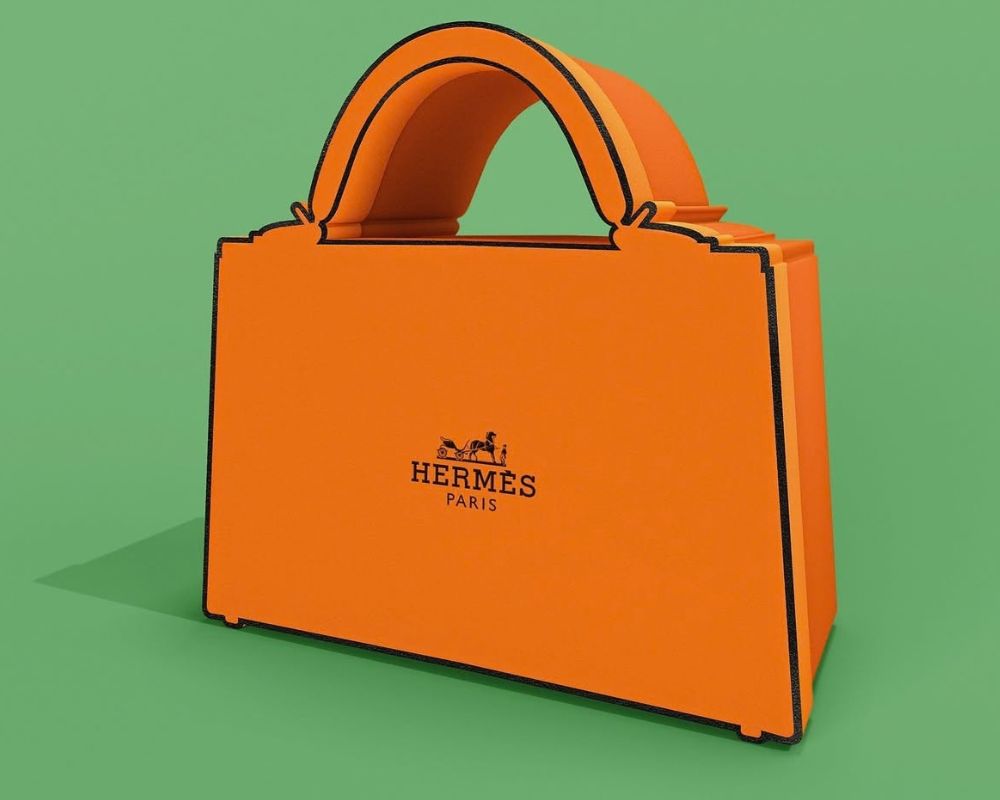
Take Hermès, which has spent decades developing its artisan network and production capabilities alongside its brand vision. Similarly, Brunello Cucinelli built an entire philosophy around Solomeo before the village became synonymous with the brand, while Aman spent three decades refining its distinctive approach to hospitality. In each case, the substance behind the promise grew alongside the brand itself.
NEOM, however, reversed that sequence. The world saw the ambition long before the infrastructure needed to support it began to take shape. And the gap between 170 kilometres promised and approximately 2.4 kilometres of foundations completed tells its own story.
There is another important consideration. When a brand announces everything at once, every setback risks becoming part of the same narrative. In NEOM’s case, Trojena’s Winter Games setback, the stadium shelving and the railway cancellation all fed into a much larger question about the project’s ability to deliver. For luxury brands, therefore, timing and sequencing matter just as much as the announcement itself.
Perhaps the biggest lesson, however, lies in the difference between making people dream and giving them something they can actually experience. NEOM mastered the first, but the second remains its biggest challenge.
Ultimately, a compelling vision may capture the world’s imagination, but it is the experience, execution and consistency behind it that turn attention into lasting loyalty.
Read next on The Pillar Edit: The Middle East is building more luxury hotels than any region on earth.
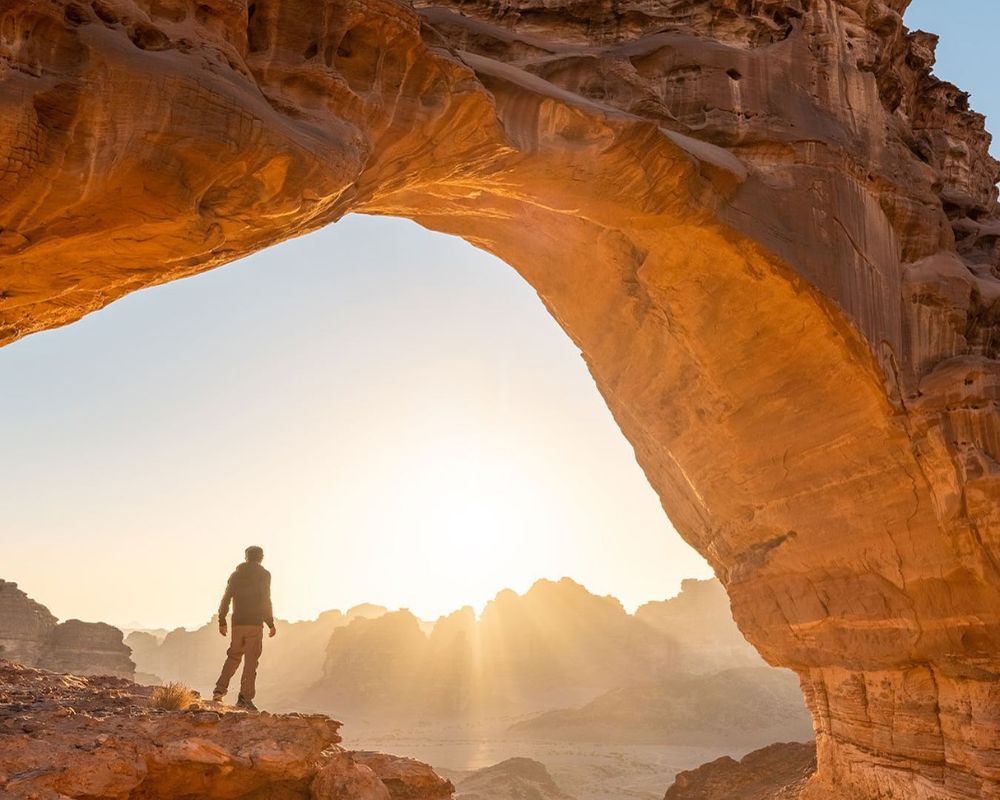
(Image credit: neom/Instagram)