






Think about the last time a luxury brand made a promise that was genuinely kept for twenty years. The Cartier Women’s Initiative is that promise. A promise that held steady through every commercial cycle, every cultural shift and every change in the conversation around corporate purpose. A promise that grew more ambitious with each passing year rather than contracting into something more manageable.
Cartier made exactly that kind of promise in 2006, when it launched the Cartier Women’s Initiative with the conviction that empowered women transform society, and in Bangkok on June 10 2026, at an awards ceremony at Chulalongkorn University attended by more than 700 guests, the results of twenty years of keeping that promise were on extraordinary display.
The numbers are the starting point. Over two decades, the Cartier Women’s Initiative has supported 330 women impact entrepreneurs from 67 countries, awarded more than $14 million in funding to businesses addressing some of the world’s most urgent social and environmental challenges, and built a living community of more than 520 active members across 80 countries.
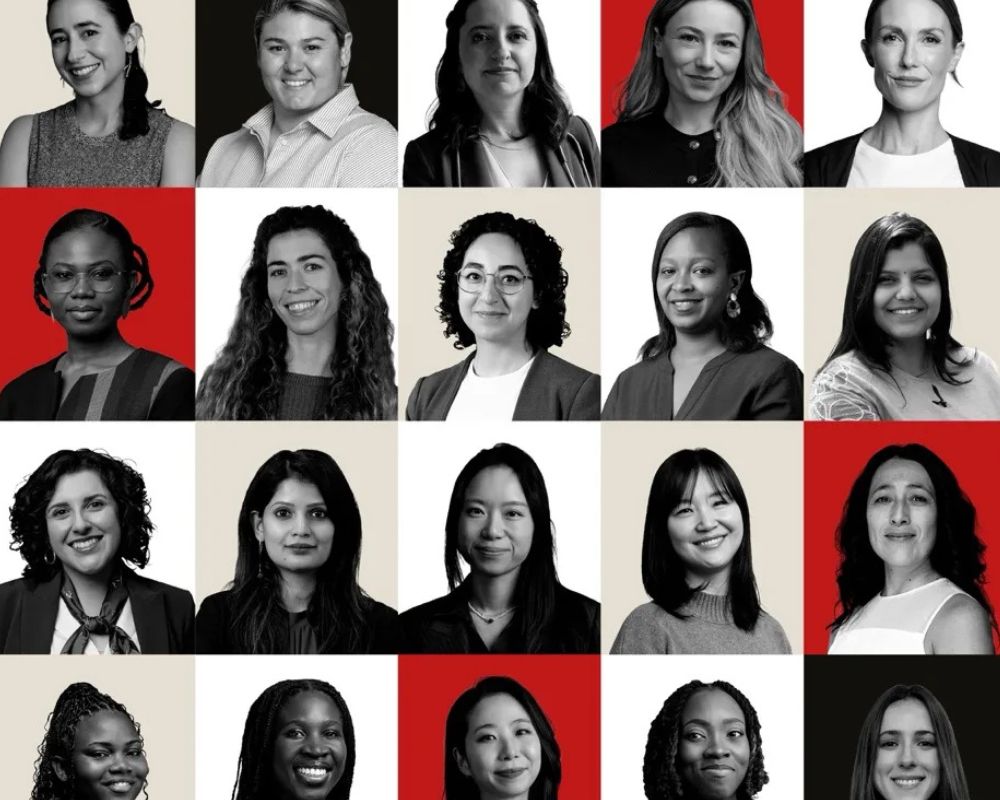
In 2026, the programme recognised 30 new fellows from 19 countries, each of them working on something that the market alone had either overlooked or systematically underfunded, and each of them receiving the capital, mentorship and lifelong community that the Cartier Women’s Initiative has spent twenty years refining into something genuinely transformative. Most remarkably of all, 82 percent of recent fellows attribute concrete, measurable outcomes directly to the programme’s support, networks and events, which is the kind of impact data that moves the conversation from philanthropy into something closer to strategic investment.
Beyond the money: the system Cartier built for women
The Cartier Women’s Initiative was founded through a collaboration between Cartier, McKinsey and Company and INSEAD business school, and the problem it was designed to address was as concrete and as well-documented as any business problem gets. Women entrepreneurs face substantial structural barriers in closing early-stage seed round funding at precisely the moment when a business is most vulnerable and most dependent on external capital to survive.
The gap between the funding available to male founders and that available to female founders at the earliest stage of business development is one of the most persistent and most damaging inefficiencies in the global venture capital system, and the Cartier Women’s Initiative was built specifically to address it with a programme rigorous enough to make a real difference.
The funding itself, $100,000 for first-place winners, $60,000 for second-place recipients and $30,000 for third-place recipients in each category, is significant at the early stage where these businesses are operating. But the funding is only the beginning of what the Cartier Women’s Initiative delivers, and understanding the full architecture of support behind the grant is essential to understanding why 82 percent of fellows attribute concrete outcomes to the programme rather than simply to the capital.
Every fellow receives access to the INSEAD Women’s Impact Entrepreneurship Programme, giving her the kind of world-class business education that has historically been available only to founders who could afford expensive MBA programmes or who had the networks to access elite business school communities. Each fellow receives approximately 28 hours of individual business and leadership coaching from practitioners with genuine expertise in scaling impact businesses.
Each fellow receives media and leadership communications training that builds the public-facing confidence and credibility that women founders are systematically less likely to have had access to at this stage of their career. And each fellow receives lifelong membership of a global community of impact leaders across 80 countries, a network that compounds in value across every successive cohort and that creates the kind of peer support, cross-market intelligence and collaborative opportunity that capital alone, however generously deployed, is structurally unable to create.
The programme also requires fellows to report on their impact for three years following the completion of their fellowship, which creates an accountability mechanism that is as rare in philanthropy as it is important in investment. The Cartier Women’s Initiative is building a system of support, accountability and community that tracks what happens to the businesses it backs long after the grant has been spent.
What happened in Bangkok in June 2026 was extraordinary
The twentieth anniversary ceremony at Chulalongkorn University in Bangkok on June 10 2026 was, by every account, an evening of genuine emotional and intellectual power. Over 700 guests filled the room, including Cartier Women’s Initiative community members from previous cohorts, international press, changemakers, local entrepreneurship stakeholders and distinguished personalities from across the world of business, culture and social impact.
Sandi Toksvig OBE, the broadcaster, writer and gender equality champion, hosted the evening. Cyrille Vigneron, Chairman of Cartier Culture and Philanthropy, spoke alongside Nualphan Lamsam, Chairperson of FIFA’s development committee and president of the Football Association of Thailand, both underscoring the significance of the moment and the irreplaceable importance of investing in women who are building businesses to create genuine change.
The ceremony unfolded as a journey through three chapters, bringing the stories of the 2026 fellows to life rather than simply presenting another round of awards. It began with the spark behind each venture, moved into the social and environmental challenges they are tackling, and ended with the breakthroughs, people and ideals driving each founder forward.
The week also brought the Cartier Dialogues, where fellows, industry leaders and thinkers came together to exchange ideas, alongside an immersive exhibition tracing the programme’s 20-year journey and the lives it has touched along the way.
Alongside the ceremony itself, one moment stood out as particularly significant in the context of what the Cartier Women’s Initiative is doing for women globally. The 2026 edition recognised, for the very first time in the programme’s twenty-year history, a fellow from Nepal. Prakriti Gautam, co-founder of Khetipati Organics, works with more than 1,600 smallholder farmers across Nepal to transform surplus and seasonal harvests into dried fruits, powders and high-altitude spices, keeping the value of those harvests at the farm gate rather than allowing it to be captured by intermediaries, and keeping employment in the community, with the majority of those jobs filled by women and young people.
Her inclusion in the 2026 cohort marks a genuine expansion of the programme’s geographic reach and a deepening of its commitment to finding and funding the most significant impact businesses wherever they exist in the world, including the places where they are hardest to see.
The women Cartier chose to back in 2026
The thirty women recognised in Bangkok in June 2026 are working across a range of sectors and geographies that reflects both the urgency of the challenges they are addressing and the ambition of the solutions they have built.
From AI-powered eye-screening clinics bringing preventive healthcare to underserved communities, to reef restoration initiatives addressing the most visible and most devastating symptom of climate change in coastal ecosystems, to electric last-mile delivery platforms reducing urban emissions in markets where logistics infrastructure is still developing, to digital workforce training tools opening professional opportunity to communities that formal education has failed, the 2026 cohort is as diverse in its methods as it is unified in its conviction that business is the most powerful available tool for creating scalable, sustainable social change.
Vanessa Castañeda Gill founded Social Cipher to help neurodivergent children understand and embrace their identities through gaming, meeting children in the environment where they are already most engaged and most themselves. Alba Forns built Climatize to enable everyday people to invest directly in renewable energy projects for the first time, democratising participation in the clean energy transition in a way that institutional finance alone has historically been unable to achieve. Keely Cat-Wells founded Making Space to help companies find, train and retain disabled professionals, reframing disability inclusion as a talent strategy rather than a compliance obligation and opening a pipeline of extraordinary professional capability that most of corporate life has spent decades overlooking.
Each of these businesses is addressing a gap that the commercial market alone created and the commercial market alone is unlikely to close. Each of them was built by a woman who saw something that others had missed, pursued it with a conviction that external capital was slow to validate, and found in the Cartier Women’s Initiative the combination of funding, mentorship and community that allowed her to build it into something with the potential to create change at genuine scale.
A promise made in 2006. Kept every year since.
The most commercially significant part about the Cartier Women’s Initiative in 2026 is something that is easy to overlook when the programme is framed primarily as a philanthropic one. Eighty-two percent of recent fellows attribute concrete outcomes to the programme’s support. Three hundred and thirty women from 67 countries have been funded. More than $14 million has been deployed. A community of 520 active members spans 80 countries and grows with every new cohort. These are the metrics of an impact investment programme that has been running for twenty years with genuine rigour, genuine accountability and genuine results.
The real story behind the Cartier Women’s Initiative is wonderfully simple: what can happen when a luxury brand makes a promise, puts serious resources behind it and keeps that promise for 20 years.
Cartier began this journey in 2006, long before purpose became part of every luxury brand’s vocabulary, before ESG became a boardroom priority and before “impact entrepreneur” became a familiar phrase. Two decades later, the programme has grown into a remarkable global community of women building businesses with ambition and purpose.
And the women gathered at Chulalongkorn University on June 10, 2026, are the heart of that story. They are building companies with the potential to shape communities, industries and generations to come. Twenty years on, Cartier’s promise has become a legacy.
Cartier is building a world where women have the capital and the community to solve the problems that matter most. LVMH is doing something equally ambitious with the planet’s most precious resource.
Read next: How LVMH and Dior are reimagining water as a luxury responsibility
(Image credit: cartierwomensinitiative.com)