



Sixteen cities. Three countries. One hundred and four matches. Forty-eight teams. And underneath all of it, a small army of operators is running FIFA World Cup 2026 hospitality, which is the part of the tournament that never shows up on television. These are the firms booking the suites, briefing the chefs, staffing the lounges, and steering chief executives, family offices, and brand presidents from the tarmac to the centre-stripe seat. While the players run the pitch, these agencies run the rooms next door. So if you have ever wondered who actually puts the champagne in your hand when Argentina scores, the answer almost always begins with one of them.
Now let us walk through who they are, what they sell, and why luxury brands are spending more on FIFA World Cup 2026 hospitality than on the tournament itself.
On Location runs official FIFA World Cup 2026 hospitality
First, the monopoly. On Location is the sole official provider of FIFA World Cup 2026 hospitality, locked in through an exclusive multi-year deal with FIFA. The company is owned by TKO Group, the same parent that runs UFC and WWE, and it has built its reputation running premium experiences at the Super Bowl, the Olympic Games, and Coachella. In other words, this is the firm that industrialised premium fandom long before football arrived in North America.
So what does On Location actually sell? Four tiers, broadly speaking. The Pitchside Lounge offers sideline seats with live-action cooking stations and sommelier service. The Champions Club sits at the centre of the action. The VIP Lounge delivers elevated viewing with curated themed menus. And the FIFA Pavilion serves as the entry-level premium product. Above all four sit Private Suites and the Platinum Access Programme, which are sold only through On Location and its officially appointed sales agents.
The numbers tell the rest of the story. A single-match private suite begins around 43,200 US dollars. A full venue-series box for six to twelve guests can push past 100,000 dollars. It is a movable hospitality programme designed for executives and HNIs who think in quarters, not minutes of stoppage time.
How FIFA World Cup 2026 hospitality actually gets built behind the curtain
Here is the part nobody really explains. The polished experience inside a Champions Club or a Pitchside Lounge is not run by a single company. Rather, FIFA World Cup 2026 hospitality is layered like a wedding cake. On Location sits at the top as the prime contractor, which means it owns the FIFA contract and the front-of-house brand. Underneath, a whole web of sub-agents and local suppliers actually does the work.
Overseas Network, a destination management company with more than twenty-five years of experience, has been officially appointed as the sub-agent handling hotels, transportation, excursions, and concierge for guests across all sixteen host cities. So when your driver shows up in Mexico City, or your room key is waiting at a Brickell hotel in Miami, that part of the trip almost certainly runs through them, even if the booking confirmation arrives with On Location’s name on it.
Then come the chefs. Each host city gets its own chef-driven menu inside the lounges, designed to reflect local flavours, which means a venue in Atlanta is serving very different food from one in Guadalajara. Local catering teams are hired match by match, and the lounges open three hours before kick-off and stay live for two hours after the final whistle.
Hotels run as a parallel rail alongside the official programme, with Airbnb appointed as FIFA’s Official Fan Accommodation Provider and individual host-city properties like The Gale Miami building their own match-day tasting menus and watch-party formats for guests who want something beyond the suite. So in practice, FIFA World Cup 2026 hospitality is less a single product and more an ecosystem, with On Location at the centre, Overseas Network running the travel layer, local chefs running the kitchens, and hotels filling the spaces in between.
The FIFA World Cup 2026 hospitality crew operating outside the perimeter
Here is the part the press releases tend to skip. While On Location owns the official perimeter inside the stadium, a much wider network of agencies handles the FIFA World Cup 2026 hospitality work that surrounds it. These firms do not sell FIFA tickets. Instead, they build the brand activations, fan zones, hospitality suites, and content moments that wrap around every match. And in many cases, this is where the real money is being spent.
So meet the four agencies you should know.
Pinpoint Experiential
Based in New York, Pinpoint works with serious football names like Arsenal FC and US Soccer. For 2026, expect them to deliver large-format brand activations across host cities, including kit launches, fan engagement zones, and the kind of immersive moments built to travel on Instagram. They do not put you in the suite. Rather, they run the moments before and after you walk into it.
KIS(cubed) Events
Headquartered in Atlanta, which is one of the eleven US host cities, KIS(cubed) Events brings full-service experiential delivery to corporate brands and hospitality groups. Their pitch is calm execution under pressure, which is exactly what brands need when a single match window runs six hours and a hundred decisions have to land inside it.
The Hype Agency
With nineteen years of large-scale staffing experience, The Hype Agency provides bilingual, W-2 brand ambassadors instead of freelancers. They cover every US host city from Atlanta to Seattle, and they speak the multicultural language the tournament actually demands. So if your brand needs five hundred trained faces across three cities in a weekend, this is the call.
Elevate Global
Coming off five major brand activations at the UEFA Euros 2024, Elevate Global has the institutional muscle to staff massive fan zones and sponsor activations. The team has already worked with Booking.com and Visit Qatar at football scale, so they understand both the soccer fan and the sponsor deck.
Why luxury brands are buying the room, not the rights
Here is where the strategy turns sharp. Plenty of luxury brands have decided they do not need a FIFA sponsorship at all. Instead, they are commissioning their own FIFA World Cup 2026 hospitality programmes, taking over hotel floors, running watch parties in penthouses, and hosting clients in private suites that have nothing to do with the official FIFA platform.
Meanwhile, VistaJet, NetJets, and Wheels Up are doing the same thing in the air. Private aviation operators are running their own concierge layers for clients flying in for a single match, and demand for the final on July 19 at MetLife Stadium is reportedly extraordinary.
So why bypass FIFA entirely? Because sponsorship money buys exposure, while hospitality money buys relationships. In luxury, the second one almost always converts faster. A founder who shares a suite with you for ninety minutes is going to remember your brand for far longer than a logo on a backdrop.
What FIFA World Cup 2026 hospitality tells us about modern luxury
Step back, and a pattern shows up. FIFA World Cup 2026 hospitality is not really about football at all. Rather, it is about selling proximity, access, and choreographed time with people you would otherwise need three intermediaries to meet. The match is the excuse. The hospitality is the actual product.
This is also why the conversation around FIFA World Cup 2026 hospitality matters far beyond June and July of this year. Whoever ends up running the operation at the next Olympics, the next G7, or the next Cannes Lions is studying On Location’s playbook right now. The blueprint is being written on a pitch in North America this summer, but the lessons are going to travel fast.
So for luxury brands, the takeaway is simple. FIFA World Cup 2026 hospitality has already proven that the most valuable real estate in modern sport is no longer the seat. It is the room behind the seat. And the agencies that build those rooms are, quietly, the most powerful operators in the business.
By the time the confetti falls at MetLife Stadium on July 19, FIFA World Cup 2026 hospitality will have done much more than entertain a few million guests. It will have rewritten the economics of premium sport. The agencies running the room behind the seat have quietly built a playbook that the next decade of events will copy, from the LA Olympics in 2028 to whatever sits on the calendar after Cannes Lions next May. And most fans watching the matches will never realise that the real game, the one with the highest stakes and the longest tail, was being played in the lounges all along.
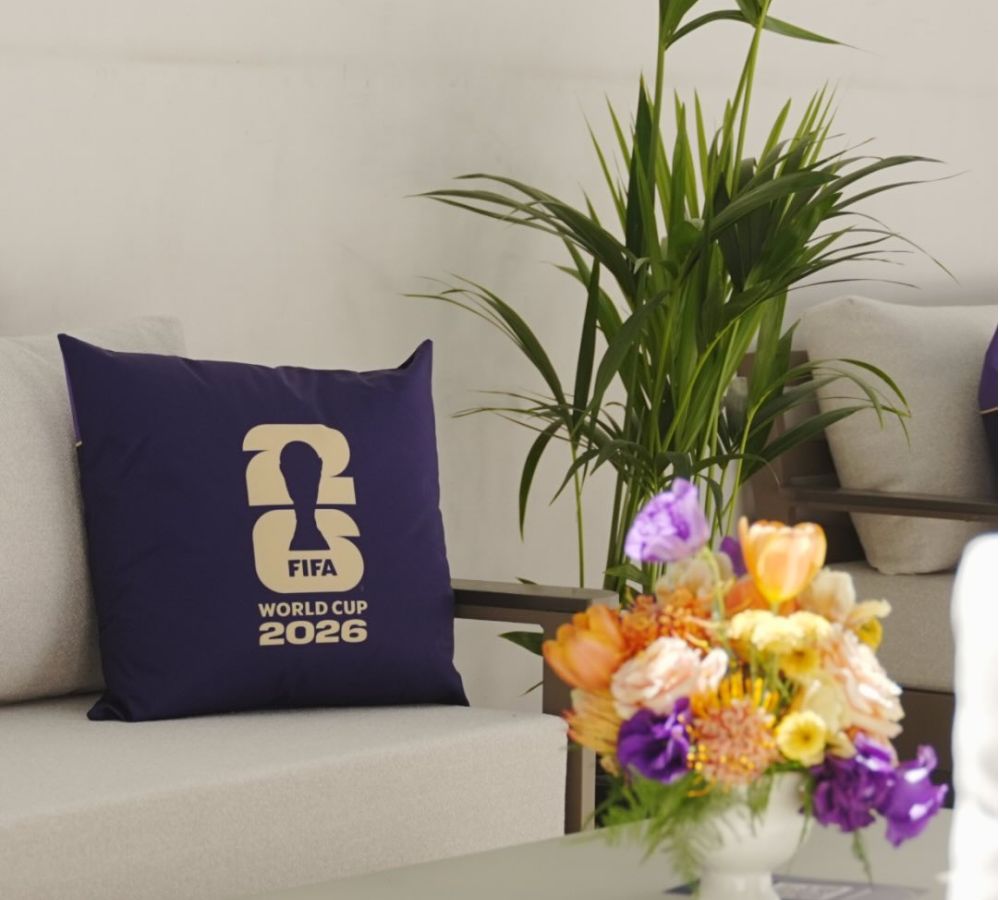
Read next: Lamine Yamal, the €X million teenager is luxury’s FIFA World Cup 2026 bet, because the same brands closing suites at MetLife are also closing endorsement deals with the tournament’s breakout star. (Image source: fifahospitality/Instagram)FAQ
Who runs official FIFA World Cup 2026 hospitality?
On Location is the only official provider of FIFA World Cup 2026 hospitality. The company is owned by TKO Group and holds exclusive rights to sell ticket-inclusive hospitality packages across all sixteen host cities in the United States, Canada, and Mexico.
Which agencies handle FIFA World Cup 2026 hospitality outside the official programme?
The key names are Pinpoint Experiential, KIS(cubed) Events, The Hype Agency, and Elevate Global. These agencies handle the brand activations and experiential work that wrap around the matches, rather than the official ticketed hospitality itself.
How much does FIFA World Cup 2026 hospitality cost?
Prices range significantly by tier, venue, and match. Published estimates from Goal.com place single-match private suites at around 43,200 US dollars, while full venue-series boxes for six to twelve guests can exceed 100,000 US dollars. Per-person packages reportedly run from a few thousand US dollars for group-stage bundles to more than 70,000 dollars for packages that include the final.