


Every June, the luxury industry finds itself asking the same question: how do you celebrate Pride Month without looking like you’re simply marketing Pride Month? For years, the answer seemed straightforward. Rainbow logos appeared across social media, limited-edition collections landed in stores, brands rolled out campaigns celebrating inclusion and diversity. Then July arrived and the conversation quietly disappeared. Which is precisely why the LVMH Pride strategy and LVMH LGBTQ+ inclusion deserves attention this year.
Something feels different in 2026. Consumers have become increasingly skeptical of seasonal activism. At the same time, many companies have become more cautious about highly visible Pride campaigns. As a result, the conversation around luxury Pride marketing has shifted from visibility to credibility.
While some brands are scaling back public Pride campaigns, the world’s largest luxury group appears to be focusing on something else entirely: embedding inclusion into the fabric of the business itself. The result is a LVMH Pride strategy that feels less like marketing and more like long-term culture building.
The luxury industry’s Pride problem
Luxury brands have never struggled to create beautiful campaigns. The real challenge is creating campaigns that people actually believe. Today’s consumers are not simply looking at advertisements, they are looking behind them. They want to know what happens after June. They want to know whether a brand’s commitment extends beyond a social media post or a limited-edition product.
That scrutiny has created a new challenge for luxury brands. What matters more in 2026? A rainbow logo for thirty days or a year-round commitment that customers rarely see? Increasingly, consumers seem to favour the latter.
That changing expectation helps explain why the LVMH Pride strategy feels particularly relevant right now. Instead of centring the conversation around products, the group has spent years building internal programmes, employee networks and measurable inclusion initiatives.
A Pride T-shirt that tells a much bigger story
On the surface, the most visible expression of the LVMH Pride strategy in 2026 is a T-shirt. For Pride Month 2026, the official LVMH Pride T-shirt was designed by Nicolas Ghesquière, Artistic Director of Louis Vuitton Women’s Collections. The design draws inspiration from the work of Keith Haring and will be worn by employees participating in Pride walks around the world. That sounds like a fairly standard Pride initiative.
But the interesting story begins when you look beyond the T-shirt itself. Since 2023, one LVMH Maison has designed the Pride T-shirt each year. Previous editions came from Loewe, Fendi and Marc Jacobs before Louis Vuitton took over the responsibility in 2026. The project has gradually evolved into a symbol of collaboration across the group’s maisons rather than a standalone marketing activation.
In other words, the T-shirt is not the story. The LVMH Pride strategy is.
From campaign to culture: The real work begins after June
What does Pride look like when it moves beyond marketing? LVMH’s answer appears to be culture. According to the group, more than 280 initiatives supporting LGBTI+ inclusion have been launched across its maisons since 2019. These initiatives include awareness programmes, training sessions, employee engagement activities and support networks operating across multiple markets. The numbers are notable. But perhaps more interesting is the philosophy behind them.
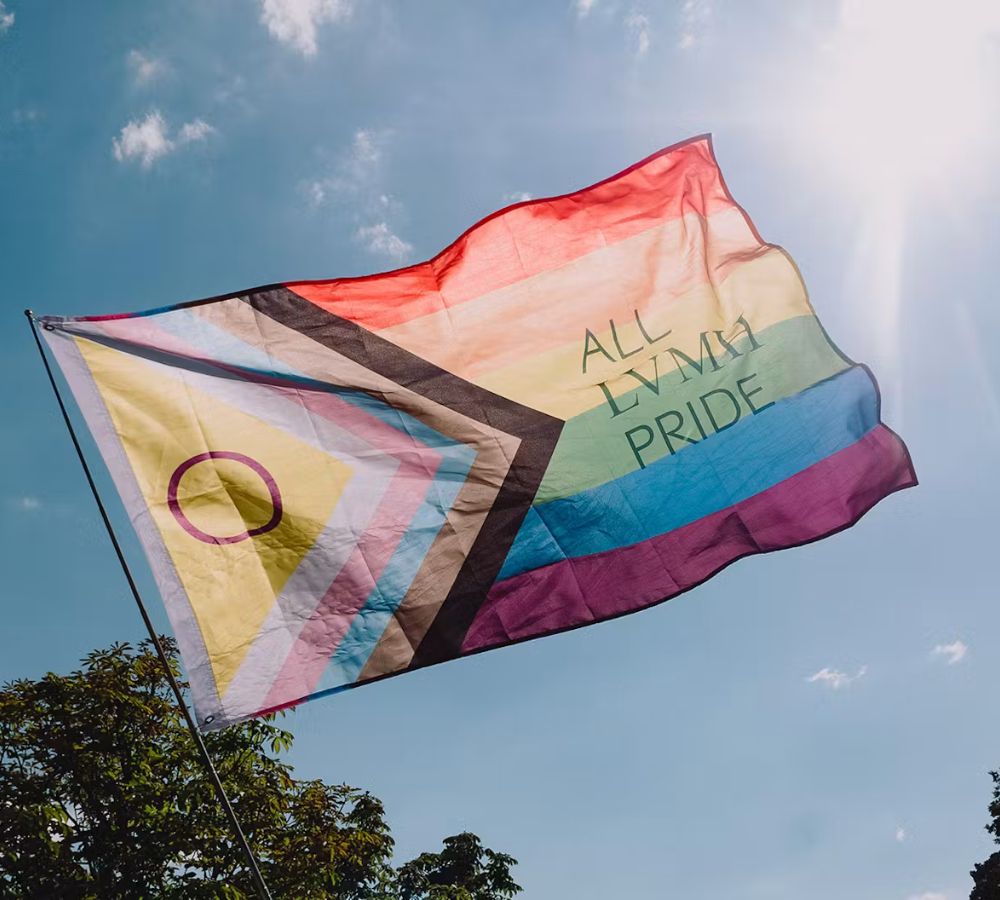
The LVMH Pride strategy does not appear to rely on a single annual campaign. Instead, it is supported throughout the year by All LVMH Pride, an employee network that now operates across 13 markets globally. The network helps drive awareness, dialogue and inclusion initiatives beyond Pride Month itself.
Anyone can launch a campaign in June. However, building infrastructure that remains active in October, January and March is considerably harder.
What LVMH understands about showing up
The most interesting aspect of the LVMH Pride strategy is what it prioritises. For years, Pride marketing was largely measured by visibility. How prominent was the campaign? How bold was the message? How much social engagement did it generate? Today, the conversation is changing.Consumers increasingly ask different questions. What is happening inside the company?How are employees supported? What systems exist beyond marketing?
The LVMH Pride strategy appears designed to answer those questions rather than simply generate headlines. That approach reflects a broader shift taking place across luxury, where consumers increasingly reward consistency over symbolism. After all, luxury has always been about long-term value. Why should inclusion be treated differently?
LVMH LGBTQ+ inclusion: Why culture matters more than campaigns
The LVMH Pride strategy is not simply a social responsibility story. It is also a brand story. Luxury brands spend decades building trust. Every interaction, campaign and customer experience contributes to that relationship. Consumers buy into luxury brands because they believe in the worlds those brands create. Which raises an important question. Can a luxury brand claim to celebrate individuality while failing to create an environment where people can be themselves?
LVMH’s answer appears to be no. The group’s broader responsibility framework increasingly positions inclusion as part of long-term business culture rather than a standalone initiative. Pride becomes one visible expression of that philosophy rather than the entire strategy.
The future of luxury Pride marketing
Where does Pride marketing go from here? The answer is unlikely to be more rainbow logos. If anything, 2026 suggests the opposite. Consumers appear less interested in performative gestures and more interested in proof. They want evidence that inclusion exists beyond a marketing calendar. They want to see values reflected in leadership, culture and operations. That is where the LVMH Pride strategy becomes particularly instructive. It suggests that the future of Pride in luxury may not be about creating bigger campaigns but about creating stronger systems.
For years, brands treated Pride as a campaign. LVMH is making the case that it should be treated as culture instead.
Read next: If LVMH is embedding inclusion into its culture, it’s doing the same with sustainability. Here’s how Louis Vuitton’s Regeneration 2030 plan is quietly reshaping luxury’s approach to environmental responsibility.
(Image credit: LVMH.com)
FAQ
What is LVMH doing for Pride Month in 2026?
For Pride Month 2026, LVMH is continuing its focus on LGBTQ+ inclusion through employee networks, awareness initiatives and community engagement activities across its maisons. The group’s annual Pride T-shirt was designed by Louis Vuitton Artistic Director Nicolas Ghesquière and will be worn by employees participating in Pride events around the world.
What is All LVMH Pride?
All LVMH Pride is the luxury group’s employee network dedicated to supporting LGBTQ+ inclusion across the organisation. Operating across multiple global markets, the network helps drive awareness, dialogue and inclusion initiatives throughout the year.
How many LGBTQ+ inclusion initiatives has LVMH launched?
According to LVMH, more than 280 initiatives supporting LGBTI+ inclusion have been launched across its maisons since 2019. These include training programmes, awareness campaigns, employee engagement activities and support networks.