


If you asked a room full of luxury industry professionals to name the most searched luxury brand in the world right now, the majority would say Chanel, some would say Hermès and a few might say Cartier. However, almost everyone would get it wrong because the answer, according to real transaction data from one of the largest authenticated luxury resale platforms on the planet, is Tiffany & Co.
According to the myGemma Luxury Resale Index 2026, which analyses data from more than 500,000 authenticated luxury items spanning handbags, fine jewellery and accessories, Tiffany & Co. is the single most searched luxury brand of 2026 so far, ahead of Chanel and Cartier. The index, published on August 3 2026, draws on real authentication requests, search behaviour, resale listings and completed transactions, making it one of the most grounded and credible pictures available of where consumer attention is actually going.
The finding that Tiffany & Co. leads all luxury brand searches in 2026 is significant on several levels. It tells us something meaningful about the shifting centre of gravity in luxury desire, about what LVMH has been quietly and systematically building since it acquired the brand for $15.8 billion in January 2021, and about why fine jewellery, rather than leather goods, is currently driving the highest volume of consumer research and purchase intent across the entire luxury market.
Most searched luxury brand: Fine jewellery is leading luxury, Tiffany & Co. is leading fine jewellery
The myGemma index finding is worth understanding carefully in context. What the data highlights is that Tiffany & Co. leads all luxury brand searches in 2026, and the index specifically notes this as a signal that fine jewellery, rather than handbags, is currently driving the most consumer research and authentication interest across the luxury category.
That finding deserves a moment of attention. The category that defined aspirational luxury for most of the past twenty years, the designer handbag, is being outpaced in search interest by fine jewellery. And within fine jewellery, it is Tiffany & Co. that sits at the very top of the search rankings, ahead of Cartier, ahead of Van Cleef and Arpels, ahead of every other house in the category.
This is a genuinely meaningful shift. For most of the 2010s, the conversation around which luxury brand generated the most search interest would have begun and ended with handbag houses. The Chanel flap bag and the Hermès Birkin dominated every measurable metric of luxury search and resale attention.
The idea that a fine jewellery house, even one as storied and globally recognised as Tiffany & Co,, would overtake them in overall brand search volume would have struck most industry observers as improbable. In 2026, it is the reality. And understanding why requires looking at three things at once: what LVMH has done with the brand since the acquisition, what the Love and Celebration campaign is doing for Tiffany & Co. right now, and what the broader category shift from handbags to jewellery reveals about where luxury desire is heading.
What LVMH has actually done with Tiffany & Co. since 2021
When LVMH completed its acquisition of Tiffany & Co. in January 2021, the deal was widely described as the most expensive acquisition in luxury history. The brand that arrived was powerful in name and cultural recognition but underperforming relative to its potential in terms of positioning. It was associated in many markets primarily with entry-level silver jewellery and engagement rings, and while that core business was commercially valuable, it sat well below where LVMH believed the brand could operate.
What followed was a systematic and patient repositioning executed across multiple fronts simultaneously. The Fifth Avenue flagship in New York was closed for a three-year renovation and reopened as a dramatically elevated retail environment that signalled a new chapter for the house.
The brand recruited a series of high-profile ambassadors, launched high jewellery collections competing directly with Cartier and Bvlgari at the very top of the market, and began an extended creative campaign designed to move its cultural associations firmly upmarket. Beyoncé wore a 128-carat yellow Tiffany diamond in a landmark campaign. The iconic blue box, always the brand’s most recognisable asset, was recentred as the defining symbol of the experience itself rather than simply the packaging around a product.
By 2026, the strategy was producing results the market could measure. In its H1 2026 results, LVMH specifically cited Tiffany and Bvlgari’s iconic lines as direct contributors to the group’s accelerating second-quarter growth, alongside Jonathan Anderson’s first designs for Christian Dior and Louis Vuitton’s new flagship stores in Beijing and Seoul. Watches and jewellery led LVMH’s category performance in H1 2026, growing 9 percent organically and accelerating further in the second quarter. Within that performance, Tiffany & Co. is a meaningful and growing driver.
The fact that Tiffany & Co. is the most searched luxury brand in 2026 is the measurable output of five years of deliberate, well-funded brand rebuilding. It is what intentional strategy looks like when it is given the time and the resources to work.
The Love and Celebration campaign is doing something strategically significant
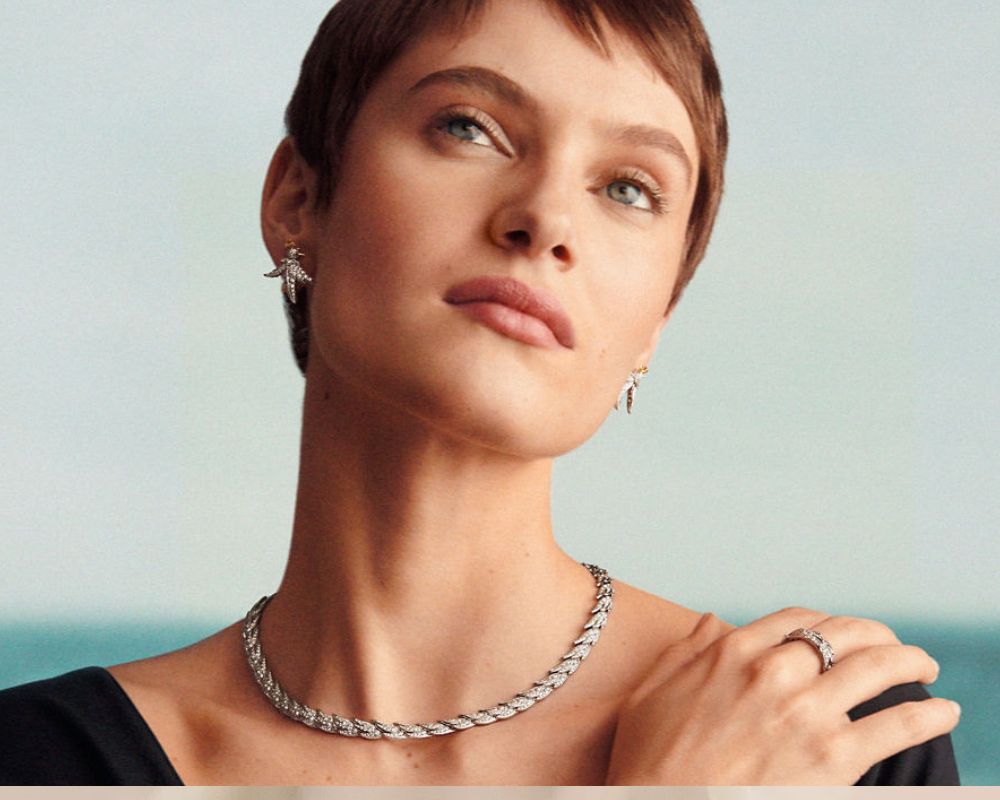
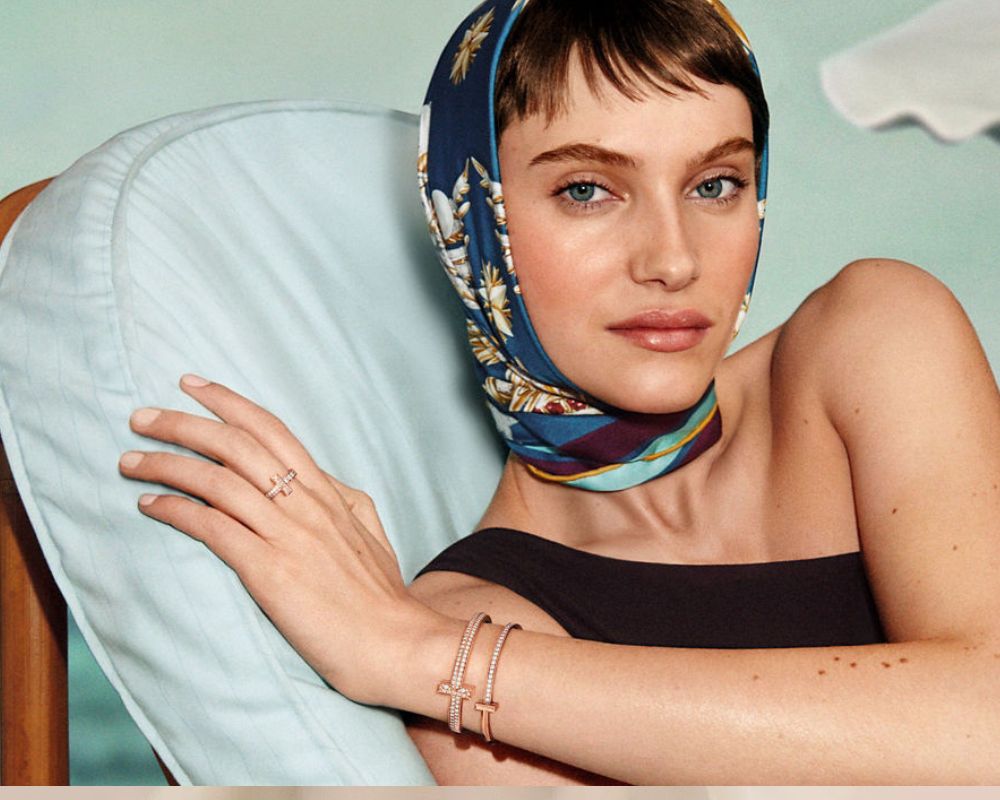
The Love and Celebration campaign, which launched in July 2026, is the most visible and culturally resonant expression of where Tiffany & Co. is positioning itself right now. It is worth examining in some detail, because it is doing something that most luxury campaigns in the fine jewellery category have historically avoided.
The campaign marks a strategic evolution for the historic jewellery house, moving beyond traditional romantic narratives to embrace a far broader spectrum of meaningful human relationships, including those with oneself, with family, with chosen communities and with the significant moments that shape an individual’s life regardless of whether another person is involved. The campaign is anchored by Academy Award-winning actress Mikey Madison and introduces the Sixteen Stone by Tiffany solitaire diamond ring, itself a thoughtful reimagining of a Jean Schlumberger design from 1959.
What the campaign articulates most clearly is an expansion of what love, and by extension fine jewellery, is culturally permitted to mean. Romantic love remains at the heart of the house’s identity, but the Love and Celebration campaign makes generous and deliberate room for self-love, family bonds, chosen community and the moments that matter deeply regardless of who else is present.
That expansion carries real strategic weight. The traditional fine jewellery market has historically been indexed very heavily toward romantic gifting occasions, with engagement rings as the dominant purchase driver. By broadening the emotional mandate of the brand, Tiffany & Co. is effectively expanding its addressable market to include every meaningful moment in a well-lived life. A piece of Tiffany jewellery, under this updated framing, becomes something a person buys to mark a professional milestone, a personal achievement, a friendship, a self-celebration. That is a significant evolution in how the brand conceives of its purchase occasions, and it carries substantial commercial implications.
The decision to introduce the Sixteen Stone ring as the campaign’s focal object reinforces the positioning further. This is a solitaire diamond ring referencing mid-century design history, placing the house firmly in the high fine jewellery conversation and signalling clearly that Tiffany & Co. is competing for the occasions and the budgets that previously flowed primarily to Cartier or Harry Winston.
Most searched luxury brand: Why fine jewellery is outpacing handbags in search interest
The fact that Tiffany & Co. is the most searched luxury brand in 2026 reflects a broader category shift that has been building for several years and accelerated meaningfully in 2026.
The handbag market has experienced significant price increases since the pandemic, with Chanel alone raising prices by over 60 percent between 2020 and 2025. While that strategy supported brand equity in the short term, it has progressively moved the aspirational buyer further from the point of purchase. The person who spent years saving toward a Chanel flap bag has increasingly done the arithmetic and found that the distance between aspiration and access has grown too wide to bridge comfortably.
Fine jewellery, by comparison, offers something that the premium handbag market is currently struggling to provide: a genuine range of meaningful entry points within a single brand. A Tiffany Return to Tiffany bracelet and a Tiffany high jewellery piece share a name, a heritage and a blue box but serve meaningfully different buyer profiles. That breadth of audience shows up directly in search volume. More people search Tiffany & Co. because more people have a genuine reason to.
There is also a resale stability argument working strongly in fine jewellery’s favour. Van Cleef and Arpels Alhambra pieces typically retain 90 percent or more of retail value, making fine jewellery one of the most stable resale categories in all of luxury. Cartier’s LOVE and Juste un Clou collections typically resell at 80 percent or more of retail, reflecting the sustained global demand for those iconic pieces. For the buyer approaching a purchase decision with long-term value in mind, fine jewellery is increasingly the more considered and rational choice.
Taken together, these factors explain the search data. Tiffany & Co. is the most searched luxury brand in 2026 because it has been repositioned upmarket with consistency and investment, because it is running one of the most strategically considered campaigns in the category, because it operates across a genuinely broad range of price points, and because the category it leads is outperforming leather goods in consumer research interest across every meaningful metric.
Most searched luxury brand for 2026 is a fine jewellery house: What this means for the luxury industry
The fact that Tiffany & Co. leads the 2026 luxury search rankings ahead of Chanel and Cartier is a data point that luxury brand strategists should examine carefully and at length.
It confirms that the category shift from handbags to fine jewellery in luxury search interest is real, measurable and accelerating. It demonstrates that brand repositioning, when executed with patience, significant investment and a coherent long-term creative vision, can produce measurable and meaningful changes in consumer attention within five years. And it suggests that the brands willing to expand their emotional mandate, to move beyond the traditional gifting occasions that have historically defined fine jewellery, are the ones generating the most search interest and building the most durable consumer relationships in 2026.
The Tiffany & Co. story under LVMH is, at its core, a story about what becomes possible when a brand with enormous heritage and global name recognition is given the resources and the strategic patience to become what it was always capable of being. The blue box was always one of the most recognisable objects in luxury. What LVMH understood when it paid $15.8 billion for the brand in 2021 is that the promise of that blue box could be made to match the product inside it. In 2026, with Tiffany & Co. the most searched luxury brand in the world, that understanding is showing up in the data.
Read next on The Pillar Edit: Why Tiffany & Co. owns nearly every major sports trophy except the FIFA World Cup, the story of how a fine jewellery house became the definitive name in sporting prestige.
(Image credit: Tiffany.com)