



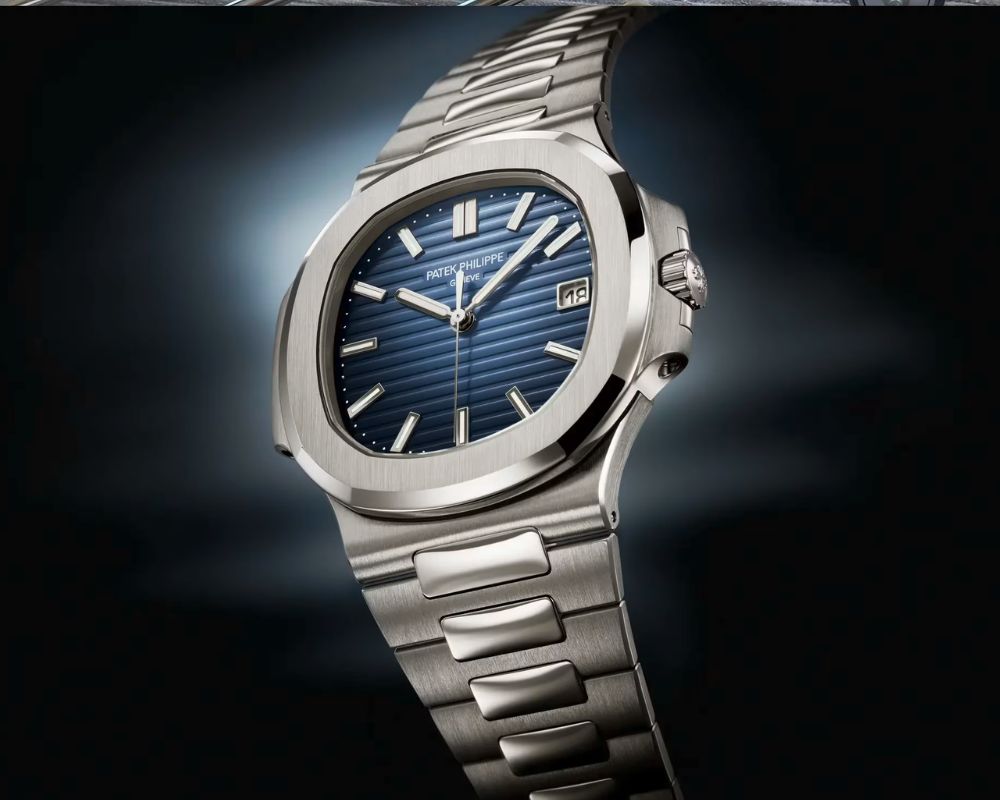
In January 2021, in what became the defining Patek Philippe Nautilus discontinued moment of the decade, President Thierry Stern made official what insiders had quietly understood since 2019: the Nautilus Reference 5711/1A was being retired. Production had actually ceased two years earlier. The formal announcement on January 25, 2021 confirmed the discontinuation of a stainless steel sports watch that had spent a decade becoming arguably the most desired timepiece in the world.
The waiting list at authorised dealers stretched between eight and ten years. Secondary market prices had climbed to well above $100,000 for a watch retailing at approximately $30,000. The Nautilus 5711 had become a cultural phenomenon that transcended the watch world entirely. In 2026, five years on, the decision looks more prescient than ever.
Stern discontinued it anyway. The reasoning he gave was simple and, at the time, somewhat shocking to the collector community: his conviction that Patek Philippe should be known for the breadth of its catalogue rather than a single model. “We are doing this for our clients who already own a Patek Philippe and to protect our brand from becoming too commercial,” Stern told the New York Times.
He was also, by his own admission, tired of the hype surrounding a single steel watch in a brand with 150 other references. The rest of the catalogue, the complications, the perpetual calendars, the Calatrava, the grand complications that represent the pinnacle of Patek’s technical ambition, was being overshadowed by a single stainless steel sports watch.
Five years later, the Patek Philippe Nautilus discontinued decision has become the most instructive case study in luxury brand management of the decade. In early 2025, the Patek Philippe Nautilus discontinued strategy continued when Patek quietly removed the Reference 5712/1A steel moon phase from its website, its standard method of signalling a discontinuation.
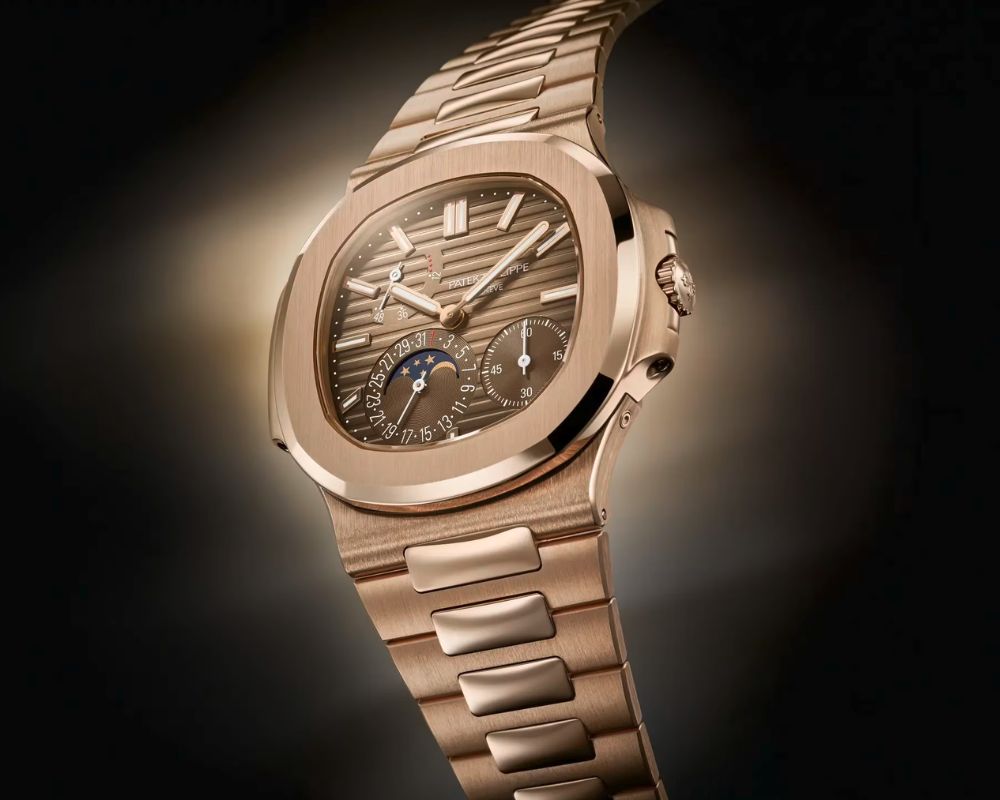
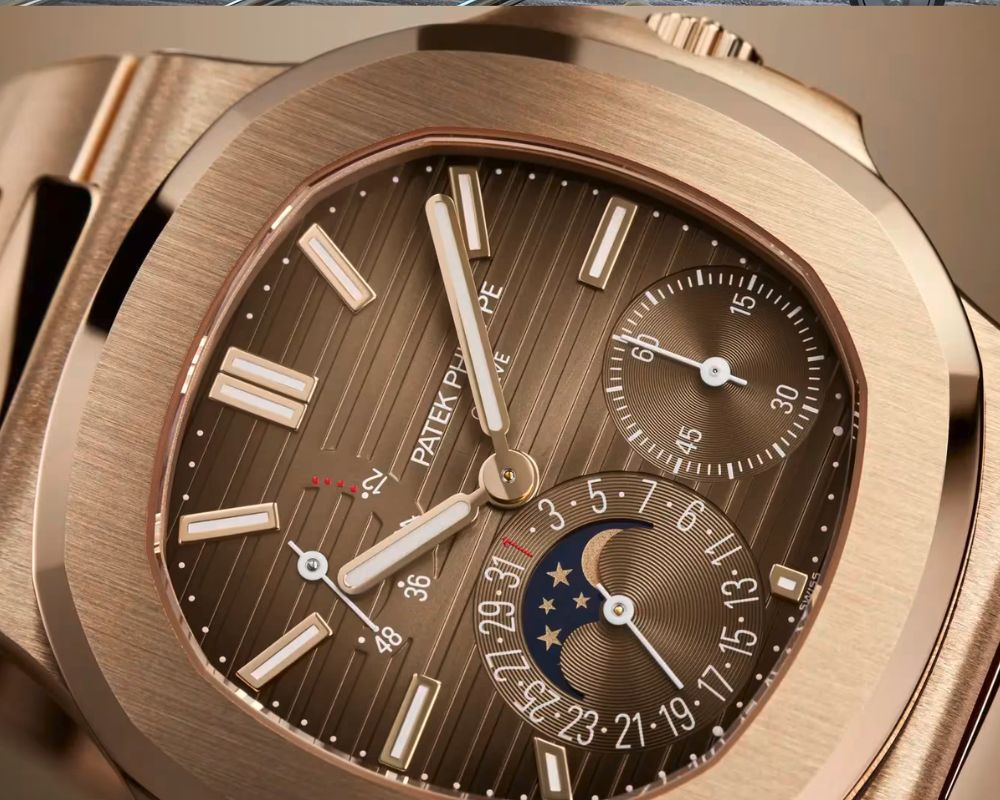
The 5712/1A, which had been in production for nearly two decades and featured a distinctive asymmetrical dial with moon phase, date and power reserve, had long been considered the most wearable entry point into the complicated Nautilus family. In 2026, the secondary market for the 5712/1A is following the same trajectory as the 5711: finite supply, growing collector demand and prices moving steadily upward. And the secondary market for discontinued steel references remains at 200 to 300 percent above original retail values, a level that has held with remarkable consistency since the 5711 was retired.
What the Nautilus was and why Stern killed it
The Nautilus was designed by Gérald Genta, who, according to watchmaking legend, sketched the original design on a cocktail napkin during a 1972 meeting with Patek Philippe. The brief was explicit: create a luxury steel sports watch with an integrated bracelet that could compete with Audemars Piguet’s Royal Oak, also a Genta design, which had been introduced that same year.
The original Nautilus launched in 1976 at a retail price of approximately $250, considered outrageous for a steel watch at the time. The Reference 5711, the modern evolution of that original design, was introduced in 2006 to mark the Nautilus line’s 30th anniversary. It retained the porthole case shape, the horizontally embossed dial and the integrated bracelet that remains entirely unmistakable fifty years after Gérald Genta first sketched it.
From the 2010s through the pandemic, the Reference 5711, the modern evolution of the original steel Nautilus, became the watch that defined the era of watch speculation. Waitlists at authorised dealers stretched toward a decade. Secondary market prices climbed to multiples of retail. The 5711 appeared in financial news as frequently as it appeared in watch publications. It had stopped being primarily a timepiece and started being primarily a financial instrument.
Patek discontinued the 5711 precisely because it had become too successful. Thierry Stern’s decision had four specific motivations that he and the brand have articulated clearly across multiple interviews: protecting brand balance by ensuring the broader catalogue received the attention it deserved, rather than a single steel sports reference consuming all of it; maintaining the kind of exclusivity that feels deliberate rather than accidental; discouraging pure speculation from buyers who had no intention of wearing the watch; and moving the Nautilus line back toward a higher average price point through the introduction of more complex and precious-metal references.
The replacement, the Nautilus 5811/1G, was released in white gold rather than steel, a deliberate signal that Patek was repositioning the Nautilus family upward rather than simply renaming the most popular reference.
The 2025 chapter and the 2026 secondary market: the logic deepens
The Patek Philippe Nautilus discontinued strategy that began in 2021 has continued into 2026 with the retirement of additional references, most notably the Reference 5712/1A, the steel Nautilus with moon phase complication that had long been considered the most wearable and attainable entry point into the complicated Nautilus family.
The 5712/1A’s discontinuation confirms what the 5711 decision established in 2021: Patek’s strategic direction for the Nautilus family runs clearly toward precious metals and increased complexity. The entire architecture of the steel sports Nautilus, which had defined one of watchmaking’s most commercially powerful eras, is being systematically retired.
For collectors and the secondary market, each additional Nautilus discontinuation has the same effect as the original 2021 decision: it permanently caps the global supply of those references, concentrating future availability entirely in the pre-owned market and reinforcing the scarcity that underpins the secondary values of every discontinued steel Nautilus reference.
By 2026, the scarcity of discontinued steel references like the 5711/1A continues to drive prices 200 to 300 percent above their original retail values. The Patek Philippe Nautilus discontinued steel references, including the standard blue-dialled 5711 in excellent condition with full documentation, currently sit at approximately $65,000 to $85,000 on the secondary market, for a watch that retailed at around $30,000 at the time of its discontinuation.
What the Nautilus strategy tells us about luxury brand management
The Patek Philippe Nautilus discontinued case study is one of the most instructive for the luxury industry as a whole for several reasons that go well beyond the specific dynamics of the watch market.
Killing your best product can be the most powerful thing you do. The Patek Philippe Nautilus discontinued example is the clearest proof available. The counter-intuitive logic of the Nautilus discontinuation is that retiring the most desired product at the peak of its popularity is precisely what prevented Patek Philippe from becoming a one-watch brand. By ending the 5711, Stern redirected collector attention to the full breadth of the catalogue. The annual calendar chronographs, the world timers, the perpetual calendars, the grand complications that define Patek’s technical reputation, all benefited from the removal of the gravitational pull of the 5711. The paradox is that the brand became more interesting precisely because it retired the thing everyone most wanted.
Scarcity that feels deliberate is worth more than scarcity that feels accidental. The secondary market premium for the Nautilus 5711 is partly a function of supply. But it is also a function of the clarity and conviction with which Patek made the discontinuation decision. Thierry Stern explained his reasoning publicly and stood behind it under considerable pressure from the collector community. That transparency transformed the discontinuation from a corporate decision into a statement of values. Collectors responded by treating the watch as a permanent artefact rather than a temporarily unavailable product.
The successor matters as much as the discontinuation. The 5811 replacement in white gold signalled that Patek was avoiding a direct steel replacement, moving the Nautilus family toward more complex references at higher price points. That signal mattered because it told the market that the 5711 was genuinely finished rather than temporarily suspended. A white gold replacement confirmed that the steel chapter of the Nautilus story was closed.
Speculation is the enemy of brand health. Thierry Stern has been explicit about his discomfort with the speculative market that grew around the 5711. When a watch designed to be worn becomes primarily a financial instrument, the relationship between the brand and the collector is fundamentally distorted. The discontinuation was, among other things, a refusal to allow that distortion to define Patek Philippe’s public identity.
What the secondary market in 2026 tells us about what comes next
The current secondary market for the Patek Philippe Nautilus discontinued collection of references tells a nuanced story about where the collector market sits five years after the original decision.
The market shifted dramatically on January 21, 2021, when Patek Philippe confirmed the discontinuation of the Reference 5711/1A. This decision sent shockwaves through the pre-owned market and cemented the Nautilus as a modern-day icon. The period immediately following the discontinuation saw secondary prices spike dramatically. Those peaks have since moderated as speculative buyers exited and genuine collectors became the dominant force in the secondary market.
The current pricing of $65,000 to $85,000 for a standard 5711 in excellent condition represents what analysts describe as a post-bubble stabilisation: significantly above retail, but substantially below the peak secondary values seen in 2021 and 2022. This stabilisation is healthy for the long-term collectability of the reference because it indicates that genuine demand, rather than speculative momentum, is the primary driver.
For most new enthusiasts in 2026, the authorised dealer waiting list for a Nautilus is effectively closed. The secondary market remains the only viable path for ownership of a steel Nautilus reference.
The broader lesson for luxury
The Patek Philippe Nautilus discontinued decision is, at its most essential, a story about the courage required to make decisions in the genuine long-term interest of a brand rather than its short-term commercial performance. In 2021, discontinuing the 5711 meant walking away from the most commercially powerful product in the portfolio at the moment when that product was generating more cultural attention than anything else in the watch world. The short-term cost was real and the long-term benefit has proven equally real.
For any luxury brand navigating the tension, the Patek Philippe Nautilus discontinued case offers clarity between the product that everyone wants and the brand it is actually trying to build, the Patek Philippe Nautilus discontinued decision is the clearest available evidence that those two things are separable, and that choosing the brand over the product is sometimes precisely the right choice.
Thierry Stern summarised the entire philosophy at the time of the 5711 discontinuation: Patek Philippe should be known for the full breadth of what it makes, rather than reduced to a single model. Five years later, in 2026, Patek Philippe is known for being the brand that had the courage to retire the watch everyone wanted. Which is a considerably more powerful identity to hold.
Read next on The Pillar Edit: The Geneva ateliers worth making a pilgrimage to see.
(Image credit: patek.com)