There is a specific kind of secrecy that operates at the centre of the luxury fragrance industry, and it is one that the industry has maintained with remarkable consistency for over a century. When you buy a bottle of Dior Sauvage, the name on the label is Dior. The perfumer who created it, Francis Kurkdjian, is increasingly well known. What is considerably less discussed is the laboratory that supplies the aroma chemicals that make the scent possible, the infrastructure of creation that sits between the perfumer’s imagination and the finished product in the bottle.
That infrastructure is controlled by a small number of luxury fragrance laboratories that collectively supply the entire industry. Givaudan, dsm-firmenich, IFF, Robertet and MANE, together with a handful of specialist competitors including Symrise and Takasago, are the firms that create the molecules, develop the formulations and supply the technical expertise without which no luxury fragrance could exist. Their names rarely appear on packaging. Their laboratories are in Geneva, Holzminden, New York and Grasse. And in 2026, their combined influence over what the world smells like is greater than at any point in the industry’s history.
The luxury fragrance laboratories story matters for a specific reason in August 2026: the Gucci and L’Oréal 50-year beauty licence, announced on July 7 2026, is the most significant realignment of fragrance development infrastructure in the luxury industry in years. When L’Oréal assumes responsibility for Gucci Beauty from July 1 2027, it brings with it the laboratory relationships that it has built across its existing luxury fragrance portfolio, which includes Yves Saint Laurent, Lancôme, Maison Margiela, Prada and Ralph Lauren. Understanding what that means requires understanding how the luxury fragrance laboratories system actually works.
How the luxury fragrance laboratories system works
A luxury fashion house that decides to launch a fragrance has two primary routes available to it. The first is to build an in-house perfumery capability: hiring master perfumers, establishing internal laboratories and developing proprietary aroma chemical formulations. This is extraordinarily expensive and time-consuming. Only a handful of houses have done it: Chanel, through its in-house perfumer Olivier Polge and its partnership with the Polge family extending back decades, and Hermès, through its in-house perfumer Christine Nagel, are the most cited examples. LVMH houses including Dior, through Maison Christian Dior’s in-house perfumer Francis Kurkdjian, also maintain significant internal fragrance capability.
The second route, taken by the vast majority of luxury fragrance brands, is to commission external luxury fragrance laboratories. In this model, the brand provides a creative brief and a budget. The laboratory assigns a perfumer, supplies the aroma chemicals and delivers a finished formulation that the brand then takes to production, marketing and retail. The brand owns the formula under contractual terms but the creative and technical work is done by the laboratory.
The 2026 Fragrance Foundation Awards finalists, announced in April 2026, make the relationships between luxury fragrance laboratories and their brand clients more visible than they typically are, because the awards protocols require crediting both the house and the laboratory that created each finalist fragrance. The result is a rare public map of who makes what.
Behind the Scents: The Laboratories Powering World’s Most Iconic Laboratories
Givaudan: the world’s largest flavour and fragrance company
Givaudan is the world’s largest flavour and fragrance company by revenue, reporting CHF 3.83 billion in fragrance and beauty sales in 2025, up 7.9 percent on a like-for-like basis. Fine fragrance sales specifically grew 18.3 percent in 2025 against already high comparable growth of 18.4 percent the prior year, making it the fastest-growing segment within the group’s portfolio.
The Givaudan name appears more frequently than any other in the 2026 Fragrance Foundation Awards finalists, including for Maison Margiela Replica Ideal One, YSL MYSLF Absolu, Estée Lauder fragrances, Versace Eros Energy, Fugazzi Vanilla Haze, Van Cleef and Arpels Extraordinaire Encens Précieux and multiple others. The perfumers working at Givaudan on luxury commissions include Christophe Raynaud, Daniela Andrier, Antoine Maisondieu, Shyamala Maisondieu, Rodrigo Flores-Roux and Caroline Sabas, all recognised figures in the fine fragrance world.
Founded in 1895 and headquartered in Vernier, Geneva, Givaudan employs approximately 17,580 people across 162 locations worldwide. Its CEO is Christian Stammkoetter, who has described the company’s H1 2026 performance as showing “good growth momentum and industry-leading profitability” in a macroeconomically volatile environment. In July 2026, Givaudan announced the acquisition of a majority stake in Eurofragance, bolstering its fine fragrance position in local and regional markets as part of its 2030 strategy.
The relationship between Givaudan and L’Oréal is one of the most commercially significant in the luxury fragrance laboratories landscape. Multiple L’Oréal luxury fragrance brand finalists at the 2026 Fragrance Foundation Awards were created in partnership with Givaudan, including Maison Margiela Replica Ideal One.
What Givaudan holds that the luxury brands it works with value most: Scale and creativity in combination. A laboratory with 162 global locations in fragrance and beauty revenue can supply the technical infrastructure for the world’s most complex fine fragrance briefs.
dsm-firmenich: behind significant luxury fragrance launches of 2026
dsm-firmenich was formed in May 2023 through the merger of DSM, the Dutch nutrition and health science company, and Firmenich, the Swiss fragrance and taste company founded in Geneva in 1895. The combined entity reported global revenue of approximately €9 billion in 2025, making it the second-largest company in the flavour and fragrance industry globally.
Firmenich built its fragrance reputation across decades of work with the most prestigious houses in the world. The name Alberto Morillas, one of the most celebrated perfumers in the industry’s history and a Firmenich employee for much of his career, created fragrances including Acqua di Gio for Armani and many others. The 2026 Fragrance Foundation Awards finalists created by dsm-firmenich include Glossier You Fleur, Prada Beauty Paradigme, Miu Miu Beauty Miutine with Dominique Ropion, Ralph Lauren Ralph’s Club New York, Billie Eilish Your Turn with Frank Voelkl, Phlur Heavy Cream and Sol de Janeiro Cheirosa 91.
In 2026, dsm-firmenich is executing a significant strategic restructuring. The company agreed in February 2026 to divest its Animal Nutrition and Health division to CVC Capital Partners, retaining a 20 percent minority stake. This move is designed to sharpen dsm-firmenich’s focus as a consumer-facing ingredients platform, with fragrance, beauty and nutrition as the core areas of investment.
What dsm-firmenich holds that the luxury brands it works with value most: The combined heritage of Firmenich’s fragrance expertise and DSM’s science infrastructure creates a laboratory with both the creative credibility and the technological capability.
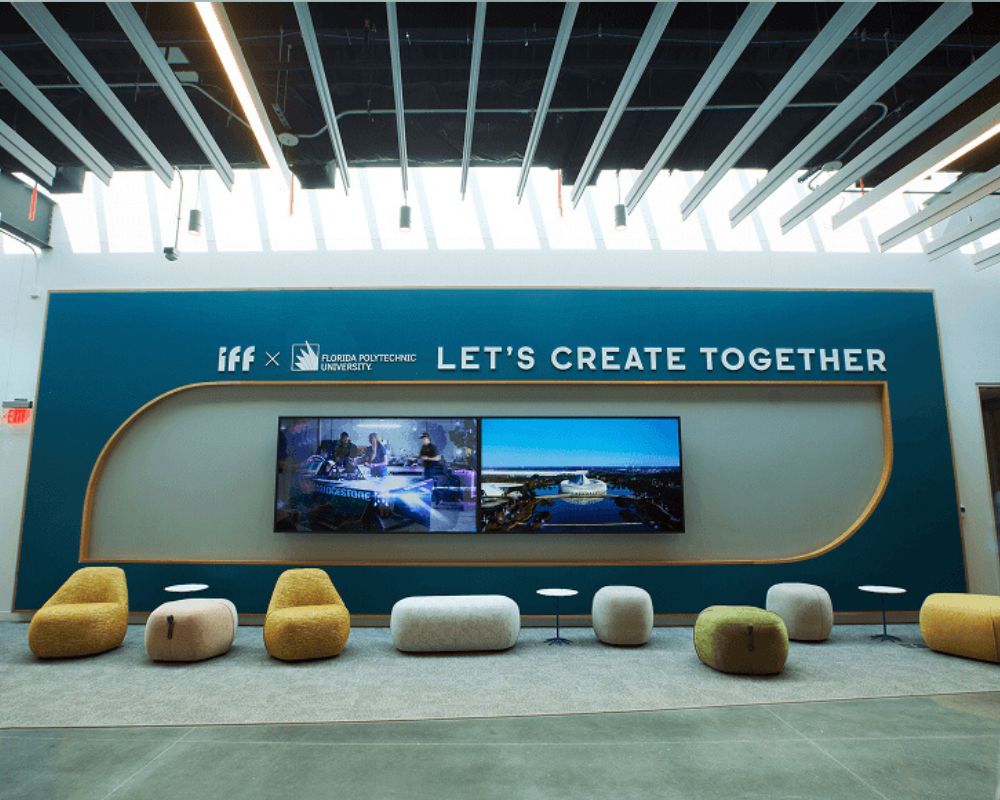
IFF: serves Chanel, Hermès and the world’s most iconic scents
International Flavors and Fragrances, known as IFF, is one of the four major global players in the flavour and fragrance industry, alongside Givaudan, dsm-firmenich and Symrise.
IFF’s fine fragrance credentials are substantial and verified. The 2026 Fragrance Foundation Awards finalists created by IFF include Lancôme La Vie Est Belle Vanille Nude, Miu Miu Beauty Miutine with Dominique Ropion alongside dsm-firmenich, June Thirtieth OG with perfumer Jean Marc Chaillan, Penhaligon’s The Cut with perfumer Paul Guerlain, and Editions de Parfums Frédéric Malle Portrait of a Lady 15th Anniversary Edition. The 2025 Fragrance Foundation Awards similarly included multiple IFF creations across luxury categories.
The relationship between IFF and L’Oréal is deeply established across multiple luxury fragrance brands. When L’Oréal assumes the Gucci Beauty licence in 2027, these established luxury fragrance laboratories partnerships will extend into whatever IFF contributes to Gucci’s fragrance development programme.
What IFF holds that the luxury brands it works with value most: IFF employs perfumers including Carlos Benaïm, Olivier Polge (shared with Chanel), Dominique Ropion and Fanny Bal, whose individual relationships with luxury brand creative directors are as important as any technical capability the laboratory offers.
Robertet: the family-owned Grasse laboratory that supplies natural ingredients
Robertet occupies a specific and irreplaceable position in the luxury fragrance laboratories landscape. Founded in Grasse, France in 1850, the company remains family-owned and operates as the leading specialist in natural aromatic raw materials, natural extracts and natural aroma chemicals in the global industry.
Grasse, the small town in the hills behind Cannes, is the historic capital of the global perfume industry and a UNESCO World Heritage site recognised for its perfume-related knowledge and practices. Robertet’s position at the heart of the Grasse supply chain gives it access to some of the most prized natural fragrance ingredients in the world, including rose absolute, jasmine absolute, tuberose and the region’s other signature botanicals.
The 2026 Fragrance Foundation Awards finalists created by Robertet include Byredo Alto Astral with perfumer Jérôme Epinette, NOYZ Only Human with Jérôme Epinette, Sol de Janeiro Cheirosa 91 with Jérôme Epinette, Rare Beauty Fragrance Layering Balm and Liis Celestial Object with Jérôme Epinette. Jérôme Epinette’s name appearing multiple times across different luxury and prestige fragrance brands reflects both his personal reputation and Robertet’s position as the preferred natural ingredients partner for the most craft-focused luxury fragrance commissions.
What Robertet holds that the luxury brands it works with value most: The natural materials supply chain and the technical expertise to work with those materials at the highest level of quality.
MANE: fragrance house that luxury brands turn to for specific creative briefs
MANE is a family-owned flavour and fragrance company headquartered in Bar-sur-Loup in the Alpes-Maritimes, near Grasse. Founded in 1871, the company operates with approximately 8,000 employees across 35 countries and has built a reputation for creative ambition that positions it as the preferred laboratory for certain luxury fragrance briefs that require a more independent and less corporate creative environment.
The 2026 Fragrance Foundation Awards finalists created by MANE include Gucci The Alchemist’s Garden Vanilla Firenze with perfumers Alex Lee and Veronique Nyberg, and Armani Beauty Stronger with You Intensely with perfumer Cécile Matton. The Gucci Alchemist’s Garden franchise, which represents Gucci Beauty’s most craft-forward fragrance proposition, being developed in partnership with MANE reflects the creative positioning the laboratory has cultivated.
What MANE holds that the luxury brands it works with value most: Creative independence and a scale that sits between the global giants and the ultra-specialist natural ingredients houses. MANE’s family ownership gives it the flexibility to take on briefs that require a different kind of creative relationship than the largest laboratories can offer.
What the Gucci and L’Oréal deal means for the luxury fragrance laboratories
The announcement on July 7 2026 that L’Oréal had entered a 50-year exclusive beauty licence agreement with Kering for the Gucci brand, effective from July 1 2027 subject to regulatory approvals, is the most significant single event in luxury fragrance development in 2026 and its implications for the laboratory community are substantial.
Under Coty, Gucci’s fragrance development operated within Coty’s established creative and laboratory network. As L’Oréal takes over the licence, those partnerships are likely to evolve, with Givaudan, IFF and dsm-firmenich among L’Oréal’s established fragrance partners.
For these laboratories, Gucci represents a significant opportunity. For the wider industry, the deal highlights how the expertise behind a fragrance can shape its creative direction and commercial success. The bottle carries the Gucci name; the laboratory helps define what happens inside it.
Read next on The Pillar Edit: How YSL Beauty’s Ourika Community Gardens turned ingredient sourcing into luxury beauty’s most compelling sustainability story, the story of what happens when a luxury beauty brand decides to grow its own ingredients rather than buy them from luxury fragrance laboratories.
(Feature image credit: .dsm-firmenich.com)