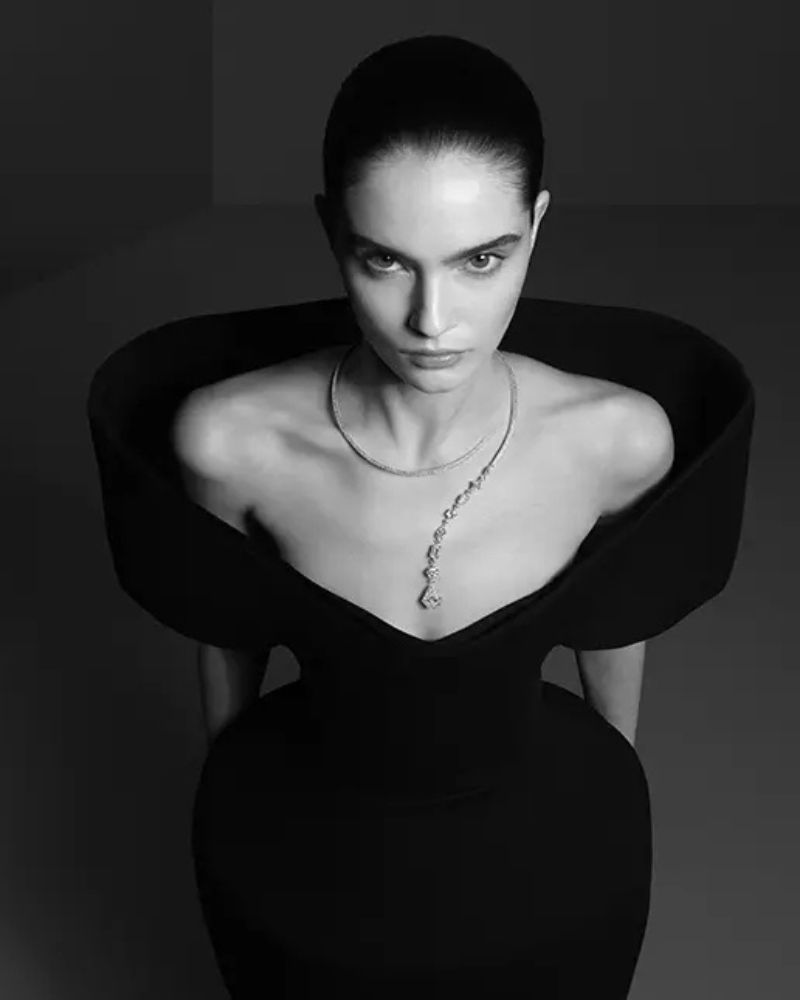

When a conglomerate that built its empire on leather and runway looks decides to pivot toward fine jewellery, you pay attention. That is exactly what Kering has done in 2026, and the Kering jewellery strategy might just be the most important bet the group has made in years. With a newly formed division housing Boucheron, Pomellato, Dodo, and Qeelin under one unified platform, Luca de Meo is nis placing a very deliberate wager on the one category that luxury consumers have never stopped spending on, even when they stopped buying everything else.
Why Kering is looking to jewellery for its next chapter of growth
The timing is not accidental. Kering reported revenues of €14.7 billion in 2025, down 13 percent on the year before. Gucci, the brand that has historically carried the group, posted an 8 percent organic decline in the first quarter of 2026. The numbers are uncomfortable, and de Meo has not pretended otherwise. What he has done, instead, is look closely at what is still working. Boucheron and Pomellato were the fastest-growing brands in Kering’s portfolio in Q1 2026. So when the conversation turns to the Kering jewellery strategy, this is the foundation it is built on: real momentum in a segment that represents just 6 percent of group sales, which means there is an enormous amount of room to grow.
Fine jewellery has proven itself to be one of the most resilient categories in luxury over the past decade. When consumers cut back on ready-to-wear or become more cautious about handbag purchases, they often continue to invest in jewellery. The category is perceived differently from many other luxury goods. Jewellery is associated with enduring value, emotional significance, and long-term investment potential. Unlike a seasonal handbag, a fine jewellery piece can hold or even increase its value over time. For a luxury group seeking to stabilise performance and rebuild growth, investing more heavily in jewellery is not a defensive move. It is a strategic decision grounded in changing consumer behaviour and the enduring appeal of the category.
How Kering is building a jewellery empire
The new division brings together Boucheron, Pomellato, Dodo, and Qeelin as a single integrated platform. Jean-Marc Duplaix, who continues as Kering’s group chief operating officer, has been appointed CEO of Kering Jewelry. All jewellery house CEOs now report to him directly. The move is designed to unlock economies of scale and allow the four houses to share infrastructure, manufacturing expertise, and distribution muscle without compromising their individual creative identities.
Central to this plan is the integration of Raselli Franco Group, an Italian jewellery manufacturer that has been a long-standing partner to Kering. The company is expected to become the industrial backbone of the new jewellery hub, providing the technical expertise and precision craftsmanship required to produce high jewellery at scale. This is the point at which Kering’s jewellery strategy begins to look particularly compelling.
The initiative brings Kering’s jewellery brands together within a vertically integrated operation that gives the group greater control over production, quality, innovation, and supply chains. This structure strengthens Kering’s ability to shape every stage of the value chain, from craftsmanship and manufacturing to market positioning and consumer perception. The result is a more cohesive approach to building long-term value across its jewellery portfolio.
The bigger picture: ReconKering and what it means
The jewellery division is far from existing in isolation. It is part of a broader turnaround roadmap that de Meo has named ReconKering, a three-phase plan that runs to 2030. The first phase, a structural reset, is meant to be completed by the end of this year. That phase includes the sale of Kering Beauté to L’Oréal for €4 billion, which frees up capital and reduces debt considerably. Reconstruction follows through 2028, with a return to competitive leadership targeted by 2030.
The Kering jewellery strategy sits squarely within the structural reset phase. By pooling four houses under a single platform and activating an industrial backbone, the group is building a foundation it previously lacked. Where LVMH has long operated Bulgari as a jewellery powerhouse and Richemont has Cartier and Van Cleef and Arpels, Kering has historically been fragmented in this space. That changes now, at least in theory.
Kering jewellery strategy: Where Boucheron and Pomellato fit in
Of the four houses within the new division, Boucheron and Pomellato are the ones carrying the most momentum. Boucheron, the storied Parisian maison founded in 1858 and the first jeweller to set up on Place Vendôme, has enormous heritage capital. It is the kind of name that resonates in the GCC as much as it does in London or Mumbai. Pomellato, on the other hand, has a younger energy. Its coloured stone collections and self-purchasing positioning make it particularly well-suited to the current moment, when luxury women are buying for themselves more than ever.
Dodo, the more playful charm-and-pendant house, anchors the entry-level jewellery tier, while Qeelin brings a distinctly Chinese aesthetic and considerable pull in Asia. Together, the four houses give Kering’s jewellery strategy a genuinely global spread, which is exactly what the group needs as it seeks to reduce its dependence on Gucci’s performance and China’s unpredictable consumer mood.
Kering jewellery strategy: The question the market is asking
The Kering jewellery strategy has been received with cautious interest rather than pure enthusiasm. When de Meo presented ReconKering at the Capital Markets Day in Florence in April, shares fell 4.3 percent on the day. The market is not doubting the logic. It is doubting the timeline. Turnarounds at this scale, with this much complexity, tend to take longer than CEOs project. Gucci’s recovery, in particular, is expected to be gradual, and gradual does not excite investors.
That said, the structural case for the Kering jewellery strategy is genuinely strong. Jewellery is growing faster than fashion leather goods across the luxury sector. Kering’s jewellery houses are performing ahead of the group average. And the creation of a dedicated platform, complete with its own CEO and manufacturing infrastructure, signals a level of institutional seriousness that the category has not had at Kering before.
What this means for the luxury industry at large
The Kering jewellery strategy is also a signal to the wider industry. LVMH and Richemont have long dominated hard luxury. Kering’s entry, at scale, into a more structured jewellery play changes the competitive landscape in ways that will take a few years to fully reveal themselves. Watch how Cartier, Bulgari, and even Tiffany respond. Watch how Boucheron is positioned at the next haute joaillerie season in Paris. And watch whether Gucci, which was doing three times its current jewellery business a decade ago, is given the resources to rebuild that part of its identity too.
The Kering jewellery strategy reflects a luxury giant making a deliberate choice about its future growth priorities. By investing in talent, manufacturing capabilities, and organisational focus, Kering is positioning jewellery as a core pillar of its next chapter. The move signals confidence in a category that continues to demonstrate resilience, desirability, and long-term growth potential across the luxury sector.
(Image credit: Kering .com)
FAQ
What is Kering's jewellery strategy?
Kering’s jewellery strategy centres on the creation of Kering Jewelry, a dedicated division that brings together Boucheron, Pomellato, Dodo, and Qeelin under a single integrated platform. The goal is to pool manufacturing, distribution, and operational resources while allowing each house to retain its own creative identity.
Which brands are part of Kering Jewelry?
The four maisons within Kering Jewelry are Boucheron, Pomellato, Dodo, and Qeelin. The division also incorporates Raselli Franco Group, an Italian jewellery manufacturer being integrated as the industrial hub of the platform.
Who leads Kering Jewelry?
Jean-Marc Duplaix has been appointed CEO of Kering Jewelry, alongside his existing role as Kering’s group chief operating officer. All jewellery brand CEOs report directly to him.