



There is a particular kind of credibility that comes from doing the work before anyone asks you to. In the luxury industry, where sustainability commitments are issued with considerable regularity and verified with considerably less, Chaumet’s environmental programme stands out for a reason that goes well beyond marketing. It stands out because it is specific, it is verifiable, it is time-bound, and it has been building across forests in France, Japan and China, across the gold supply chains of artisanal mining communities, and across the operational footprint of one of Paris’s oldest and most storied jewellery houses for years.
The Chaumet sustainability programme in fine jewellery is the story the industry has largely missed. It involves a 100 percent certified raw materials target set for 2026, a three-year WWF partnership spanning three countries, a funded natural regeneration project in the Chantilly forest, membership of the Swiss Better Gold Association, and a climate strategy aligned to the Paris Agreement through the LVMH LIFE 360 framework. It is also the story of a house that has been a member of the Responsible Jewellery Council since 2005, two decades before sustainability became a mainstream luxury conversation.
This is that story, told properly.
Why Chaumet’s sustainability credentials deserve more attention
Before examining the specific commitments in detail, it is worth understanding why the Chaumet sustainability programme in fine jewellery has received so little attention relative to its substance.
Chaumet operates with restraint. The house, founded in Paris in 1780 and acquired by LVMH in 1987, has always carried the confidence characteristic of the very oldest French luxury institutions. It lets its heritage speak rather than chasing cultural moments. It builds sustainability programmes rather than issuing press releases for every initiative. It earns its reputation rather than positioning its environmental work as a marketing differentiator in the way that many younger or more commercially aggressive brands choose to do.
What it does instead is considerably more demanding. It sets specific, measurable, time-bound targets, it joins certification bodies with genuine third-party verification standards. It partners with organisations like WWF and Reforest’Action that have real accountability frameworks and it delivers against those commitments without waiting for the industry to applaud.
In a category where greenwashing is a genuine and documented problem, and where vague commitments to sourcing from “responsible” suppliers are the norm rather than the exception, the specificity of the Chaumet sustainability programme in fine jewellery is itself a statement.
The raw materials commitment: 100 percent certified by 2026
The centrepiece of the Chaumet sustainability programme in fine jewellery is its commitment to ensuring that 100 percent of its strategic raw materials are certified by 2026, according to standards that specifically address environmental and water resource protection.
This target sits within the LVMH LIFE 360 programme, the Group’s environmental roadmap structured around four pillars: biodiversity, climate, creative circularity and traceability and transparency. The 2026 targets represent an intermediate milestone on a longer journey that extends to 2030, and Chaumet has embedded all four pillars into its operational commitments at house level rather than treating them as group-level aspirations.
For a fine jewellery house, the raw materials commitment is the hardest and most important one to get right. Gold, diamonds, coloured gemstones and precious metals all carry significant environmental and social footprints. The sourcing of these materials has historically been opaque, and the gap between a brand’s public commitments and the reality of its supply chain has been a persistent credibility problem across the jewellery industry.
Chaumet’s approach to this challenge is specific and layered. In 2024, the Maison joined the Swiss Better Gold Association, an organisation dedicated to the sustainable development of artisanal and small-scale mining. Artisanal mining, which supplies a significant proportion of the world’s gold, has historically operated outside the structured certification systems that govern larger industrial operations. By joining the Swiss Better Gold Association, Chaumet is extending its responsible sourcing commitment into the most complex and most impactful part of the gold supply chain.
In the same year, Chaumet unveiled a Bee de Chaumet pendant made from 100 percent traceable gold from responsible sources, marking the first step in a long-term project to extend gold traceability across its collections. Each step of the gold sourcing process is monitored against strict guidelines, and in alignment with the Kimberley Process, the Maison certifies that all its diamonds come from legitimate sources unconnected to armed conflicts.
Looking ahead to 2030, Chaumet has committed to achieving 100 percent traceability of its certified stones, extending the sourcing transparency it has built in gold to the full range of precious materials it works with.
The WWF partnership: forest biodiversity across three continents
In March 2026, Chaumet announced a three-year sponsorship partnership with WWF France, its most significant environmental commitment to date and the one that most clearly illustrates what the Chaumet sustainability programme in fine jewellery looks like in practice on the ground.
The partnership, announced on March 24 2026 through LVMH’s official channels and confirmed by Luxury Daily on March 26, focuses on the protection and restoration of forest biodiversity across France, Japan and China. The first initiative, the Nature Impact project in France, centres on protecting French forests and the fauna and flora that depend on them. This is followed by parallel initiatives in Japan and China, reflecting the global geography of Chaumet’s client base and the global scale of the biodiversity challenge it is choosing to address.
The WWF partnership is significant for several reasons. First, it is long-term. A three-year commitment to a specific conservation organisation, with defined programmes in defined geographies, is a meaningfully different undertaking from a one-off donation or a vague pledge to support environmental causes. Second, it is a partnership with an organisation that has genuine accountability standards and public reporting requirements. WWF’s involvement means that the outcomes of this work are measurable and verifiable by an independent body. Third, the geographic scope reflects a sophisticated understanding of where biodiversity pressure is most acute. France, Japan and China are all facing significant forest ecosystem challenges, and Chaumet’s commitment to all three simultaneously is a statement of genuine ambition.
The Chantilly forest project: from supply chain to landscape restoration
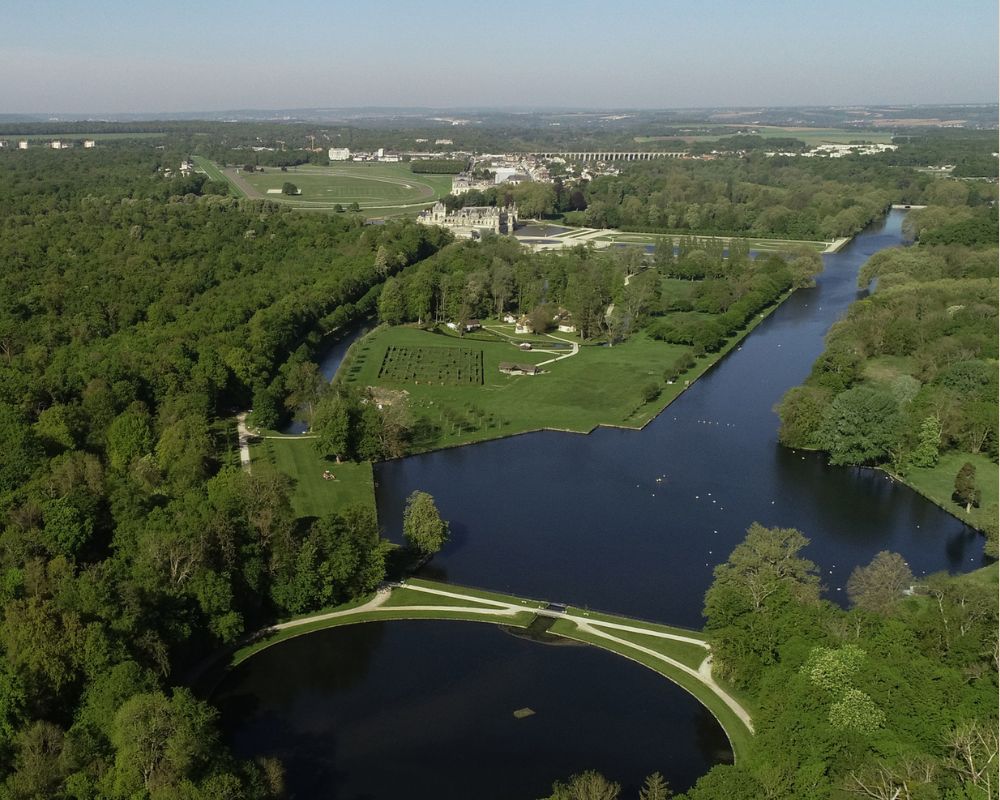
Alongside its WWF partnership, Chaumet has been supporting Reforest’Action since 2023, funding an assisted natural regeneration project in the Chantilly forest, a classified heritage forest in northern France that is facing increasing pressure from climate change.
The Chantilly forest is a significant commitment on multiple levels. It is a landscape that carries historical and cultural weight in France, which gives the project a resonance that goes beyond straightforward conservation. It is also a concrete, geographically specific programme with measurable ecological outcomes: the assisted natural regeneration approach involves supporting the forest’s own regenerative capacity rather than replanting with uniform species, which produces more ecologically complex and climate-resilient outcomes than conventional reforestation.
The Reforest’Action partnership began in 2023 and continues as part of the broader Chaumet sustainability programme in fine jewellery. The Chantilly project is described on Chaumet’s own environmental commitment page as an ongoing initiative, reflecting the house’s understanding that meaningful landscape restoration is a long-term project rather than a single event.
The climate strategy: aligned to Paris, operationally specific
Beyond biodiversity, the Chaumet sustainability programme in fine jewellery includes a climate strategy directly aligned to the Paris Agreement. Under the LVMH LIFE 360 framework, Chaumet has committed to reducing greenhouse gas emissions from energy consumption across its sites and stores by 50 percent by 2026, against a 2019 baseline. The Maison is also working toward operating entirely on renewable energy by 2030.
These are operational commitments, covering the energy used in Chaumet’s boutiques, its ateliers and its administrative facilities. They sit alongside LVMH’s group-level ambition to reduce Scope 3 emissions, which cover the supply chain and upstream and downstream transportation, by 55 percent per unit of added value by 2030.
Chaumet has also introduced specific operational choices that reflect this climate commitment in practical terms. The transport of boutique decor by ship rather than air is one documented example: a choice that carries a real carbon impact and requires logistical planning and commercial discipline, rather than simply representing a carbon offset or a public statement.
Chaumet sustainability programme: Circularity and the Bee de Chaumet display
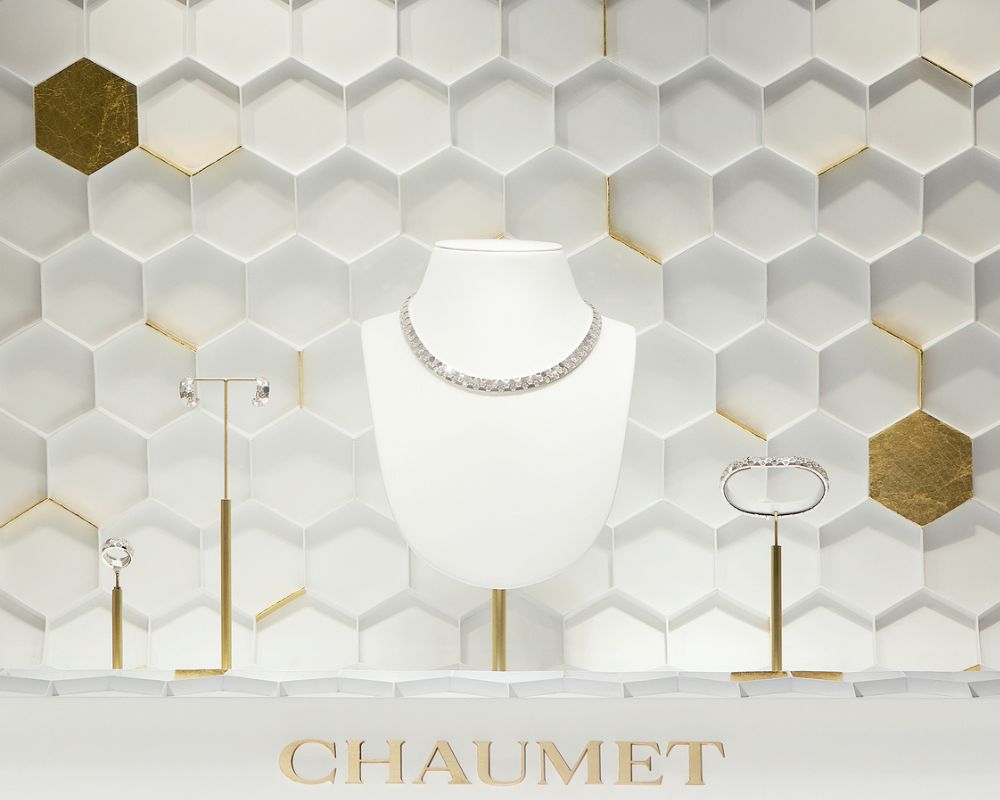
The fourth pillar of the LVMH LIFE 360 programme, creative circularity, is represented in the Chaumet sustainability programme in fine jewellery through a specific initiative unveiled in 2025: an eco-designed display inspired by the Chaumet Bee collection.
The display is made from 95 percent cardboard, a deliberate material choice that reduces carbon impact in three specific ways: it uses fewer materials overall, it is lighter and therefore easier to transport with a lower associated carbon footprint, and it extends its useful lifespan beyond that of conventional display structures. This is the kind of detail that rarely makes headlines, but it is also the kind of detail that separates a sustainability programme with genuine operational depth from one that exists primarily as a communications exercise.
The Bee display sits within a broader creativity-and-circularity ethos that the LVMH group has been developing across its Maisons since the group’s circular services task force was established in 2023. For Chaumet specifically, circularity at the product display level complements the traceability and certification work at the raw materials level, creating a programme that addresses the full lifecycle of the Maison’s output rather than focusing on a single headline metric.
What the Chaumet sustainability programme teaches the wider industry
The Chaumet sustainability programme in fine jewellery is instructive for reasons that go beyond its specific commitments. It is instructive because of the approach it represents.
The programme is built around third-party verification at every level. Chaumet has been a member of the Responsible Jewellery Council since 2005, audited every three years against standards that cover human rights, labour practices, environmental performance and business ethics across the entire supply chain. It joined the Swiss Better Gold Association in 2024, bringing artisanal gold sourcing into a verifiable certification framework. Its WWF partnership is a three-year programme with a conservation organisation that publishes its own performance data. Its LVMH LIFE 360 targets are reported at group level with specific progress metrics.
This architecture of accountability, layering internal targets with external certification, conservation partnerships and supply chain membership organisations, is what the most credible corporate sustainability programmes look like when they are built with genuine intent rather than reputational management in mind.
For the broader fine jewellery industry, and for luxury as a whole, the Chaumet sustainability programme in fine jewellery offers a template that is considerably more demanding than the industry average and considerably more credible as a result. The house has been a Responsible Jewellery Council member for twenty years. Its 2026 targets were set before the regulatory environment made such targets legally advisable. And its partnerships with WWF, Reforest’Action and the Swiss Better Gold Association represent relationships with organisations that have genuine stakes in the outcomes.
That is what it looks like when a house decides that responsible luxury is an operational commitment rather than a marketing position. And in 2026, with regulatory pressure on the industry increasing across every major market, it is also what it looks like when a house decides to be ready before it is required to be.
Read next on The Pillar Edit: LVMH LIFE 360: inside the environmental strategy reshaping how the world’s largest luxury group thinks about its impact.
(Image credit: chaumet.com)