



On August 26 2026, a glacier in Nepal’s Himalayan region collapsed. The flood that followed is estimated to have killed thousands and thousands missing across the districts of Rasuwa, Nuwakot, Dhading and Gorkha. The glaciers of the Hindu Kush Himalaya are warming at twice the global average rate and the communities living at their feet are bearing consequences they did nothing to create.
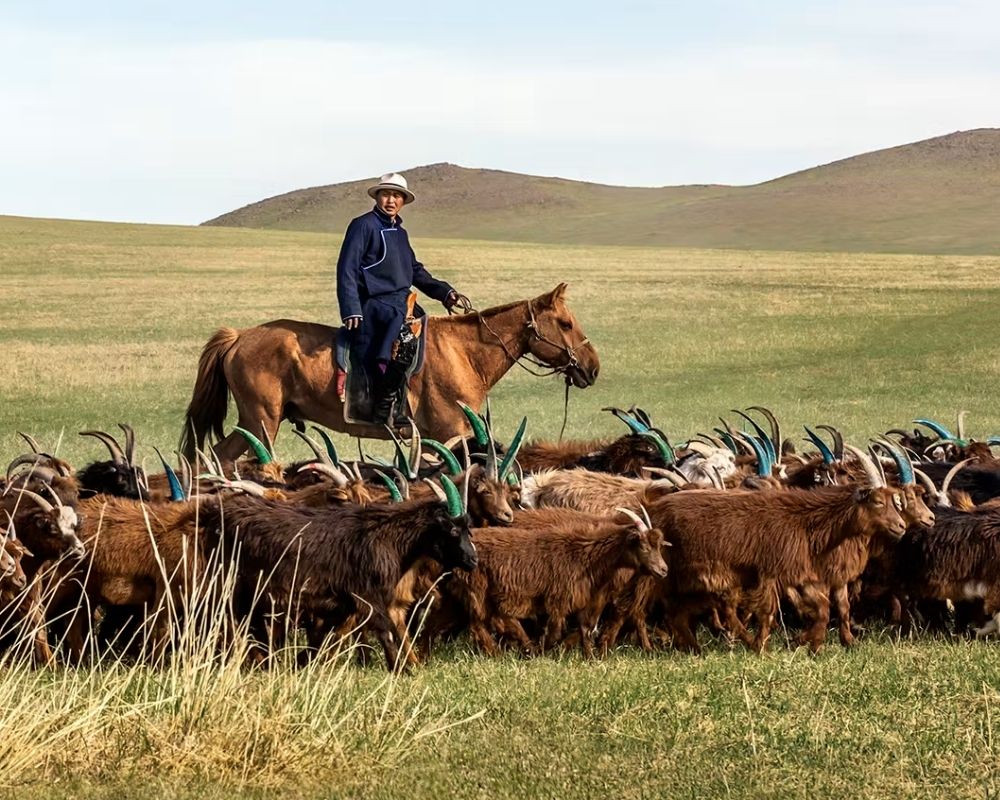
On the other side of the mountain world, across the vast grasslands of Mongolia’s Sukhbaatar Province, another climate story is unfolding. The same warming that is reshaping the Himalayas is placing enormous pressure on herding communities here, where dzuds, catastrophic freeze events often preceded by summer droughts, can wipe out entire herds and leave families without grazing land, water, feed or access to basic healthcare.
It is against this backdrop that one luxury house has spent two years building a response. Loro Piana Resilient Threads programme, launched on May 15, 2025, brings together environmental restoration, animal welfare, healthcare and community resilience in one long-term initiative.
The programme launched in partnership with the United Nations Convention to Combat Desertification, the Sustainable Fibre Alliance and the Odyssey Conservation Trust, is the most specific, most operationally serious and most genuinely meaningful climate action any luxury brand has taken in direct response to the glacial climate crisis affecting its supply chain communities. This is the case study of what it is, how it works and why it matters more than ever in the week of August 28 2026.
From the steppe to the people who depend on it
Launched in May 2025, the five-year programme is already reshaping conservation across five districts in Mongolia’s Sukhbaatar Province. Co-designed with the Government of Mongolia, local partners and herder cooperatives, and delivered with UNCCD, Sustainable Fibre Alliance and Odyssey Conservation Trust, it brings LVMH’s LIFE 360 strategy to the ground.
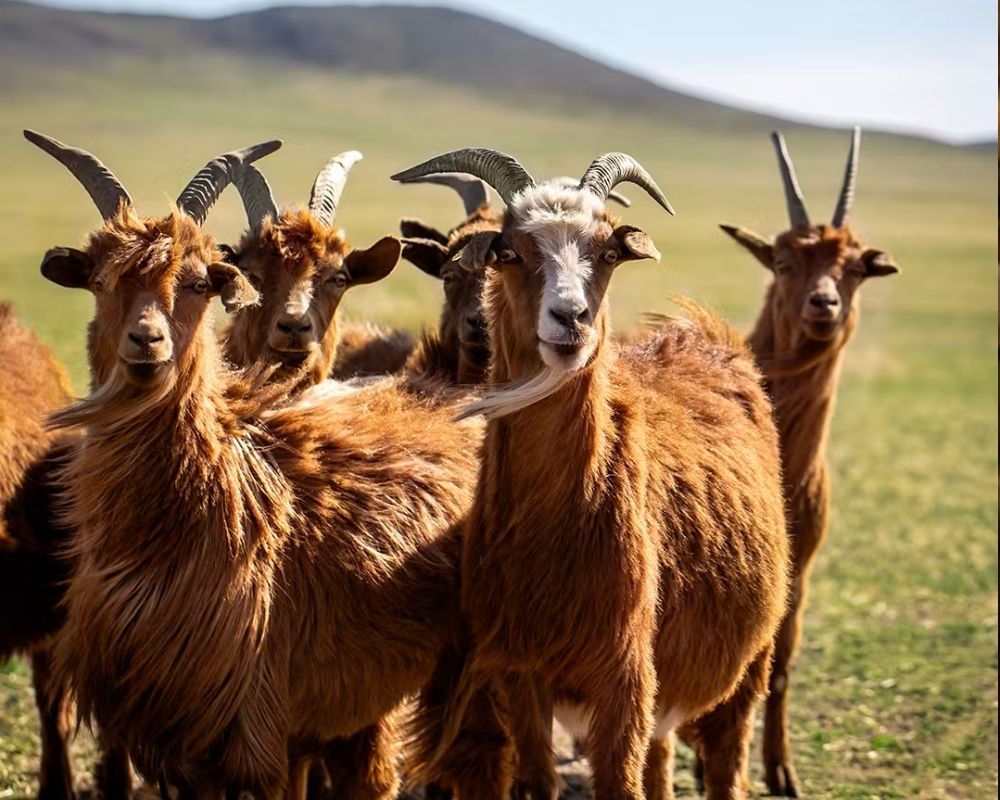
The work spans people, animals and biodiversity: a mobile One Health Hub now takes healthcare to remote herding communities, while a biodiversity centre and seed bank are protecting fragile ecosystems. A new programme is also helping rehabilitate the endangered Bayandelger red goat, valued locally for both cashmere and nutrition.
Alongside this, the programme has published a Dzud Impact Report and launched One Health training with the Mongolian University of Life Sciences, Royal Veterinary College and University of Liège, building local knowledge for the challenges ahead.
The climate is destroying Mongolia
A dzud is Mongolia’s name for a climate disaster specific to its geography. In summer, the grassland dries out in intense heat. In winter, the same parched land freezes under a layer of ice so thick that livestock find the grass underneath the ice completely inaccessible. Without grazing, the animals die. Without the animals, the herders lose their entire livelihood overnight. The dzud of 2024 was one of the most devastating on record, killing millions of livestock across Mongolia and leaving herding communities in the Sukhbaatar Province, where Loro Piana sources a significant portion of its finest cashmere, in conditions of acute crisis.
The climate science connecting dzuds to global warming is direct and well-established. The same warming that is accelerating Himalayan glacier melt is driving the temperature volatility that makes dzuds more frequent and more severe. The ICIMOD Glacier Outlook 2026 confirmed that 78 percent of the Hindu Kush Himalayan glacier area, situated between 4,500 and 6,000 metres above sea level, is highly exposed to elevation-dependent warming. The Mongolian steppe, while geographically distinct from the Himalayan glaciers, is part of the same regional climate system and experiences the same acceleration.
The herders in Mongolia’s Sukhbaatar Province created none of that warming. They are among the world’s most minor contributors to global carbon emissions. And they are paying for it with their livelihoods, their animals and their futures.
Loro Piana Resilient Threads programme: What five years of real commitment looks like
The Loro Piana Resilient Threads programme is an operationally specific, multi-partner, community-co-designed programme addressing the climate crisis in Mongolia’s cashmere-producing communities at the level of herder health, animal welfare, ecosystem restoration and economic resilience simultaneously. The One Health approach, which treats the health of people, animals and ecosystems as deeply interconnected, is the framework that makes it genuinely different from conventional corporate sustainability initiatives.
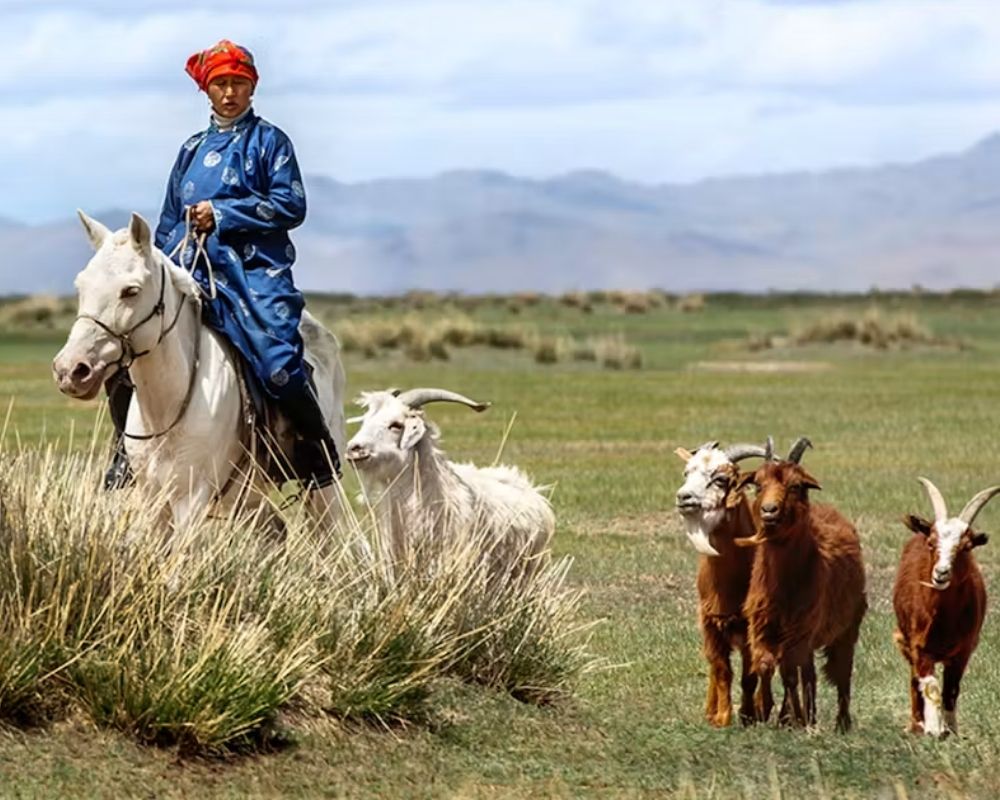
The first mobile One Health Hub, established in 2025, is one of the programme’s most tangible and most immediately impactful achievements. Sukhbaatar Province covers more than 80,000 square kilometres of grassland steppe, and many of the herding communities within it are so remote that accessing basic healthcare requires journeys of many hours across terrain that is often impassable in winter. The mobile hub reaches these communities by vehicle, delivering preventive healthcare and vaccination campaigns, training sessions and healthcare awareness initiatives to people who would otherwise have no access to them. It also carries veterinary services for the animals, because when herd health collapses in a dzud, a community’s entire economic foundation collapses with it.
The Bayandelger red goat rehabilitation programme addresses a specific and urgent biodiversity emergency within the broader climate story. The Bayandelger is an endangered breed that provides both high-quality cashmere fibre and essential nutrition, including goat milk and meat, to the communities that raise it. Climate pressure and dzud losses have pushed the breed toward critical population levels. The rehabilitation programme is working to reverse that decline through conservation breeding, herder training and support that makes raising the Bayandelger economically viable for communities facing the compounding pressures of climate volatility.
The seeds bank is perhaps the least immediately visible element of the Loro Piana Resilient Threads programme and the most important for the long-term ecological health of the Eastern Steppe. The programme is collecting and protecting seeds from the plant species that define the grassland’s biodiversity and that are at risk from the combination of overgrazing under climate pressure and the direct effects of warming and drought on vulnerable flora. The Eastern Steppe is one of the last intact grassland ecosystems on earth, and the seeds bank is building the biological foundation for its restoration.
Every luxury brand takes from these communities. One is giving back.
For Loro Piana, the story of exceptional cashmere begins long before the fibre reaches a loom. It begins with the herders, the animals and the landscapes that make the raw material possible.
As Pier Luigi Loro Piana, Vice Chairman of Loro Piana, puts it, the quality of the brand’s cashmere is rooted in the dedication of herders and generations of cashmere-sourcing traditions. Decades of working in these landscapes have also made one thing clear: protecting the animals and the environment that sustain the fibre is not a one-off commitment, but an ongoing process of learning, stewardship and collaboration.
That thinking sits at the heart of the Loro Piana Resilient Threads programme. Rather than treating sustainability as something separate from the business, the initiative starts with a simple reality: you cannot protect the quality of a precious raw material without protecting the ecosystem that produces it.
As climate pressures increasingly disrupt these fragile landscapes, investing in their resilience becomes both an environmental responsibility and a business imperative. Loro Piana Resilient Threads Programme is where those two priorities meet, turning the protection of cashmere-producing communities, animals and ecosystems into part of the long-term strategy for preserving the material itself.
The One Health masterclass at the Mongolian University of Life Sciences, developed in partnership with the Royal Veterinary College in the United Kingdom and the University of Liège in Belgium, extends the programme beyond immediate crisis response into the long-term capacity building that makes genuine resilience possible.
Training the next generation of Mongolian veterinarians, animal scientists and herding community leaders in One Health practices is the kind of investment that takes years to show results and decades to fully mature. Loro Piana began the preparatory work for the Loro Piana Resilient Threads programme two years before launch, working with cooperatives and local herders to understand priority needs and strategies from the ground up rather than designing a programme in Milan and implementing it from above.
Nepal’s glacier collapse is a warning luxury cannot ignore
The Nepal glacier collapse on August 26 2026 and the Loro Piana Resilient Threads programme in Mongolia exist in the same climate story. The Hindu Kush Himalayan region, which stretches across Nepal, Tibet, Mongolia and the surrounding mountain ecosystems, is warming faster than almost anywhere else on earth. The 2026 ICIMOD Glacier Outlook confirmed that glaciers in the Ganga and Brahmaputra basins, which include the Nepal districts destroyed by this week’s floods, experienced area reductions of 21 and 16 percent respectively between 1990 and 2020.
The people in Rasuwa and Nuwakot in Nepal who lost their lives on August 26 and the herders in Sukhbaatar Province in Mongolia who are losing their livelihoods year by year to dzuds are both victims of the same phenomenon. The warming that is accelerating at the Third Pole, the collective name for the Hindu Kush Himalayan mountain system, is simultaneously collapsing glaciers into river valleys and desiccating the grassland steppe, destroying two of the most geographically and culturally significant landscapes on earth and threatening the communities that have inhabited them for centuries.
The luxury industry sources some of its most precious and most commercially irreplaceable raw materials from these landscapes. Loro Piana Resilient Threads is the clearest demonstration available that a luxury brand can respond to that responsibility with something more than targets and reporting.
After two years of preparatory work, the programme is now taking shape across five districts, bringing together a mobile health clinic for remote herding communities, a seed bank and biodiversity centre, and a rehabilitation programme for an endangered goat breed. Alongside these initiatives, a university partnership is helping prepare the next generation of One Health practitioners, creating a longer-term foundation for the programme.
What ties these efforts together is the way they have been developed: each element has been co-designed with the communities they are intended to serve, ensuring that the programme responds to local needs while building resilience for the future.
Loro Piana Resilient Threads Programme: 2029 is the deadline and the stakes are only getting higher
The Loro Piana Resilient Threads programme presented at COP17, the United Nations Convention to Combat Desertification conference, in late 2025, with Frédéric Arnault, CEO of Loro Piana, underscoring the brand’s commitment to sustainable Mongolian cashmere in a forum attended by governments, scientists and NGOs from across the world. The presence of a luxury brand at COP17 making a specific, operational and UN-partnered commitment to combating desertification in a cashmere-producing region is the kind of moment that signals a genuine shift in how the most serious luxury brands are thinking about their relationship to the landscapes and communities that make their work possible.
The Loro Piana Resilient Threads programme runs until 2029. By then, if the climate trajectory the ICIMOD confirmed in its 2026 Glacier Outlook continues, the pressures on Mongolia’s herding communities will be even more acute than they are today. The programme is building the resilience that those communities will need to survive those pressures. And in doing so, it is building the supply chain resilience that will allow Loro Piana to continue producing the finest cashmere in the world from the landscapes that have made it possible for generations.
And this is where Resilient Threads gets real. Climate damage arrives with consequences, and the floods in Nepal are a sobering reminder of what is at stake. The Loro Piana programme takes on the painstaking work of building resilience where it matters most: on the ground, alongside the communities, animals and landscapes that sustain the very materials at the heart of the brand.
Read next: When a luxury brand commits to the communities its supply chain depends on, the results are extraordinary. YSL Beauty did something similar in Morocco’s Ourika Valley, and the story is just as remarkable as the Loro Piana Resilient Threads Programme.
(Image credit: lvmh.com)